Life, seasoned with perspective.
Young professionals often step into the workplace carrying hope, only to encounter challenges they were never prepared for. This reflection examines courage, boundaries, and the quiet strength required to protect one’s dignity while pursuing growth.
This past week, some of my students shared painful stories from their attachment placements.
For many of them, it was their first experience in a real workplace. The shock was unmistakable.
I walked into class prepared for the day’s lesson. Almost immediately, a student raised her hand.
“Sir, can we talk about our attachment experiences before we continue?”
I agreed.
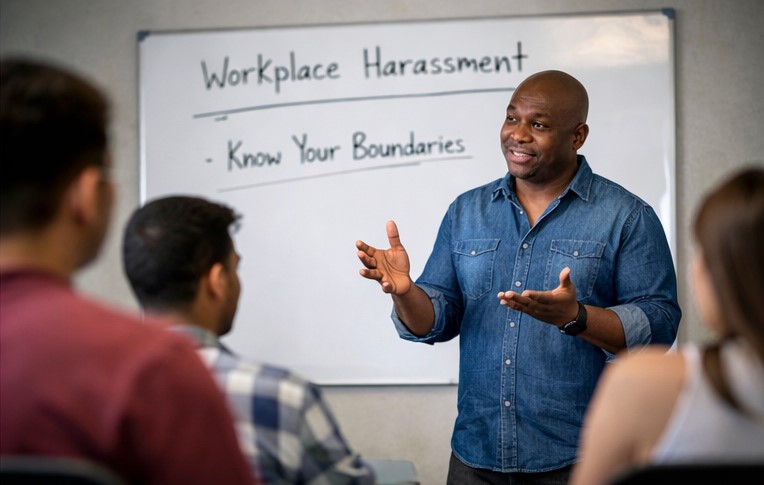
Teaching, for me, has never been only about books. I stepped into this profession to prepare young people for the realities of work, informed by my own years as a media practitioner. I asked the class whether they were comfortable shifting the lesson. Their expressions answered for them. They had been waiting for this space.
I put away my marker and notes.
I switched into what I call Dad mode.
“Let us start with you,” I said to the student who had spoken.
She hesitated.
“Sir, I do not know if all workplaces are like where I was, but I had a very hard time.”
After a long silence, I encouraged her to continue.
She gathered her courage and spoke quickly, as though afraid she might reconsider.
“My boss asked me for sex on the first day. It continued for the entire three months. I had to find clever ways to escape.”

The room fell silent.
Then another student spoke.
And another.
Different institutions. The same story.
Some were denied field opportunities after refusing advances. Others said remaining silent felt safer than reporting. I listened, knowing that the day’s lesson had already shifted.
Moments like this are reminders that teaching is not only about examinations. It is about protecting futures. About naming wrongdoing. About helping young people stand without shame.
I carry a personal mantra that guides me. Martin Luther King Jr once asked, “What are you doing for others?” When I know I can add value, I pause everything else to do so.
Not all the stories were dark. Some students described supportive supervisors and healthy learning environments. That balance mattered. Hope must sit beside truth.
I was particularly attentive to the male students. Most said their experiences had been uneventful. Then one quiet student raised his hand.
“Mwalimu,” he said slowly, “I was on attachment with a girl from another class. We went on assignments together. Many times I returned alone and struggled to explain where she had remained… because she stayed behind with senior people.”
His voice carried what words could not.
Sometimes silence tells the loudest story.
After listening, I knew I had to speak from experience, not theory.
Twenty-two years ago, after finishing media school, I secured an internship in a government institution as an audiovisual officer. The role involved frequent travel. During a long assignment in northern Kenya, near the Ethiopian border, the conditions were harsh. Filming could only happen early in the morning and late in the evening. The rest of the day passed in slow conversations and occasional drinks.
One evening, a colleague from another department invited me for a beer.
I accepted, innocently.
Two beers in, the conversation shifted. The advances became unmistakable.
I froze.
At that moment, other colleagues walked in. The interruption ended the situation.
That night, I learned something lasting.
Workplaces test more than competence.
They test boundaries.
They test courage.
They test identity.

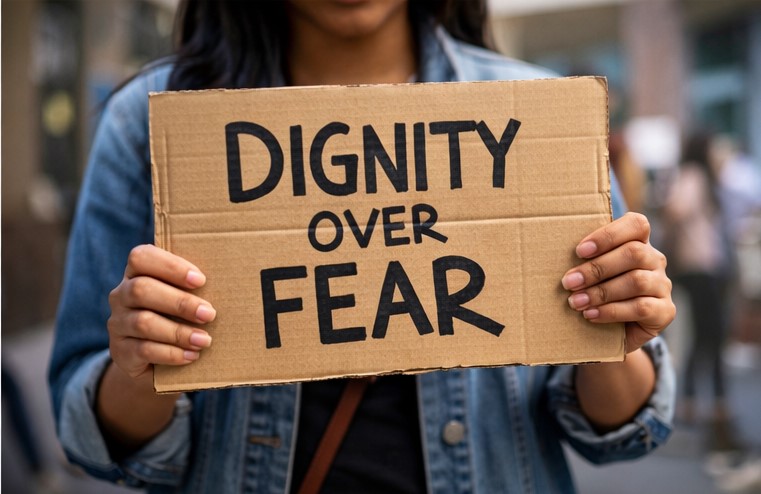
So I spoke plainly to my students. I told them harassment is never the victim’s fault. That silence protects the wrong people. That discernment is a survival skill. And that dignity is worth more than any opportunity.
Yes, meaningful relationships can emerge in professional spaces. That is part of life. But pressure, manipulation, and coercion are not relationships. They are abuse.
Young people entering the workplace must carry more than certificates. They must carry self-worth. They must carry boundaries. They must carry the courage to walk away when something feels wrong.
The truth is simple.
No job is worth losing yourself.
As I looked at my students that day, I felt both heavy and hopeful. Heavy because of what they had endured. Hopeful because they chose to speak.
Perhaps that is where change begins.
Not in policies.
Not in headlines.
But in brave conversations inside ordinary classrooms.
If the workplace tests you, let it never break you. Let it reveal your strength instead.
Because the future belongs to young people who know their worth and refuse to trade it for survival.
About the author
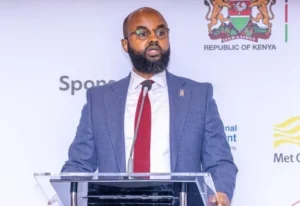
Kibisu Mulanda is a media executive and strategic communicator with more than 20 years of experience in television, NGO storytelling, and youth-focused content. He is the Acting Head of Switch Media Ltd and a media lecturer at the Kenya Institute of Mass Communication (KIMC). A Certified SIYB Trainer, he blends storytelling with strategy to drive social impact.
About the Author