Emergency response continues amid rising concerns over construction safety in Kenya’s capital
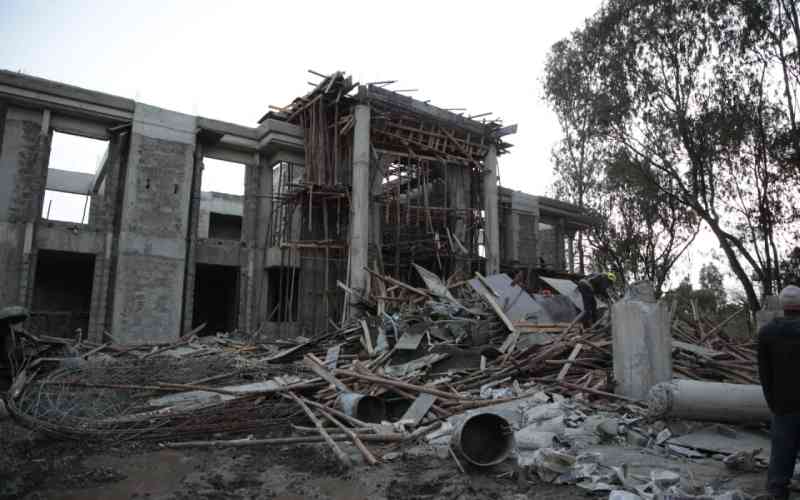
At least two people have died and seven others injured after a building under construction partially collapsed on Saturday afternoon in the Karen suburb of Nairobi, authorities confirmed, in the latest in a series of structural failures that have raised questions about building oversight in the city.
The incident was reported shortly before 4 p.m. along Ngong Road, opposite Karen Community Church, prompting an immediate response from search and rescue teams coordinated by the National Disaster Management Unit (NDMU) and the Kenya Red Cross. Rescue operations are ongoing as officials work to clear debris and establish whether all affected individuals have been accounted for.
Rescue efforts and official response
According to NDMU Director Assistant Inspector-General Duncan Ochieng’, emergency crews have evacuated the injured, who were rushed to Kenyatta National Hospital, and continue to assess the site. Two individuals were confirmed dead, seven were injured — two of whom were reported in critical condition — and two others escaped without apparent injury.
“As you can see from the rubble, we cannot completely ascertain that the area has been thoroughly searched,” Ochieng’ said, underscoring the complexity of the operation. “We will determine the cause, and if anybody is found culpable, they will be answerable to the law.”
The partially collapsed structure — which gave way at about the second-floor level — remains a hazardous site as teams work to stabilise the scene and prevent further injury.
A troubling pattern of building failures
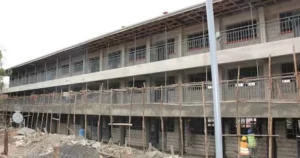
The Karen collapse follows closely on another deadly incident: the South C building collapse on 2 January 2026, in which a multi-storey structure pancaked, killing at least two people during a protracted rescue and recovery effort.
Industry experts and government officials have pointed to systemic problems in Nairobi’s construction sector. A recent assessment by professional bodies including the Institution of Engineers of Kenya warned that only about 15 per cent of city structures are deemed safe, citing weak regulatory enforcement, corruption and the involvement of unqualified builders as major drivers of unsafe construction practices.
This comes amid revelations that some buildings flagged for safety infractions — including one in South C — had continued construction despite stop orders from urban planning authorities.
Regulatory scrutiny and public safety
The spate of collapses has intensified scrutiny on Nairobi’s National Building Inspectorate and county enforcement mechanisms, which critics say have lacked teeth in preventing construction that flouts approved standards and building codes.
Cabinet and county officials have faced calls to tighten oversight and ensure rigorous compliance with safety regulations, particularly as Kenya’s urban population expands rapidly and construction activity accelerates across the metropolis.
What happens next
As rescue operations in Karen wind down, investigations into the precise cause of Saturday’s collapse are expected to be led by structural engineers and forensic examiners. Families of the deceased and injured await updates, and authorities have pledged to pursue accountability should evidence of negligence emerge.
The incident adds to mounting pressure on regulators to enforce building standards more effectively and address structural vulnerabilities before further loss of life occurs in one of East Africa’s fastest-growing cities.
About the Author