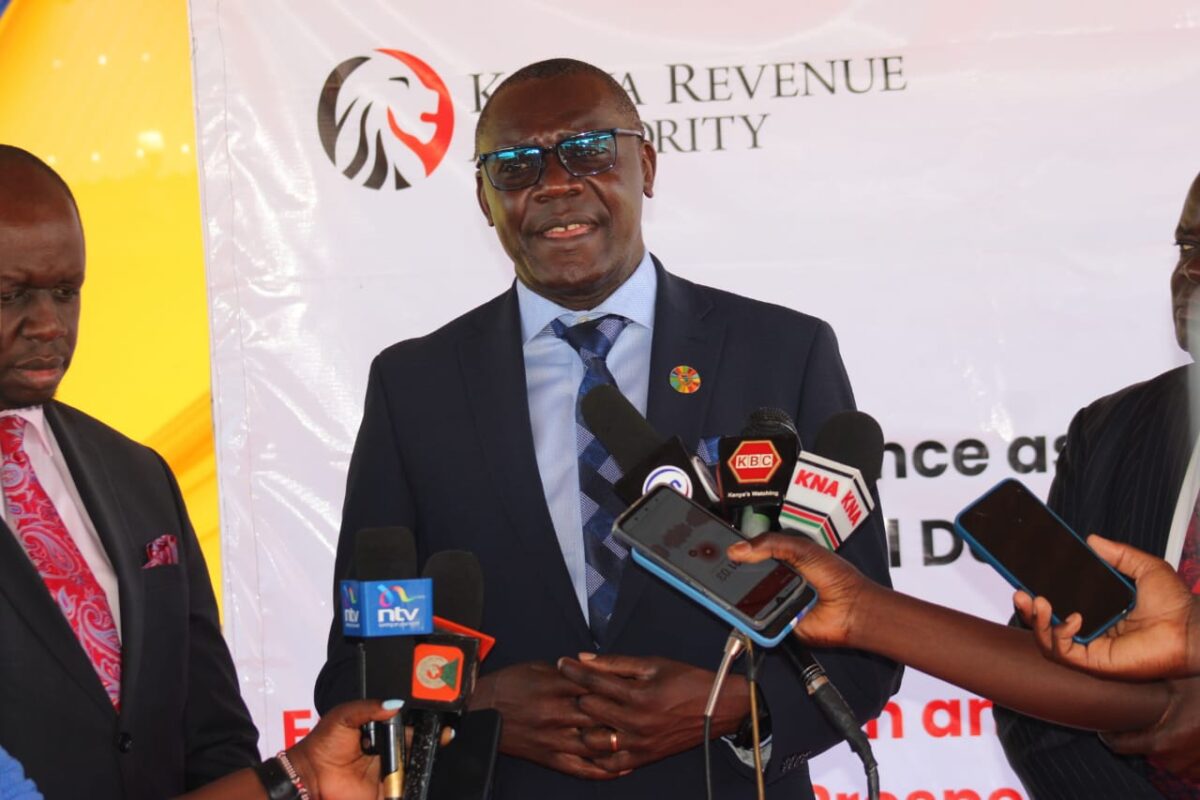
The Kenya Revenue Authority (KRA) says people aged 21 to 30 now make up its largest group of taxpayers, accounting for about 42 per cent. At this age bracket majority are starting their first jobs or small businesses. The agency’s message to them is simple; learn early, comply easily.
Speaking at a public lecture on Monday at the Kendu Adventist School of Medical Sciences, George Obell, KRA’s commissioner for micro and small taxpayers, said the focus is shifting from punishment to guidance.
“These are young people just getting into business or employment hence they need support to understand their obligations, not pressure,” Mr Obell said.
Mr Obell stressed that low-income earners are protected by existing reliefs. Anyone earning below Sh25,000 a month pays no income tax. Small businesses with annual turnover between Sh1 million and Sh25 million qualify for a flat turnover tax of 1.5 per cent.
“You don’t have to pay anything else,” he said.
To reach young taxpayers where they are, KRA is expanding tax education beyond its offices. It is working with universities, training colleges, community groups and professional associations, including health workers and gig economy players. Community-based tax ambassadors are also being trained to explain tax rules in plain language.
“We are going to the ground, we want people within the system who can explain benefits and filing requirements in a way that makes sense,” Mr Obell said.
Mr Obel acknowledged that many young taxpayers accept tax as a civic duty but struggle with complex procedures and hard-to-find information. In response, KRA is rolling out sector-based training and deeper engagement with learning institutions.
The authority is also looking further upstream. Talks are under way to introduce basic tax education in high schools, so students leave school knowing what a tax PIN is and why filing matters.
“We want this to be systematic and consistent, not something people learn only when they are already in trouble,” Mr Obell added.
On enforcement, KRA struck a conciliatory note. Mr Obell said the agency is allowing payment plans for taxpayers whose debts stem from delayed government payments. Instead of freezing bank accounts, KRA may issue notices to state institutions that owe money.
“Tax should not be the reason someone is pushed to the extreme,” he said.
One persistent issue is the high number of nil returns filed by young people. Filing remains a legal requirement, even with no income. But KRA says it is simplifying the process.
“If you have no income, you should just click, declare and close,” Mr Obell said, adding that simpler digital tools will be rolled out by February.
Behind the softer tone lies firm intent. KRA is analysing data to separate genuine nil filers from those under-reporting income.
“Our goal is simple, make compliance easy, build responsibility early, and support young taxpayers as they grow,” Mr Obell said.
About the Author