President William Ruto on Saturday offered a cheerful but firm answer to growing whispers that he might one day return to the Orange Democratic Movement. His message was simple: he is not going anywhere.
The President was speaking at ODM’s 20th-anniversary gala in Mombasa, a night meant to celebrate the party’s long history but one that also revealed the sharp political tensions shaping its future.
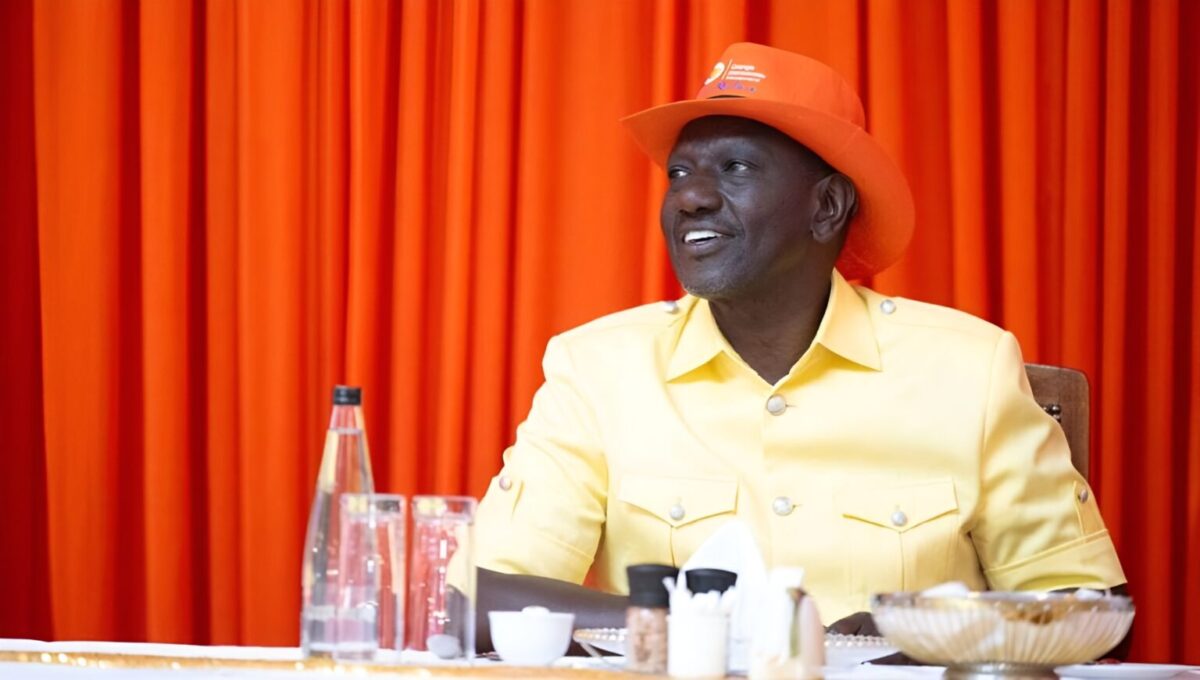
Ruto arrived in a bright yellow Kaunda suit topped with an orange ODM-branded hat. The outfit caught attention instantly. He joked that the colour choice was deliberate, meant to stop rumours before they grew any louder.
“People keep telling me to leave my party and come back to ODM,” he said, laughing as the room joined in. “I knew if I wore orange alone, my people in UDA would think I had crossed over. So I put on yellow to show I am still right where I belong.”
He added that pairing UDA’s yellow with ODM’s orange was his way of showing the spirit of the broad coalition now steering his government. He praised ODM members who serve in his administration, promising they would not be shut out from state networks.
“I want to assure you that you will not lack a way to reach the government,” he said.
A Celebration Overshadowed by a Party at War with Itself
Beneath the warm speeches and clinking glasses lay a deeper struggle within ODM-one that has intensified since the death of its long-time leader, Raila Odinga.
Two strong camps have now emerged.
One group, led by acting Party Leader Oburu Oginga and supported by senior government ministers such as Hassan Joho, John Mbadi, and Opiyo Wandayi, argues that Raila placed ODM inside government for strategic reasons. They believe the party must remain in that space, at least until 2027, when a new arrangement could be reconsidered.
Standing firmly on the other side is a pro-independence wing led by Secretary-General Edwin Sifuna, Siaya Governor James Orengo, and Raila’s daughter, Winnie Odinga. They want the party to pull back from government and rebuild its opposition identity. Their push for a National Delegates Convention has become the rallying call for members who say ODM should field its own presidential candidate in the next general election.
The tension has turned public. Winnie Odinga has openly questioned whether those managing ODM’s relationship with the President can handle the role. Orengo, never one to hold back, declared recently: “It is not ODM that needs Ruto; it is Ruto that needs ODM.”
A Complicated History
Ruto’s presence at the dinner brought back a piece of history that supporters on all sides recognize: he was one of ODM’s earliest members. His attendance-together with that of senior officials in his government-showed he still sees value in the connection, even as he distances himself from talk of rejoining the party.
For ODM, the evening was both a celebration and a reminder of the battles ahead. For Ruto, it was a chance to stamp down the rumours while extending a hand to a party still working out who it wants to be.
And as the 2027 race begins to take shape, the question of ODM’s direction-and who will lead it-remains one of the most closely watched stories in Kenyan politics.
About the Author