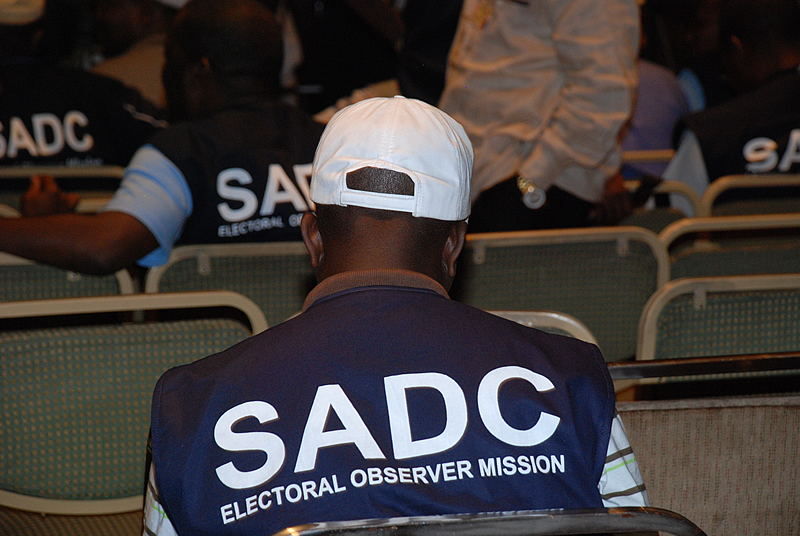
In Dodoma on Monday, the Southern Africa Development Community (SADC) declared that the recent general election in the United Republic of Tanzania did not meet the regional bloc’s standards for a free and fair vote.
The announcement came as Samia Suluhu Hassan was sworn in for her first full elected term under heightened security.
Mission findings
The electoral observation team, led by the former Malawian Speaker Richard Msowoya, reported a climate of intimidation and limited democratic space.
“In view of the Mission observations … it is the SEOM’s tentative conclusion that, in most areas, voters could not express their democratic will,” the preliminary report stated.
Observers noted that in some polling stations, ballot-boxes appeared to contain neatly stacked multiple voting papers, creating what the team described as “a perception of ballot stuffing”.
They also raised concern over the broader political and security context. According to the report, freedom of expression was restricted ahead of voting, with some social-media platforms inaccessible and opposition voices facing increasing pressure.
Government response and opposition claims
The Tanzanian government has stated that the election was conducted in line with national law and that the vote count reflected the people’s will. President Suluhu, in her swearing-in address, emphasised unity and stability.
Opposition parties rejected the process. They pointed to the exclusion of key candidates and alleged suppression of dissent. Some civil society groups described the vote as “a crackdown disguised as democracy”.
Why this matters
For SADC, member states are required under the “Revised SADC Principles and Guidelines Governing Democratic Elections (2021)” to guarantee open contest, equal opportunity and transparency. The mission said the Tanzanian election “fell short of the requirements” set out in those guidelines.
Observers said the shortcomings could weaken public confidence in the result. According to the report, the observation mission experienced difficulties early on: their members were initially not issued proper accreditation letters and were denied full access to key stakeholders.
Meanwhile, the electoral commission declared a landslide win for President Suluhu with over 97 % of the vote, a result widely criticised by observers as implausible in a competitive system.
About the Author