

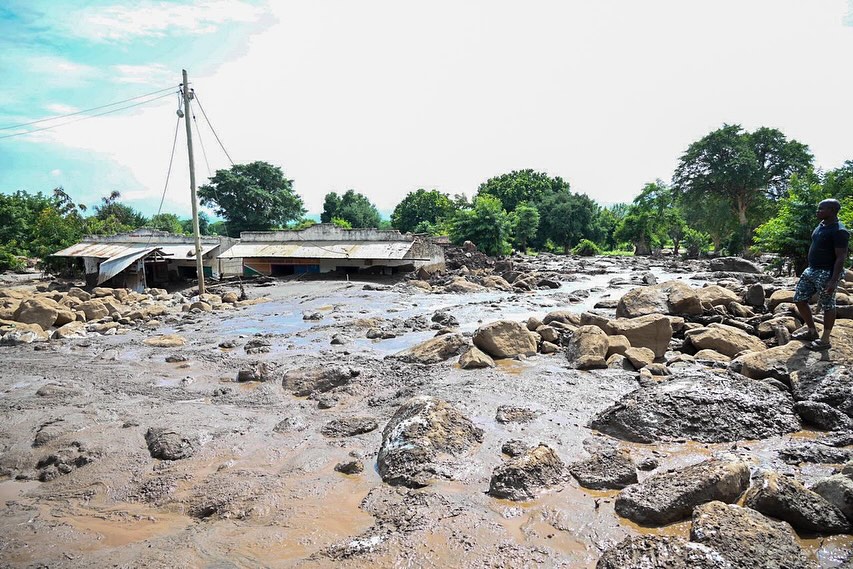
Elgeyo Marakwet County has been struck by yet another landslide, barely a day after a separate landslide in Marakwet East claimed dozens of lives.
The latest incident occurred on Monday night at Kibendo in Keiyo North, following hours of heavy rainfall. County emergency teams and local authorities rushed to the scene as rescue efforts got underway in the dark.

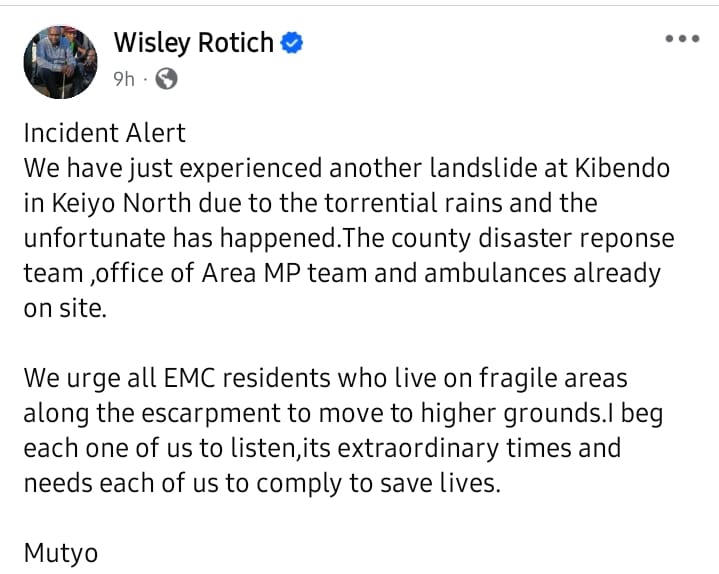
Governor Wisley Rotich confirmed the tragedy in a Facebook post shortly after midnight. “We have just experienced another landslide at Kibendo due to the torrential rains. The county disaster response team, office of the area MP, and ambulances are already on site.” Rotich wrote.
He urged residents living along the escarpment and other fragile areas to evacuate immediately.
The new disaster comes as Elgeyo Marakwet continues to reel from a deadly mudslide in Chesongoch, Marakwet East, that left at least 26 people dead and several others missing. Rescue teams are still searching for 25 people believed to be buried under thick layers of mud and debris.
According to county officials, the worst-hit villages include Edow, where 19 residents perished, Embobut with five fatalities, and Sambirir, where two people were confirmed dead. Twenty-six survivors remain hospitalised.
Interior Cabinet Secretary Kipchumba Murkomen, who visited the area on Sunday, described the series of landslides as a “National catastrophe.” He attributed the devastation to years of deforestation and poor land management, warning that continued rainfall could trigger further disasters.

“The biggest problem is deforestation,” Murkomen said. “The entire Kerio Valley is under threat as it continues to rain.”
Rescue efforts have been hampered by impassable roads and unstable terrain, with teams relying on aerial support to access isolated villages. The government has deployed the National Police Service, the Kenya Red Cross, and local volunteers in a coordinated response.
As the rain continues to pound the Rift Valley, local leaders are pleading with residents to take early warnings seriously. Experts say the recurring disasters highlight a deeper crisis — the unchecked destruction of forests and cultivation on steep slopes that have left communities increasingly exposed to the forces of nature.
About the Author