When the crowds had gone and the formalities of a state burial had ended, former president Uhuru Kenyatta stayed behind. He did not leave with the other dignitaries. He lingered at the graveside of Raila Amolo Odinga, took a moment alone, and placed a short, handwritten note among the flowers.
“My brother, rest in peace. I will be visiting you from time to time. Rest well.”
Those eight words carried decades of history. They were not the language of politics. They were a quiet, intimate farewell from a man who had once been a rival and later a friend.
A private gesture after a public farewell

Raila Odinga was laid to rest at his ancestral home in Kang’o Ka Jaramogi, Bondo, on Sunday, 19 October 2025. The burial followed a state funeral attended by thousands, including President William Ruto and a roll-call of national and international figures.
On Monday, 20 October, Uhuru Kenyatta returned to Bondo. He joined Raila’s immediate family — including widow Ida Odinga, elder brother Oburu Oginga and sister Ruth Adhiambo — to visit the fresh grave. The concrete slab over the burial site was still drying.
In a brief, solemn ceremony, Uhuru offered a quiet prayer and observed a moment of silence. He was shown through the small mausoleum built to honour Raila’s father, Jaramogi Oginga Odinga, and spent time in the company of the bereaved family in Raila’s home. Later, he signed the condolence book and left the note that has since been read across the country.
The gesture drew notice precisely because it was unadorned. Other leaders had departed after the burial. Uhuru remained. That choice — to stay when others left — became for many a sign of loyalty and friendship that transcended politics.
From inherited rivalry to a public truce
The bond between Uhuru Kenyatta and Raila Odinga is bound up with Kenya’s modern history. Both men were born into political dynasties. Their fathers — Jomo Kenyatta and Jaramogi Oginga Odinga — once worked together for independence and later split over the nation’s direction. Their sons would follow similarly fraught paths.
Raila emerged as a long-time opposition figure. Uhuru, as the scion of an establishment family, often represented continuity. They opposed one another across multiple elections, most bitterly in 2017 when the disputed poll left the country deeply divided.
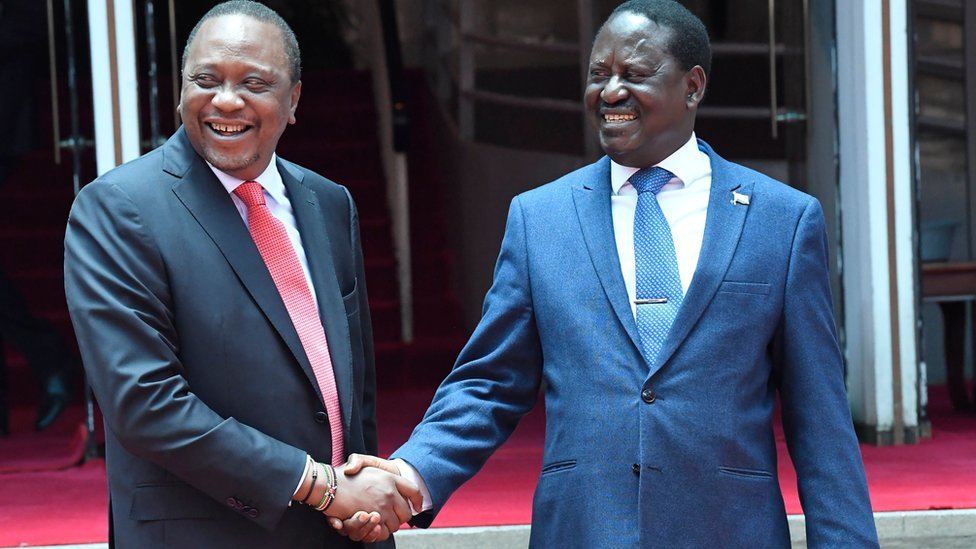
Yet in March 2018, the two men surprised the nation. Before cameras and a stunned public, they clasped hands in a public sign of reconciliation. The so-called Handshake helped shift Kenyan politics. It led to joint initiatives and a period of cooperation that softened, at least in public, the history of rivalry between them.
The last months and the medical account
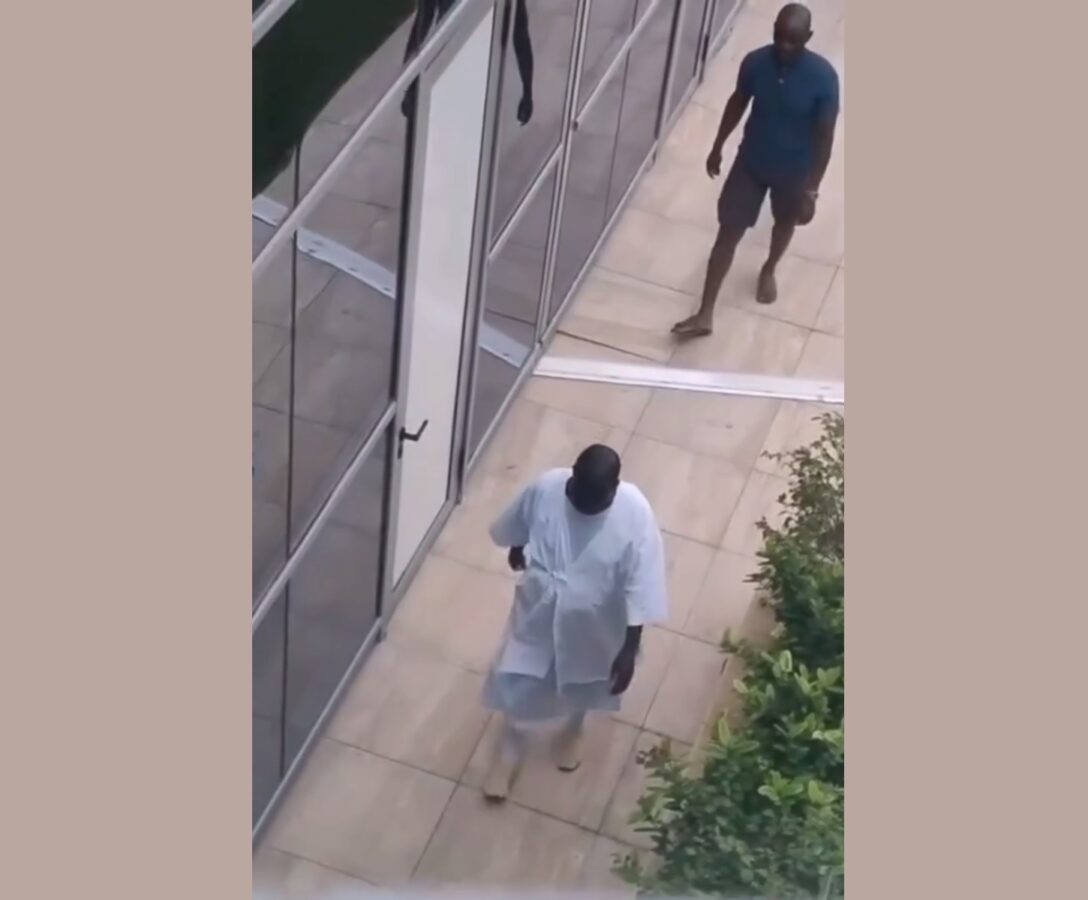
Raila Odinga collapsed during a morning walk while in India for medical treatment. He was taken to Devamatha Hospital after suffering cardiac arrest. Doctors attempted resuscitation and placed him in intensive care. Medical reports cited multiple serious health issues, including diabetes, kidney complications and deep vein thrombosis (DVT). Despite emergency interventions, he died on 15 October 2025.
His body was flown back to Kenya and received at Jomo Kenyatta International Airport the following morning. The president declared a period of national mourning and ordered a state funeral. The country observed seven days of mourning, flags flew at half-mast and the Kenya Defence Forces accorded Raila military honours, including a 17-gun salute.
A friendship that outlasted politics

Those who watched the two men over the years saw an arc few expected. What began in inherited rivalry moved through contest and confrontation, and eventually into a hesitant, public friendship.
In later years, Uhuru and Raila were often photographed together. They shared stages and, sometimes, private moments. Their rapprochement was not simply political theatre; to many who witnessed it, it was genuine. The short note Uhuru left at his friend’s grave — and his decision to remain when others left — read to many as the final, private punctuation on a long and complicated relationship.
A nation’s quiet moment

The image of Uhuru at the graveside will remain in the country’s memory: a former president, alone by a fresh grave, leaving a small message and promising to return. It was a simple act of remembrance. It was also a public lesson in the human cost of politics, and in the possibility of reconciliation.
“My brother, rest in peace,” Uhuru wrote. “I will be visiting you from time to time. Rest well.”
In those lines, a nation heard more than condolence. It heard the close of a long chapter in Kenya’s political life and the private proof that, sometimes, personal loyalty outlasts political contest.
About the Author