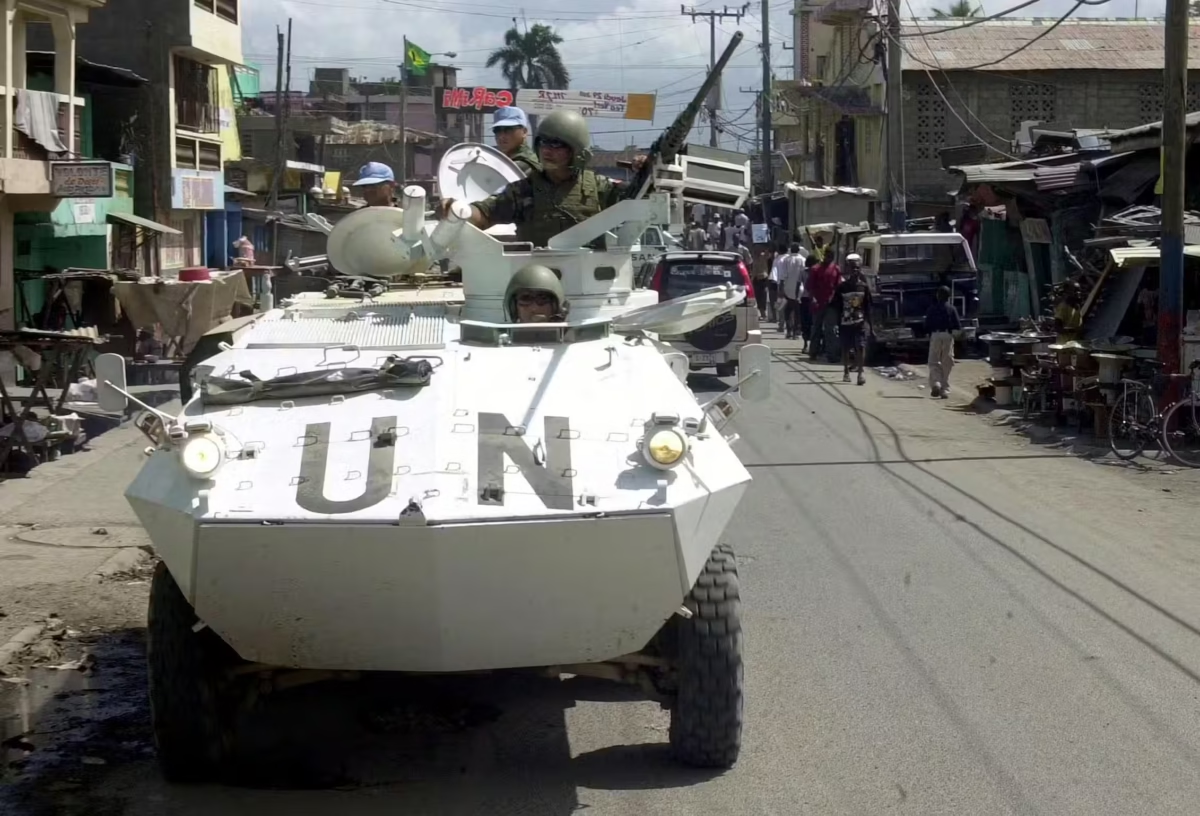
UNITED NATIONS — The United Nations Security Council voted on Tuesday to strengthen its response to Haiti’s spiralling gang violence, approving a new multinational force with both police and military troops.
The resolution, co-sponsored by the United States and Panama, transforms the current security mission into a larger operation with up to 5,500 uniformed personnel — five times the size of the existing deployment. Until now, the UN-backed mission relied largely on police support, with around 1,000 officers, most of them Kenyan.
“This vote demonstrates that the international community is sharing the burden,” said Mike Waltz, the US ambassador to the UN, following the 12-0 decision. Russia and China abstained.
The escalation comes amid growing desperation inside Haiti. “Every day, innocent lives are snuffed out by bullets, fire and fear,” Laurent Saint-Cyr, head of Haiti’s Transitional Presidential Council, told world leaders in New York last week. He described whole neighbourhoods being erased by violence, displacing more than a million people and devastating communities. “This is the face of Haiti today — a country at war, a contemporary Guernica,” he said.
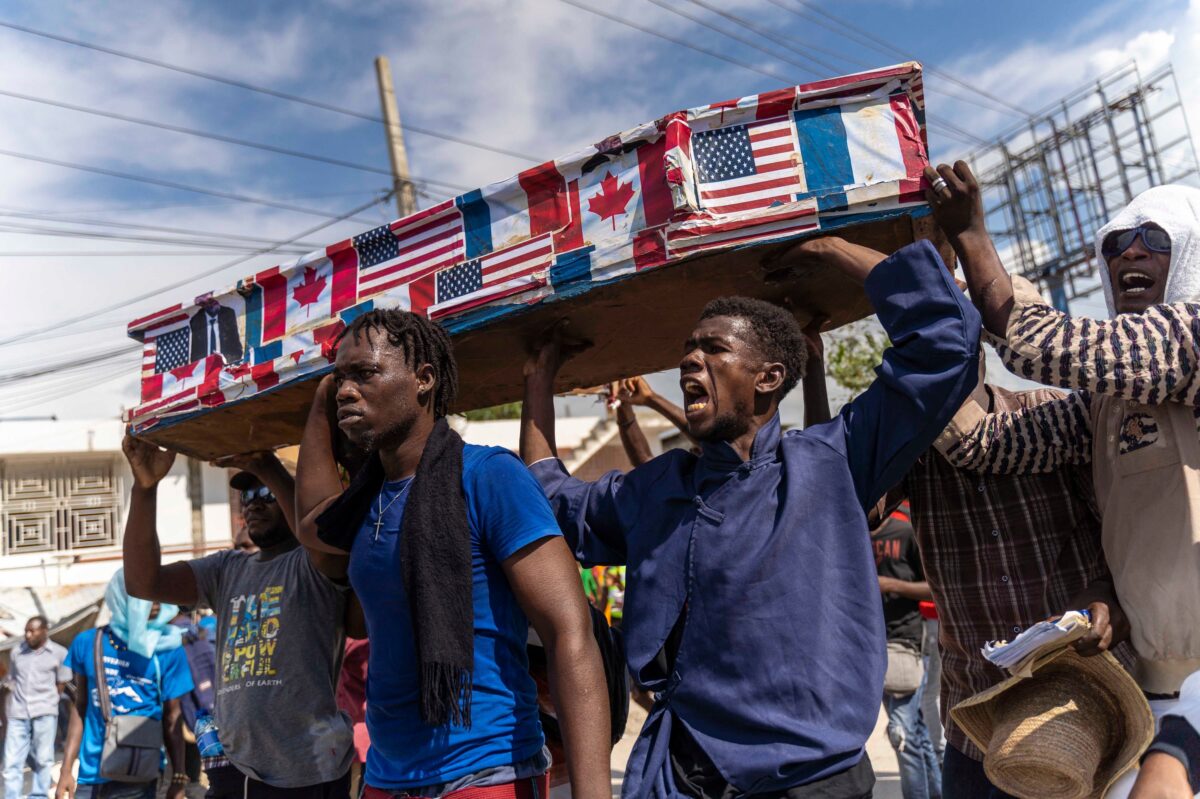
The gangs, emboldened by weak political institutions, have seized swathes of the capital, Port-au-Prince, and beyond. Murders, kidnappings, arson and looting have become routine. The crisis deepened last year when gangs forced Prime Minister Ariel Henry to resign. Haiti, the poorest country in the Americas, has not held elections since 2016.
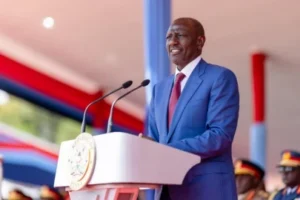
Kenya, which leads the existing mission, has long argued that stronger backing is essential. President William Ruto said last week that with the “right personnel, adequate resources, appropriate equipment and necessary logistics, Haiti’s security can be restored.”
The expanded force will operate for an initial year, with the support of a UN office dedicated to providing financial and logistical assistance — a structure first suggested by Secretary-General António Guterres.
“This mandate would empower the force to proactively target gangs and restore security to Haiti,” said US Deputy Secretary of State Christopher Landau.
Still, not all Security Council members are convinced. China and Russia, which abstained, previously questioned the effectiveness of outside interventions without a clear political transition in place.
Panama’s ambassador, Eloy Alfaro de Alba, urged the Council to act. “The Council can help restore peace in a nation currently suffocated by merciless gangs,” he said.
For Haitians, the promise of a stronger international presence may offer some hope. But whether foreign troops can stabilise a country long scarred by both violence and failed interventions remains an open question.
About the Author