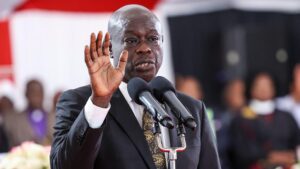

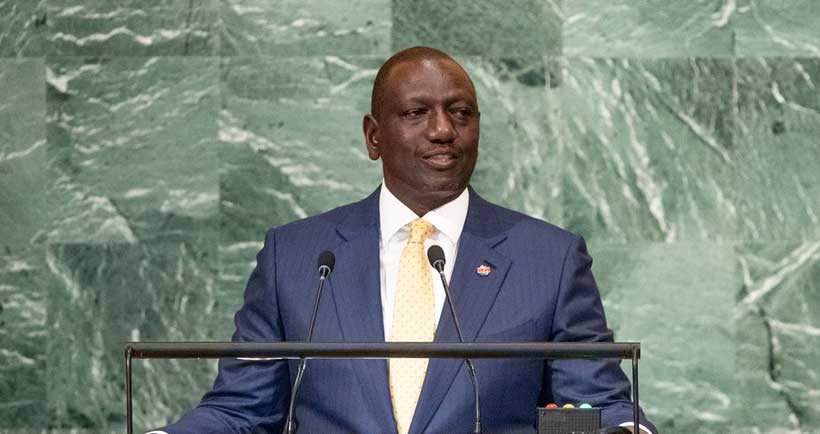
NEW YORK — Kenya’s president, William Ruto, said on Wednesday he expects his country to seal a trade agreement with the United States before the end of the year, even as Washington’s duty-free programme for African exports hangs in the balance.
Speaking on the sidelines of the United Nations General Assembly, Mr. Ruto described the African Growth and Opportunity Act (AGOA) as “a platform that connects Africa and the U.S. in a very fundamental way.” He added, “I will be asking for the U.S. to consider seriously renewing and extending AGOA for at least a minimum of five years.”
The programme, first passed in 2000, grants duty-free access to the American market for certain goods from eligible African nations. It is set to expire at the end of September. Previous attempts to extend it stalled in Congress, and the return of Donald Trump to the White House earlier this year has further complicated matters.
Mr. Trump, who has pushed for higher tariffs, imposed a 10 percent duty on Kenyan goods in April. His administration’s scepticism over preferential trade deals has raised doubts about AGOA’s future.
Still, Mr. Ruto struck an optimistic tone. “AGOA gives both Africa and the U.S. the best chance to expand and deepen trade,” he said.
Kenya has been in talks with Washington on a bilateral trade agreement, and Mr. Ruto said “good progress” had been made. If signed, it would be the first such deal between the U.S. and a sub-Saharan African nation. He is pushing for greater access for Kenya’s textiles, tea, coffee and avocados, while also seeking openings in mining and fishing.
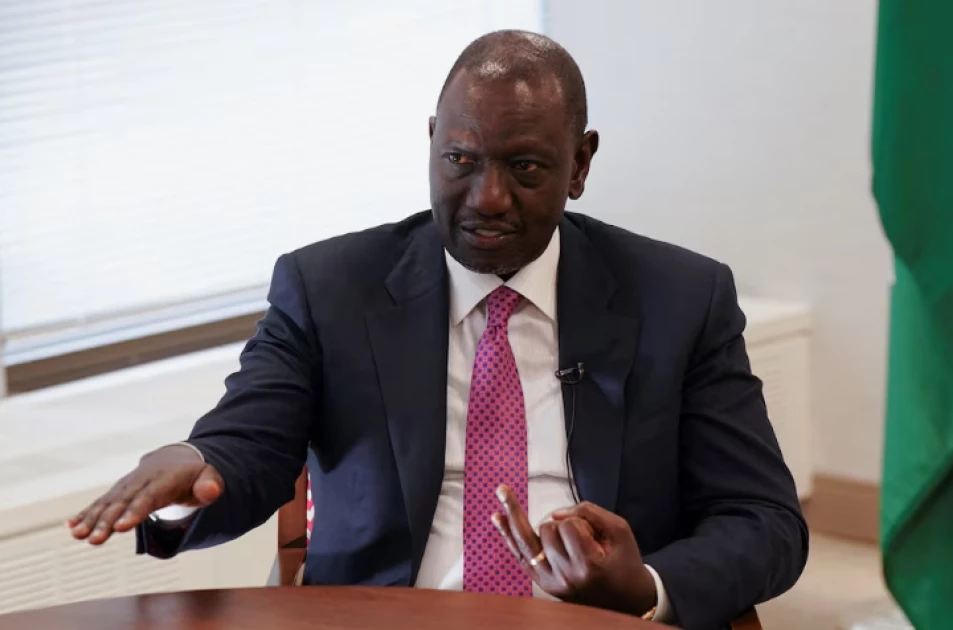
China already allows duty-free access for Kenya’s farm exports, Mr. Ruto noted, though he acknowledged the trade deficit with Beijing remains wide. With the U.S., he said, the balance is “fairly even” but in need of fine-tuning.
Beyond trade, Mr. Ruto has used his trip to New York to press Washington and its allies on security issues. He said Kenya, the U.S., Qatar and regional blocs in Africa are preparing talks on the crisis in eastern Congo, where a U.S.-brokered peace accord between Rwanda and Congo has failed to halt fighting.
In Haiti, where Kenya is leading an international mission to tackle armed gangs, Mr. Ruto warned that the deployment was faltering. “We need more numbers,” he said. “We need more logistics, we need more equipment, and we need more financial support to be able to carry this through.”
Armed groups now control much of Port-au-Prince. The violence has displaced more than a million people and pushed parts of the country to the brink of famine, according to United Nations agencies.
For Mr. Ruto, the stakes are high. Kenya’s trade with the U.S. supports hundreds of thousands of jobs in the apparel sector alone. At the same time, Nairobi is seeking to position itself as a stable partner for Washington in a region often marked by political unrest.
Whether Congress will grant the five-year extension he seeks remains uncertain. For now, Mr. Ruto is betting that a mix of diplomacy and persistence will keep Kenyan goods flowing into American stores.
About the Author