
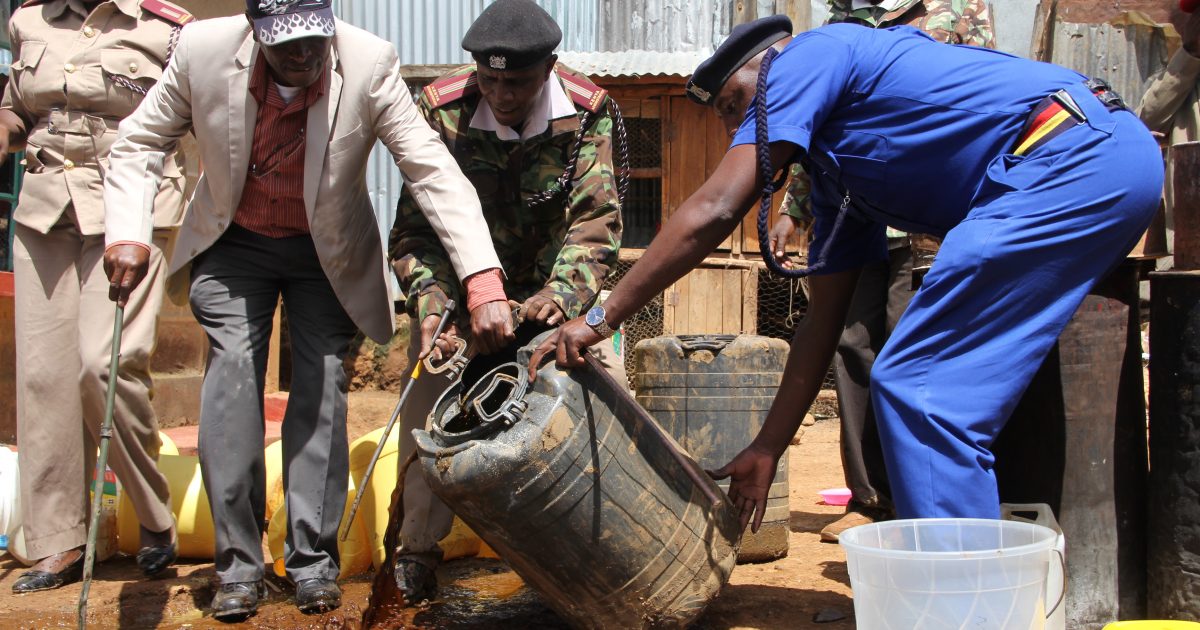
Kisumu has emerged as one of the country’s leading hotspots for illicit alcohol consumption, Interior Cabinet Secretary Kipchumba Murkomen said on Thursday, warning that the trade poses a growing threat to public health and economic progress.
Speaking at a public security forum in the lakeside city, Mr Murkomen revealed that Kisumu ranks third nationwide for illegal alcohol use and fifth for marijuana consumption per capita. He described the findings as “deeply concerning,” given the city’s role as a major economic hub for fishing, sugar, and rice.
“To unlock Kisumu’s full potential, we must confront the hard truths,” he told the gathering. “Illicit alcohol, drug abuse, and organised gangs are choking progress. Our response must be decisive and comprehensive.”
The announcement comes as the government escalates a nationwide crackdown on illegal brews. Authorities blame the trade for fuelling crime, draining productivity, and putting thousands of lives at risk. In recent years, dozens of deaths linked to toxic home-brewed alcohol have made headlines, prompting calls for stronger regulation.
Mr Murkomen warned that security officers found colluding with cartels would face the law. “Any officer who is found to be abetting this crime will be dealt with in accordance with the law,” he said.
The government’s new plan combines law enforcement with social measures. A multi-agency team has been tasked with seizing assets and freezing accounts of suspected gang leaders. At the same time, boda boda operators will be required to join cooperatives and operate within set hours and routes, a move aimed at curbing their involvement in criminal activities.
Along Lake Victoria, border patrols are to be expanded. The Coast Guard will receive additional support to tackle smuggling and unregulated fishing, while a joint framework with Uganda is being developed to protect fishermen from harassment and curb the flow of contraband goods.
Beyond enforcement, the Interior Ministry is focusing on cultural and social drivers of insecurity. Mr Murkomen highlighted high rates of gender-based violence in Kisumu and linked harmful practices, such as “disco matanga” and wife inheritance, to increased substance abuse and unrest.
Community participation is also central to the strategy. Students, boda boda riders, and beach management units are being drawn into local security committees to ensure that residents take part in shaping solutions.
For Kisumu, the numbers underline a wider national struggle. The city’s ranking has renewed debate over how Kenya can tackle drug abuse and illegal brews without stifling livelihoods in a region that has long balanced economic promise with persistent challenges.
About the Author