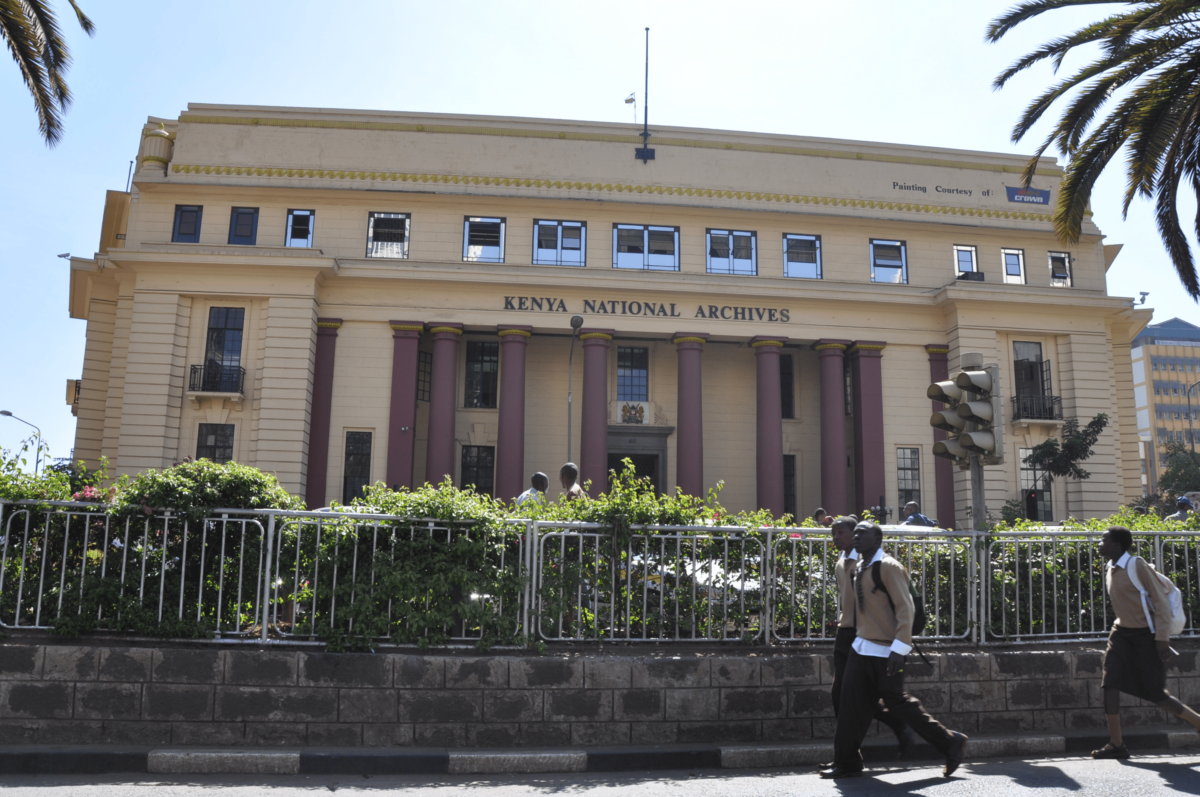
The Kenyan government has announced plans to relocate the National Archives from the heart of Nairobi’s central business district to a safer, quieter setting. Officials say the move is meant to protect the country’s historical records and create a calmer environment for researchers.
The decision follows concerns about the vulnerability of the building, which stands at the busy junction of Moi Avenue and Tom Mboya Street. During recent protests, some demonstrators allegedly attempted to set parts of the archives on fire, raising alarms about the safety of its priceless collections.
“We would like to see how we can safeguard our assets in this building and take it to an environment where researchers can produce content and be comfortable,” said Principal Secretary for Gender and Culture, Ummi Bashir, during a press briefing.
The National Archives, established in 1965, occupies a former bank built in 1930. Inside are more than 40,000 photographs, parliamentary papers, books, and artifacts that document Kenya’s past. It also houses the Murumbi Gallery, a collection of sculptures, bead work, textiles and photography. Recently, the United Kingdom returned over 300,000 digitized colonial-era records, further enriching the institution’s holdings.
While the government has not yet confirmed a relocation site or timeline, officials insist the goal is to safeguard the archives and improve access. Researchers have long argued that the CBD location is noisy and congested.
The building not only serves as a heritage building but as a landmark and meeting point for many Kenyans. The plan reflects a broader effort by the government to protect national heritage from both physical threats and the pressures of urban life.
About the Author