WASHINGTON — President Donald Trump said he has ordered two nuclear submarines to be moved into position following remarks by former Russian President Dmitry Medvedev that he called “provocative” and “dangerous.” President Trump made the announcement Friday through a post on Truth Social. Trump said the move was intended as a precaution after Russia former president Medvedev warned of nuclear retaliation if the United States continued to pressure Russia over the war in Ukraine.
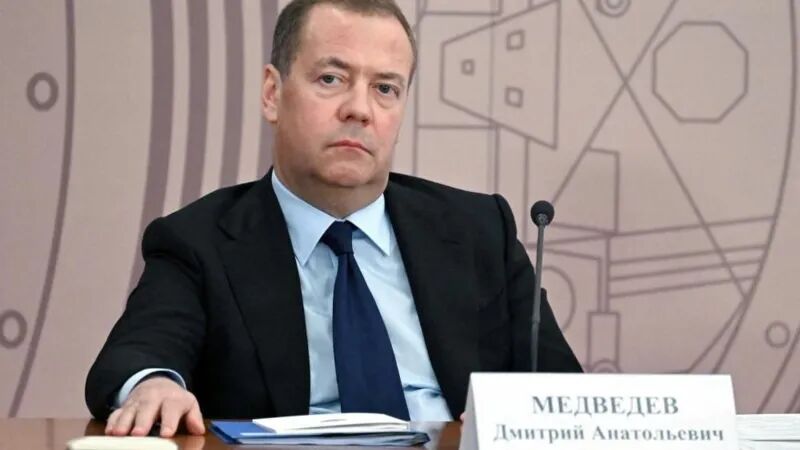
“Based on the highly provocative statements of the former president of Russia, Dmitry Medvedev… I have ordered two nuclear submarines to be positioned in the appropriate regions,” President Trump wrote. “Words are very important and can often lead to unintended consequences.”
President Trump did not identify the submarines or their location, in line with standard military secrecy. Trump also did not specify whether the vessels were nuclear-powered or nuclear-armed.
Former Russia president Medvedev serving as deputy chairman of Russia’s Security Council, responded this week to Trump’s recent ultimatum to Moscow. The US president had given Russian leader Vladimir Putin a deadline to agree to a ceasefire in Ukraine by August 8 or face tougher sanctions.
In response, Medvedev posted a warning on Telegram, alluding to “Dead Hand,” the Cold War-era Soviet automatic nuclear retaliation system. The post was widely viewed as a thinly veiled nuclear threat.
President Trump later told reporters that Medvedev’s words crossed a line. “A threat was made, and we didn’t think it was appropriate,” Trump said. “I have to be very careful. We’re going to protect our people.”
The Kremlin has not issued a formal response. However, Moscow’s stock market dropped sharply after Trump’s statement. Russian state media downplayed the announcement, with commentators calling it “bluster.”
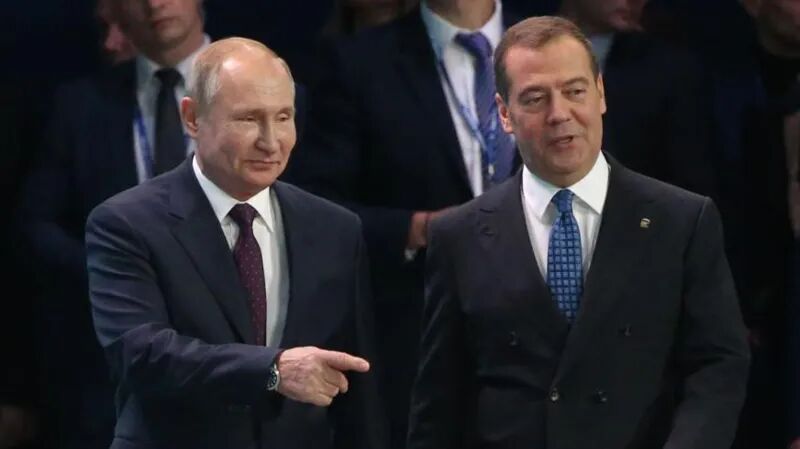
This is not the first time Trump has responded publicly to Medvedev’s remarks. Earlier in the week, Trump dismissed him as “the failed former president of Russia who thinks he’s still in power.” Trump also warned Medvedev to “watch his words” and accused him of “entering very dangerous territory.”
The clash follows weeks of rising rhetoric between the two. Trump previously warned President Putin that failure to end the war would trigger severe tariffs on Russian oil and other exports. Trump first issued a 50-day deadline in July, then shortened it to “10 or 12 days,” and most recently, to August 8.
In response, Medvedev called Trump’s threats “theatrical” and accused him of turning diplomacy into a game of ultimatums. “Each new ultimatum is a threat and a step towards war,” he wrote earlier this week on X.
President Trump’s move has raised questions about whether the submarine deployment is part of a broader strategy or a personal reaction to an online exchange.
Speaking to Newsmax after the announcement, Trump said, “Medvedev said some things that are very bad, talking about nuclear. When you mention the word nuclear, my eyes light up. I say we better be careful it’s the ultimate threat.”
Analysts have noted that Medvedev has made similar threats in the past without prompting a direct response from Washington. Since Russia’s invasion of Ukraine in 2022,Medvedev has become known for inflammatory posts targeting the West.
But this time, Trump’s reaction has placed the threat in sharper focus.
As of Saturday morning, there had been no public confirmation from the Pentagon about submarine movements. There were also no signs of Russian submarine deployments near the United States.
Both nations maintain large fleets of nuclear submarines, which serve as a key part of their strategic deterrence.
In 2017, Trump claimed to have sent two nuclear submarines toward the Korean Peninsula amid rising tensions with North Korea. Trump later held diplomatic talks with North Korean leader Kim Jong Un.
Whether this latest move signals a similar approach to Moscow remains unclear.
For now, the deployment appears to be a symbolic show of strength one that underscores the volatile mix of personal politics and nuclear policy in the digital age.
About the Author