STUTTGART — Three people died and 41 others were injured after a passenger train derailed Sunday evening in southwest Germany when an overflowing sewage shaft triggered a landslide along the tracks, according to police reports in Ulm. The train was traveling between Sigmaringen and Ulm when it crashed near the town of Riedlingen, about 120 kilometers south of Stuttgart. The derailment occurred at 6:10 p.m. local time after days of intense rainfall in the region caused the sewage system to flood and weaken a slope near the railway line.
Police confirmed that the deceased include the train driver, another railway employee, and a passenger. Forty-one individuals sustained injuries, several of them serious. About 100 people were on board at the time.
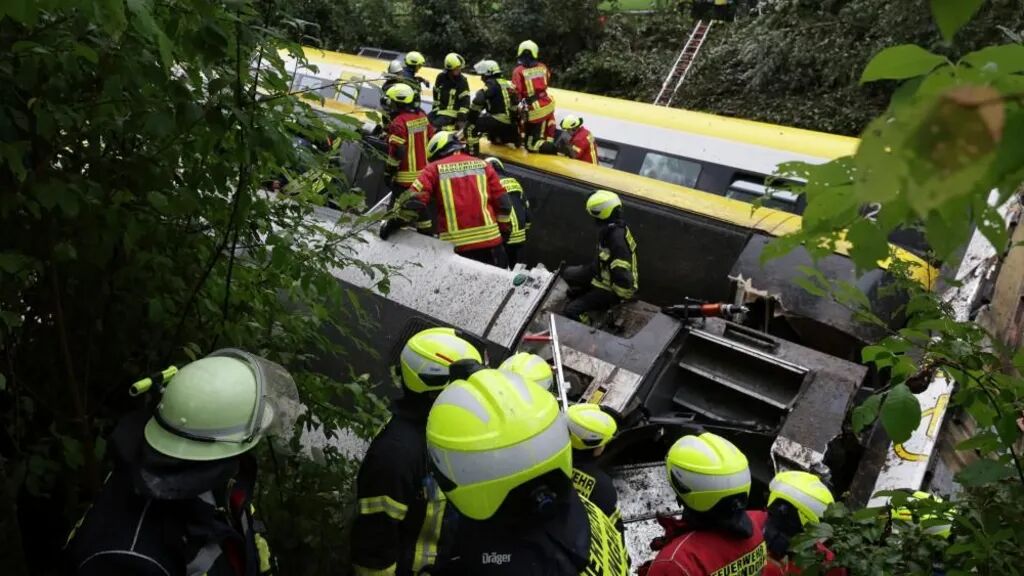
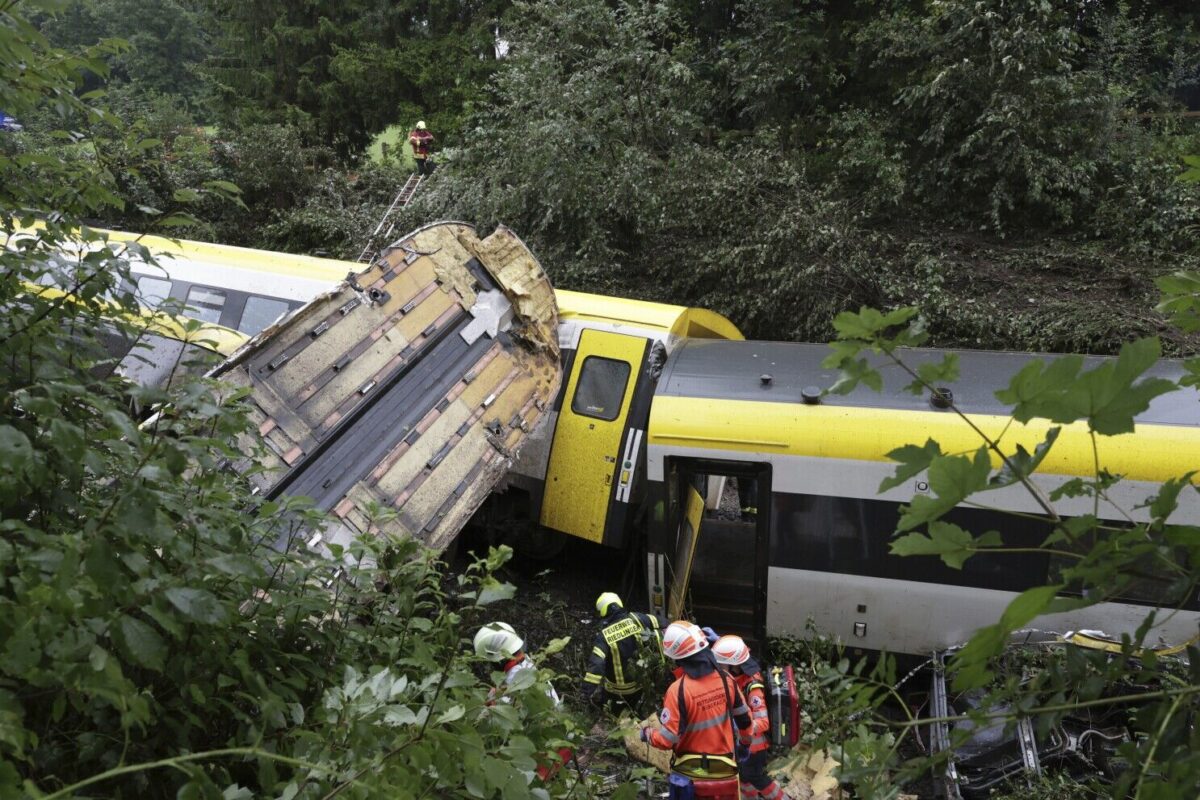
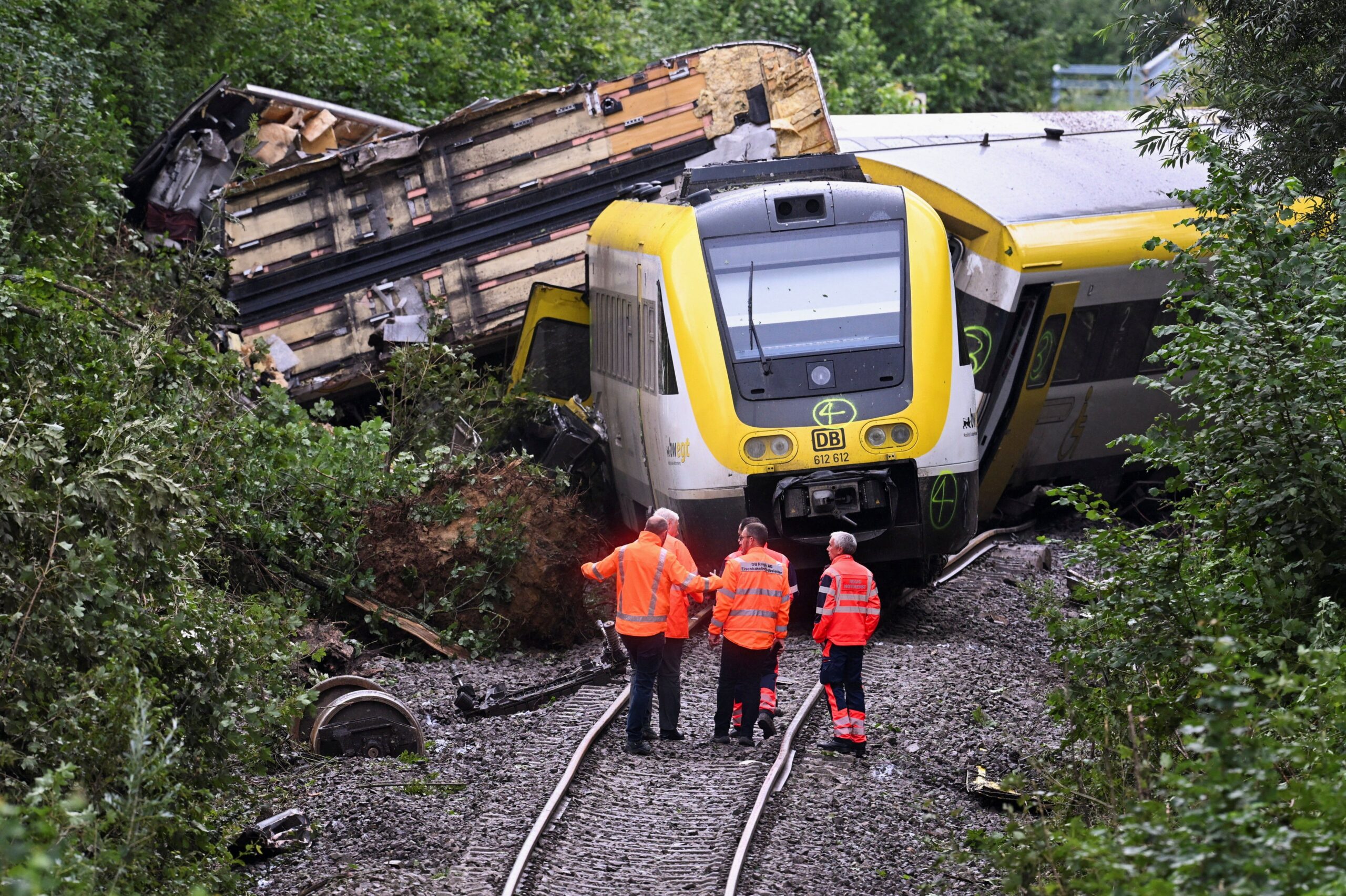
The impact of the derailment overturned at least two carriages, which came to rest in a forested area beside the track. Images from the scene showed emergency workers surrounding the wreckage, with some carriages lying on their sides. Fallen trees and muddy debris scattered the area.
In a statement, Ulm police said, “The slope next to the tracks became unstable after a sewage overflow led to a landslide, which in turn caused the train to derail.”
Authorities have closed the area to all rail traffic as investigators continue examining the cause. Clean-up operations are expected to begin Monday. Deutsche Bahn, the train operator, expressed condolences to the families of the victims, stating, “Our thoughts and sympathies are with the victims and everyone who now has to process this experience.”
Chancellor Friedrich Merz reacted to the tragedy Sunday evening. “I mourn the victims of the train accident and extend my deepest sympathy to their families,” Chancellor Friedrich Merz wrote on X, formerly Twitter. He added that he was in close contact with the country’s interior and transport ministers to ensure that emergency teams receive full support.
The train was operating on a 90-kilometer route connecting the towns of Sigmaringen and Ulm, popular for commuters and regional travelers. The crash site lies in a remote area, which complicated early rescue efforts. Emergency responders from nearby districts were dispatched within minutes.
This is the deadliest rail accident in Germany since 2022, when a train derailed near Garmisch-Partenkirchen, killing five people. Sunday’s derailment once again raised concerns about infrastructure resilience in the face of extreme weather.
Germany has experienced heavier-than-normal rainfall this summer. Meteorologists reported that the region around Baden-Württemberg received more than double its average July rainfall in the past ten days.
Officials said the tracks in the affected area will remain shut until further notice. The federal transport ministry has not yet released a statement on whether inspections will be expanded to other vulnerable segments of the national rail network.
About the Author