Thai military officials said the confrontation began early Thursday when Cambodian forces allegedly deployed surveillance drones near Thai troop positions. Gunfire followed, quickly escalating into a broader exchange of fire, with Thailand accusing Cambodia of launching rockets and prompting Thai airstrikes on Cambodian military sites.
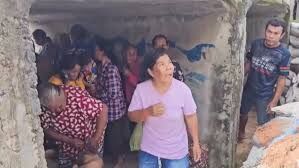

The Thai government confirmed that 11 civilians and one soldier were killed in the provinces of Surin, Ubon Ratchathani, and Srisaket. Among the dead were an 8-year-old child and a 15-year-old teenager. Cambodia has not released an official casualty count.
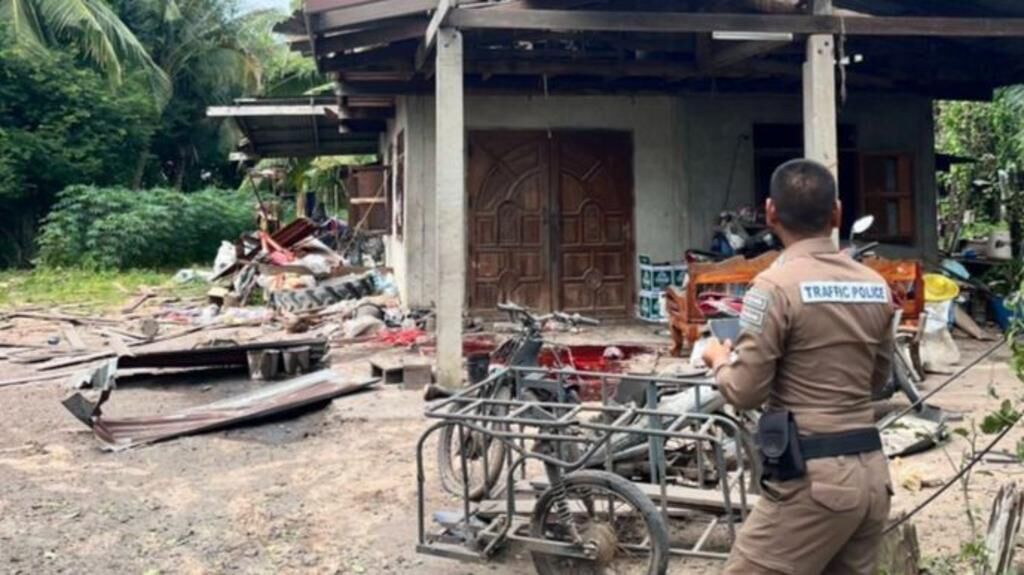
“This is really serious. We’re in the middle of evacuating,” said Sutian Phiwchan, a resident of Ban Dan district near the border, speaking to the press as evacuations began. Thailand has moved 40,000 people from high-risk areas. Both nations have advised civilians to vacate border zones.
The Cambodian government responded by accusing Thailand of “excessive force” and announced a downgrade in diplomatic ties. Thailand closed all border crossings with Cambodia following the incident.
The conflict traces back over a century, rooted in a border demarcation set during the French colonial occupation of Cambodia. A focal point of the dispute is an 11th-century Khmer-Hindu temple near the boundary.
Hostilities reignited in 2008 when Cambodia attempted to register the temple as a UNESCO World Heritage Site, sparking protests and sporadic clashes. The latest escalation follows the death of a Cambodian soldier during a May skirmish, which strained relations further.
Cambodia claims Thursday’s violence began when Thai soldiers breached a mutual agreement and advanced toward the sacred temple. Thailand denies this version, asserting that the confrontation was triggered by Cambodian drone activity.
Over the past two months, both countries have stepped up their troop presence in the border region and imposed trade restrictions. Cambodia halted imports of Thai produce, electricity, and internet services. Thai authorities also imposed limitations on cross-border movement.
Thailand’s acting Prime Minister Phumtham Wechayachai described the conflict as “delicate” and urged a resolution in accordance with international law. Cambodian Prime Minister Hun Manet echoed the desire for peace but warned, “We have no choice but to respond with armed force against armed aggression.”
While both sides have signaled a preference for de-escalation, the political backdrop complicates efforts to ease tensions. Hun Manet, who took over from his father Hun Sen, is still consolidating authority. Observers say Hun Sen’s ongoing influence may be fueling nationalist rhetoric to reinforce his legacy.
In Thailand, the current coalition government, backed by former leader Thaksin Shinawatra, is dealing with internal instability. A recent rift emerged after a leaked conversation between Thaksin and Hun Sen led to Thaksin’s daughter, Paetongtarn Shinawatra, being suspended from her role as prime minister.
Despite the sharp uptick in violence, experts say the conflict is unlikely to spiral into full-scale war. But without decisive leadership on either side, the potential for continued skirmishes remains high.
Both nations have called on international observers to monitor the situation, but no mediating parties have been formally engaged.
About the Author