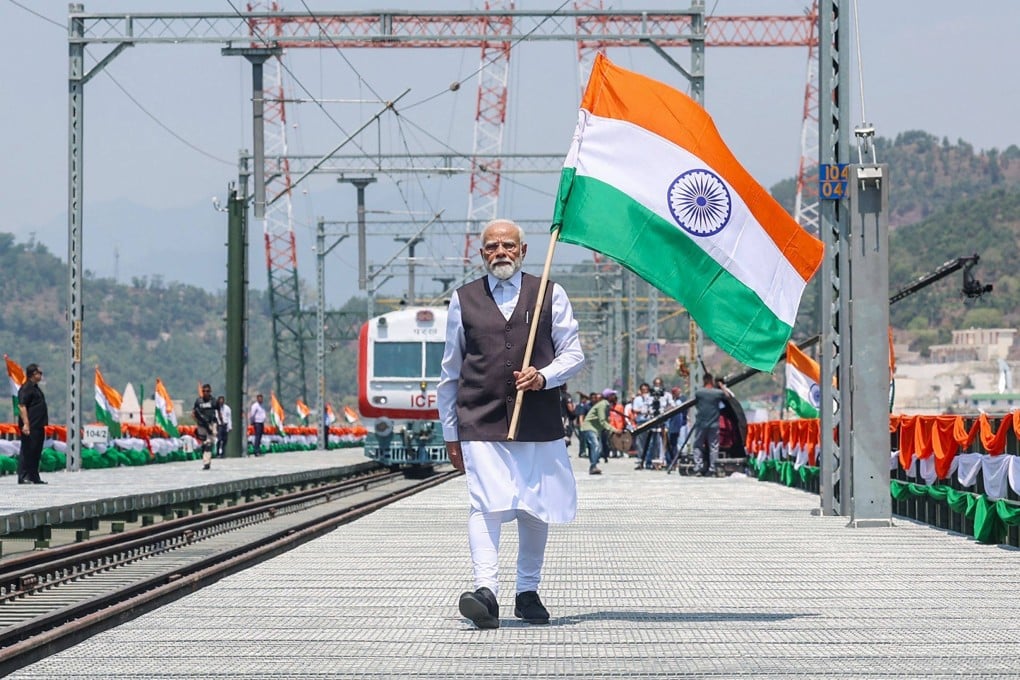
REASI, India — In a bold statement of engineering ambition and national integration, Indian Prime Minister Narendra Modi on Friday inaugurated two record-breaking railway bridges in Jammu and Kashmir projects aimed at stitching the Himalayan region more tightly into India’s vast railway network.
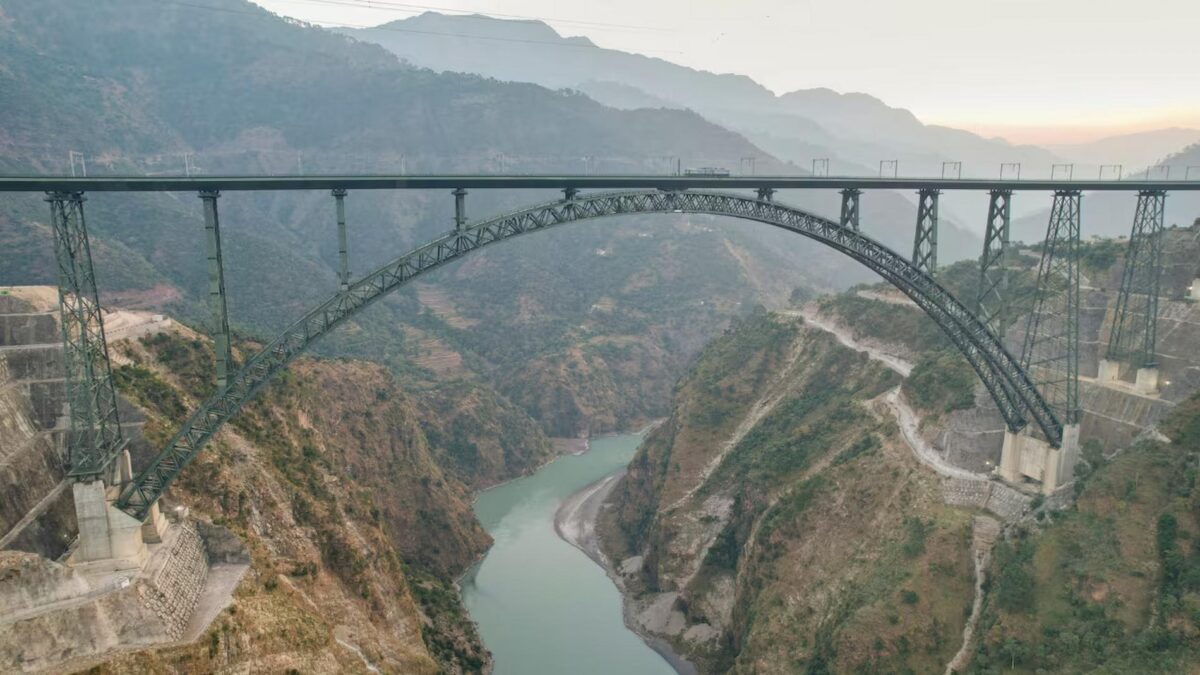
Under clear skies in the mountainous Reasi district, Mr Modi walked across the newly completed Chenab Bridge, the highest railway arch bridge in the world, towering 359 metres above the riverbed. “This is not just a bridge,” he said, “it’s a symbol of India’s resolve, of engineering skill, and of our commitment to inclusive development.”
Standing alongside senior officials, including Railways Minister Ashwini Vaishnaw and Jammu and Kashmir Lieutenant Governor Manoj Sinha, Mr Modi waved the national flag from the deck of the bridge in a show of national pride.
The Chenab Bridge, part of the long-delayed Udhampur-Srinagar-Baramulla Railway Link (USBRL) project, has been under construction for nearly two decades. The 272-kilometre line, built at a cost of ₹43,780 crore (roughly $5.25 billion), is designed to connect Kashmir with the rest of India by rail for the first time.
Alongside it, Mr Modi also opened the Anji Khad Bridge, India’s first cable-stayed railway bridge, another feat of high-altitude engineering. The two bridges are part of a broader push to improve mobility, boost tourism, and open up economic opportunities in a region long shaped by conflict and isolation.
The Prime Minister met workers and engineers at the site, praising their perseverance in one of India’s most difficult construction zones. The USBRL had to contend with tough terrain, seismic challenges, and extreme weather. More than 36 tunnels and nearly 950 bridges were constructed to navigate the Himalayas.
“The entire country is proud of what has been achieved here,” Mr Modi told the gathered crowd. “This bridge will not just carry trains; it will carry dreams, hopes, and the promise of prosperity.”
In a move aimed at expanding public access, the Prime Minister also flagged off two new Vande Bharat Express trains modern semi-high-speed trains—between Shri Mata Vaishno Devi Katra and Srinagar. The service is expected to shorten travel time and make the pilgrimage route to Vaishno Devi more accessible.
While supporters see the railway line as a lifeline for Jammu and Kashmir, critics have raised questions about the government’s broader approach to the region, particularly following the revocation of its special constitutional status in 2019. But even many sceptics agree that improved infrastructure is a necessary step toward economic normalcy.
Experts say the Chenab and Anji bridges could also help integrate Kashmir more fully into national markets by easing the movement of goods and reducing the region’s dependence on roadways that are frequently cut off during winter.
“This is about more than just trains,” said a senior railway official on site. “This is about giving people access to education, to work, to opportunities.”
For the villagers watching the ceremony from the hills above, it was a day marked by cautious hope. “We’ve waited so long for this connection,” said Rafiq Ahmad, a farmer from a nearby village. “Maybe now things will begin to change.”
The full USBRL line is expected to be operational within the next few months. For now, officials hope the two bridges standing tall in the Himalayas will serve as lasting monuments to the ambitions of a rising India.
About the Author