

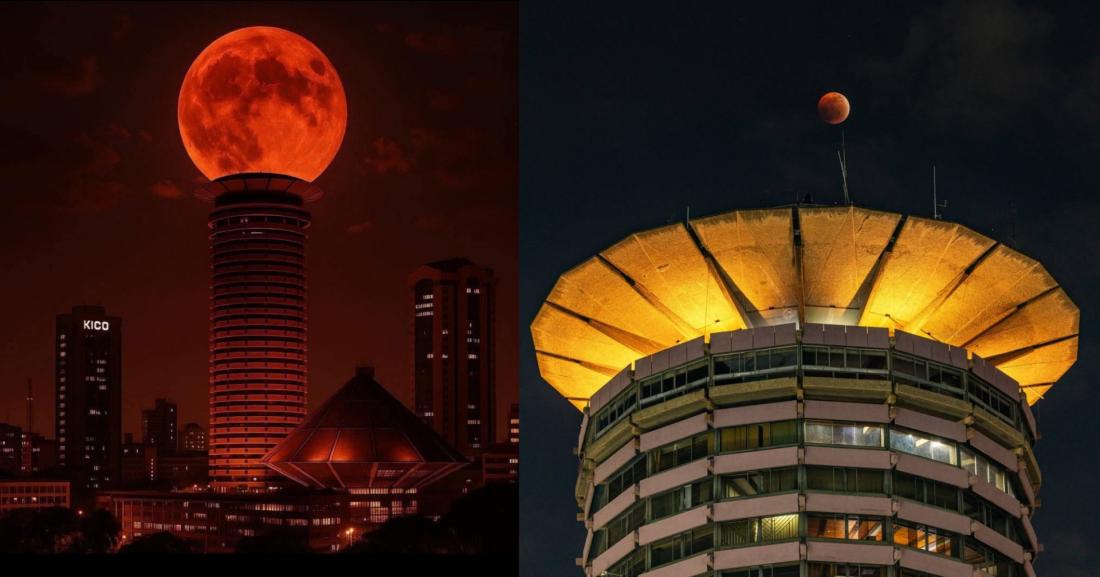
Skywatchers around the world are preparing for a dramatic celestial display on March 3, headlined by a total lunar eclipse, commonly known as a “blood moon.”
However, observers in Kenya will unfortunately miss the total lunar eclipse due to its timing and geographic visibility.
What Happens During a Blood Moon?
A total lunar eclipse occurs only during a full moon, when the Sun, Earth, and Moon align perfectly. In this alignment, Earth passes directly between the Sun and the Moon, casting its shadow on the lunar surface.
There are two main types of lunar eclipses: partial and total.
During a partial lunar eclipse, only part of the Moon enters Earth’s darkest shadow, known as the umbra. But during a total lunar eclipse, the Moon moves completely into the umbra, becoming fully covered by Earth’s shadow.
Instead of disappearing into darkness, the Moon turns a striking reddish-orange color. This phenomenon is what gives rise to the term “blood moon.”
The red glow occurs because Earth’s atmosphere scatters shorter wavelengths of light, such as blue, while allowing longer red and orange wavelengths to pass through.
This filtered sunlight bends around Earth and illuminates the Moon, creating the dramatic crimson hue visible from Earth.
Why Kenya Will Miss the March 3 Blood Moon
According to NASA, the March 3 total lunar eclipse will be visible in eastern Asia and Australia during the evening hours. It will also be seen across the Pacific at night and in most of North and Central America, as well as western South America, during the early morning hours.
Due to the positioning of Earth’s shadow and the timing of the eclipse, the event will not be visible from Kenya or most parts of East Africa. By the time the eclipse reaches totality, the Moon will be below the horizon in the region.
Venus and Saturn Conjunction on March 8
While Kenya will miss the blood moon, skywatchers can look forward to another celestial highlight on March 8. On this date, Venus and Saturn will appear very close together in the sky in what astronomers call a conjunction.
A conjunction happens when two celestial bodies appear near each other from Earth’s perspective. Although they may look close, the planets remain millions of kilometres apart in space. This pairing will be visible shortly after sunset, offering a bright and beautiful display for those with clear skies.
Although Kenya will miss the total lunar eclipse, March still promises captivating astronomical moments. From planetary alignments to seasonal shifts, the sky continues to offer reminders of the intricate dance between Earth and its cosmic neighbors.
For those eager to witness a blood moon, the next total lunar eclipse visible in East Africa will be an event to watch for in upcoming astronomical calendars.
About the Author