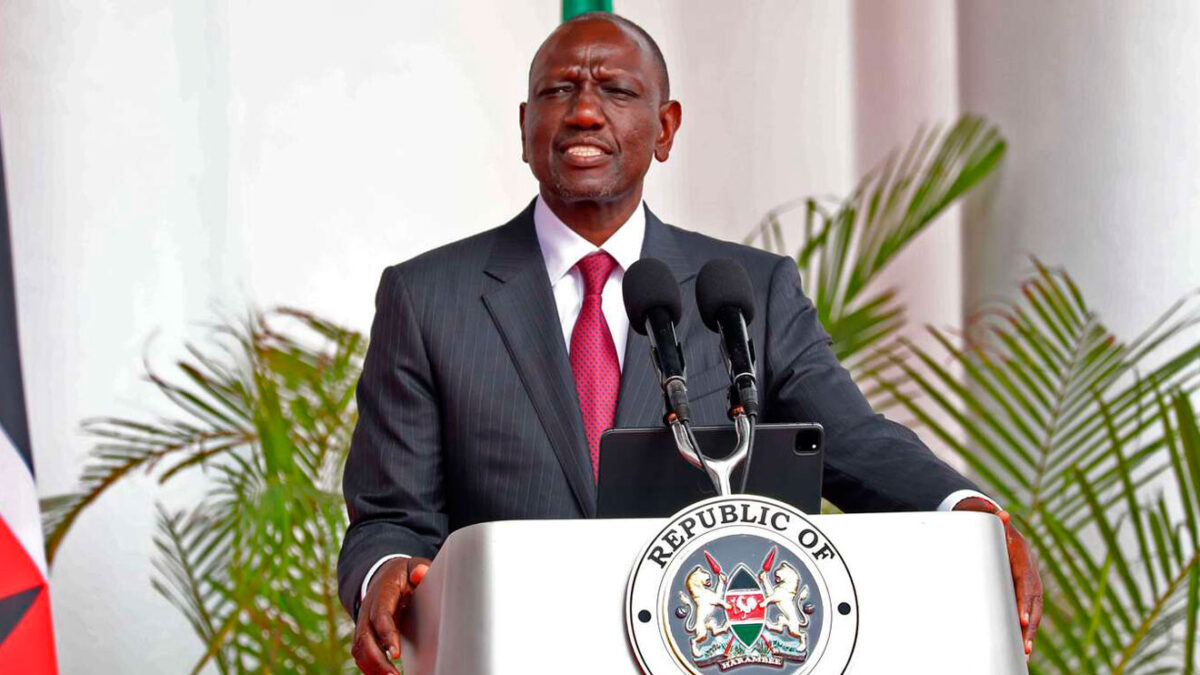
President William Ruto has pledged far-reaching legal, digital and enforcement reforms to curb rising road fatalities, warning that Kenya “cannot and will not accept” the continued loss of lives on its highways.
Speaking at State House, Nairobi, during the presentation of a report by the National Council on the Administration of Justice (NCAJ), Ruto described road safety as a grave national concern, citing data showing that more than 5,000 people died in traffic accidents last year.
According to the report, 5,009 fatalities were recorded in 2025 — an increase of 261 compared to 2024. Road crashes now cost the economy an estimated 5% of gross domestic product, equivalent to about KSh450 billion annually.
The festive season alone accounted for 415 deaths, representing a 23% rise from the previous year.
Ruto, however, pointed to measurable gains from a pilot inter-agency traffic justice model implemented during the 2025/2026 festive season. The initiative brought together enforcement, prosecution and adjudication under a coordinated framework. It involved the deployment of 36 prosecutors, 40 officers from the Ethics and Anti-Corruption Commission, and 121 officers from the National Transport and Safety Authority.
Fatalities involving Public Service Vehicles (PSVs) declined by 10% during the pilot period, a development the president said demonstrated that coordinated enforcement can deliver results.
Despite this progress, the report flagged emerging risks. Accidents involving private vehicles have increased relative to PSVs, while night-time crashes involving long-distance trucks are on the rise. Motorcycle-related incidents continue to pose a persistent threat.
The findings identified systemic weaknesses within the justice chain, including weak enforcement, inadequate highway patrols, bribery across the enforcement process, lenient penalties, poor inter-agency coordination and gaps in post-crash response. Operational challenges were also noted: virtual courts achieved only a 25% success rate due to connectivity and power constraints, while budget limitations hampered the rollout of mobile courts.
Investigative and prosecutorial delays, weak evidence management systems, inconsistent fines, absence of traffic-specific sentencing guidelines and poor enforcement of court attendance notices were also cited as contributing factors.
Beyond the justice sector, the report highlighted reckless driving, speeding, drunk driving, poor driver training, unlicensed motorcycle operations, unroadworthy vehicles, counterfeit spare parts, unsafe road design and the vulnerability of pedestrians as major contributors to fatalities. Economic pressure on PSV operators was also linked to risky behaviour.
In response, the report recommends amendments to the Traffic Act, including the introduction of instant fines and a demerit points system for driving licences. It proposes standardised driver training and licensing, and fast-tracking of pending legislation to strengthen the NCAJ framework.
On digital reform, the recommendations include creating an integrated e-transport and traffic case management system linking all relevant agencies, expanding automated ticketing, deploying CCTV and speed cameras, and establishing secure digital evidence systems.
Integrity measures form a central pillar of the proposed reforms. These include body-worn cameras for traffic officers, strengthened vetting and anti-bribery mechanisms, and improved working conditions for enforcement personnel.
Infrastructure interventions were also outlined, including accelerated identification and correction of accident blackspots along major corridors such as the Northern Corridor and the Mombasa–Nairobi Highway. The report calls for safety-by-design standards in new road projects and expanded pedestrian infrastructure.
Additional recommendations include mandatory vehicle and motorcycle inspections, the introduction of digital fatigue monitoring systems for long-distance drivers, defensive driving certification for PSV operators, formalisation of boda boda operations through SACCO structures, and the establishment of additional trauma centres and ambulance response points to strengthen the “Golden Hour” emergency response framework.
Ruto emphasised that road safety reform must shift from pilot phase to full national implementation, backed by sustained political leadership and dedicated financing, including operationalisation of the National Road Safety Fund.
“As a country, we have made an important step,” the president said. “But rising fatalities, systemic corruption risks and infrastructure gaps make it clear that reform must now move to full national transformation.”
The government, he added, is committed to implementing the report’s recommendations without delay.
About the Author