Iran’s clerical establishment remains formally intact following the killing of Ali Khamenei, but the coming days will test whether the Islamic Republic can preserve cohesion after the most consequential rupture in its political and religious leadership in decades.
Khamenei’s death, confirmed by Iranian state media on 28 February, followed coordinated US–Israeli strikes on senior leadership targets. Washington and Tel Aviv announced the operations under separate names — “Epic Fury” in the United States and “Rising Lion” in Israel — describing them as efforts to cripple Iran’s command structure. Multiple explosions were reported in Tehran and other major cities. Satellite imagery indicated that Khamenei’s main compound was destroyed.
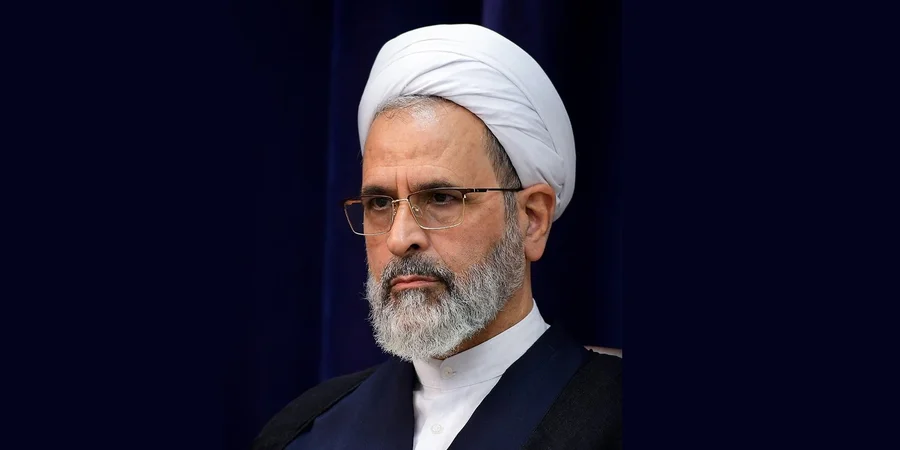
Iran’s state news agency ISNA reported on 1 March that senior cleric Alireza Arafi would serve as acting supreme leader during the transition. Arafi has been appointed to a temporary leadership council tasked with carrying out the constitutional duties of the office until a successor is formally chosen.
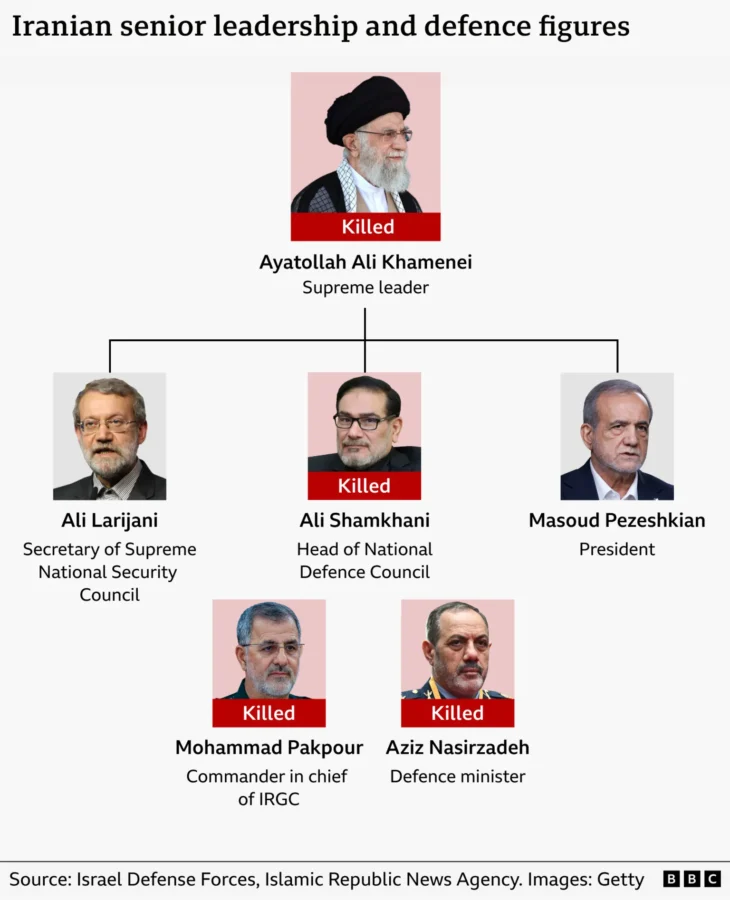
Separately, the Tasnim news agency reported that executive authority during the interim period would rest with President Masoud Pezeshkian, Judiciary Chief Gholam Hossein Mohseni-Ejei, and a representative of the Guardian Council. The arrangement appears designed to project continuity and prevent the perception of a power vacuum at the apex of the system.
The strikes also killed several senior figures. Iranian state media confirmed the deaths of Mohammad Pakpour, commander of the Islamic Revolutionary Guard Corps, and Ali Shamkhani, the supreme leader’s chief security adviser. Other military and nuclear-linked facilities were reportedly targeted.
Public reaction has been mixed. While authorities moved swiftly to assert control, videos circulated showing limited celebrations in parts of Tehran and other urban centres, echoed by segments of the Iranian diaspora. For some Iranians, the elimination of the supreme leader represented a historic break that years of protest movements had not achieved.
US President Donald Trump urged Iranians to “take over your government,” while Israeli Prime Minister Benjamin Netanyahu argued that regime change was attainable. The military phase of the campaign appeared tightly coordinated; the political consequences remain uncertain.
Under Iran’s constitution, the authority to appoint a new supreme leader lies with the Assembly of Experts, an 88-member clerical body elected for eight-year terms. In practice, the process is heavily structured. All candidates for the Assembly are vetted by the Guardian Council, six of whose 12 members are appointed directly by the supreme leader, with the remainder nominated by the judiciary and approved by parliament. The judiciary chief is himself appointed by the supreme leader, embedding the office’s influence within the succession framework.
Speculation over potential successors is inevitable, though deliberations occur behind closed doors. A smaller committee within the Assembly is understood to review possible candidates before presenting names to the full body. Voting proceedings are not public.
The precedent of 1989 — when Khamenei himself emerged as supreme leader despite not being widely viewed as the leading candidate — underscores the unpredictability of the process. The current transition could unfold rapidly, potentially within days, but it will reflect a balance of clerical authority, security influence and factional negotiation reshaped by the deaths of several senior commanders.
For now, Iran’s constitutional mechanisms are functioning, and an acting structure is in place. Whether that proves sufficient to stabilise the Islamic Republic, or merely postpones deeper fragmentation, will become clearer as the succession process advances.
About the Author