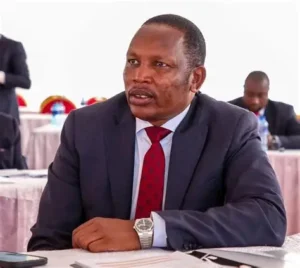
Peter Wanyama speaks quietly but with purpose. His career has largely unfolded away from headlines, in policy rooms, drafting chambers, and legal seminars. Yet now, as he seeks leadership within the Law Society of Kenya (LSK), his work has come into sharper public view.
Mr Wanyama is the managing partner at Manyonge Wanyama Associates and Advocates. His legal career spans legislative drafting, policy advisory, and constitutional governance. It is a path shaped less by courtroom theatrics and more by careful writing, negotiation, and interpretation of law.
Over the years, he has played a role in drafting at least 32 legislative statutes for government ministries and agencies. These laws touch sectors central to Kenya’s economy and governance, from public procurement and agriculture to telecommunications, energy, and financial services. Colleagues describe him as a “technical lawyer”, one whose strength lies in shaping systems rather than arguing individual cases.

His experience coincides with Kenya’s era of constitutional transition. After the promulgation of the 2010 Constitution, counties emerged as new centres of power. With them came legal uncertainty. Mr Wanyama found himself advising county governments and public institutions on legislative development and statutory risk.
Beyond drafting laws, he has spent much of his career teaching others how to understand them. He has facilitated more than 185 seminars on policy development, land law, competition law, and public governance. His work as a trainer has taken him to universities, public agencies, and professional bodies.
He has also worked with international and regional partners, including the State University of New York’s Kenya programme, where he trained parliamentary committees on compliance in procurement law. Legal practitioners say such roles are often overlooked but essential to strengthening public institutions.
Mr Wanyama’s connection with the Law Society of Kenya runs deep. He has served as a resource person in the Society’s continuing professional development programmes, helping younger advocates navigate complex areas of legal practice. The LSK, established in 1949, remains one of Kenya’s most influential professional bodies. It plays a role not only in regulating lawyers but also in defending constitutional order and civil liberties.
His candidacy comes at a moment of heightened scrutiny of Kenya’s legal profession. Lawyers have been central to court battles over elections, constitutional amendments, and government policy. Public trust in institutions, including the judiciary and Parliament, has become a national conversation.
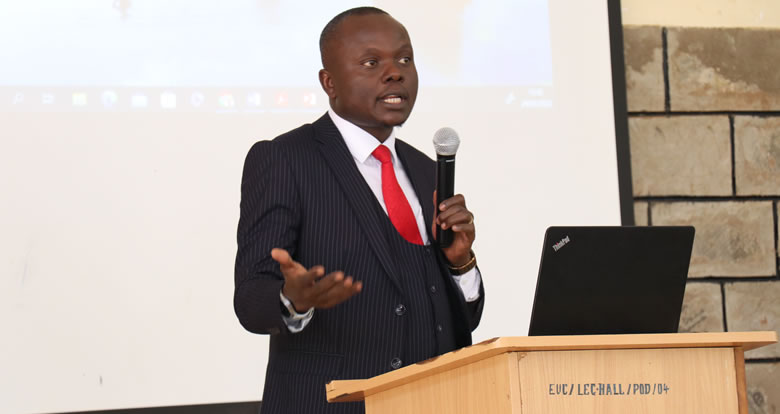
Mr Wanyama says his interest in leadership is rooted in strengthening the profession’s credibility.
Supporters see him as a steady hand. They point to his legislative experience and his work training public officials. Critics, however, note that legislative and advisory roles differ from the advocacy and activism often associated with LSK leadership.
Still, his career reflects Kenya’s evolving legal landscape. From legislative reform to institutional training, he has worked in spaces where law intersects with governance and public policy.
The outcome of the LSK elections will shape how the profession responds to political pressure, constitutional challenges, and public expectation. For Mr Wanyama, the campaign is less about personal ambition than professional continuity.
His work, largely conducted behind desks and in committee rooms, may now shape the direction of Kenya’s legal profession itself.
About the Author