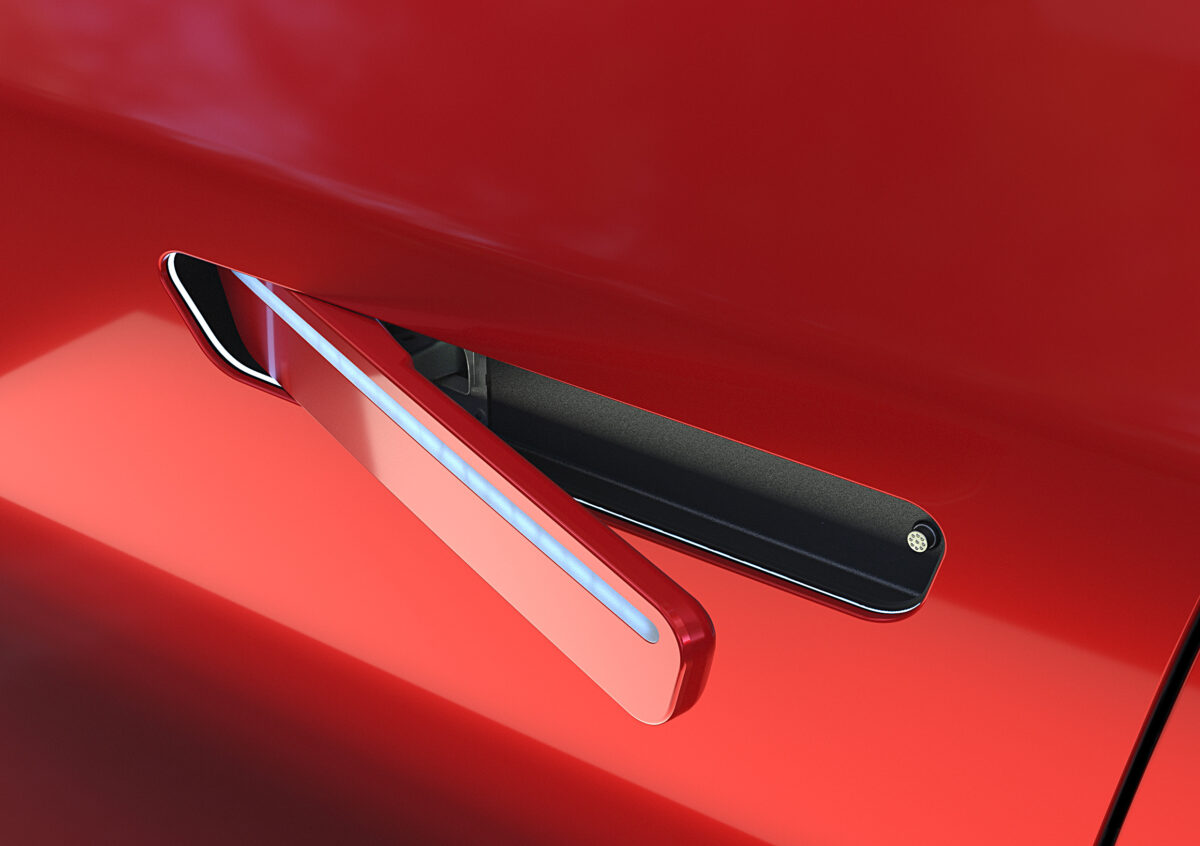
China has become the first country to ban hidden door handles on electric vehicles, a design popularised by Tesla, after safety concerns and fatal accidents raised alarm.
The Ministry of Industry and Information Technology announced that, starting 1st January 2027, all new passenger cars must feature a mechanical door release both inside and outside. State media reported that the rule requires a recessed handle on the exterior of each door and clear signage inside showing how to open it.
The decision follows a spate of incidents, including two deadly crashes involving Xiaomi EVs in China. In both cases, investigators suspect power failures may have prevented the doors from opening.
“Safety is our top priority,” the ministry said in a statement. “Vehicles must allow occupants to exit reliably in all circumstances.”
The new guidelines specify that outside handles, except for the boot, must have a recessed space measuring at least 6cm by 2cm by 2.5cm, while interior instructions must be no smaller than 1cm by 0.7cm. Cars already approved for sale will have two years to update their designs.
Hidden handles, which provide a sleek, flush appearance, have become a hallmark of China’s booming new energy vehicle (NEV) sector, including electric, hybrid, and fuel cell models. According to data cited by China Daily, around 60% of the country’s top 100 selling NEVs currently use the design.
The move could reverberate globally. China is the world’s largest EV market, and its regulatory decisions often influence car design and safety standards internationally. Tesla, whose door handles sparked the trend, is already under scrutiny in the United States and Europe.
In November, the US National Highway Traffic Safety Administration (NHTSA) opened a probe into Tesla’s electric door handles following reports that they stopped working unexpectedly. The agency received nine complaints regarding the 2021 Model Y, including four incidents in which owners had to break windows to escape.
About the Author