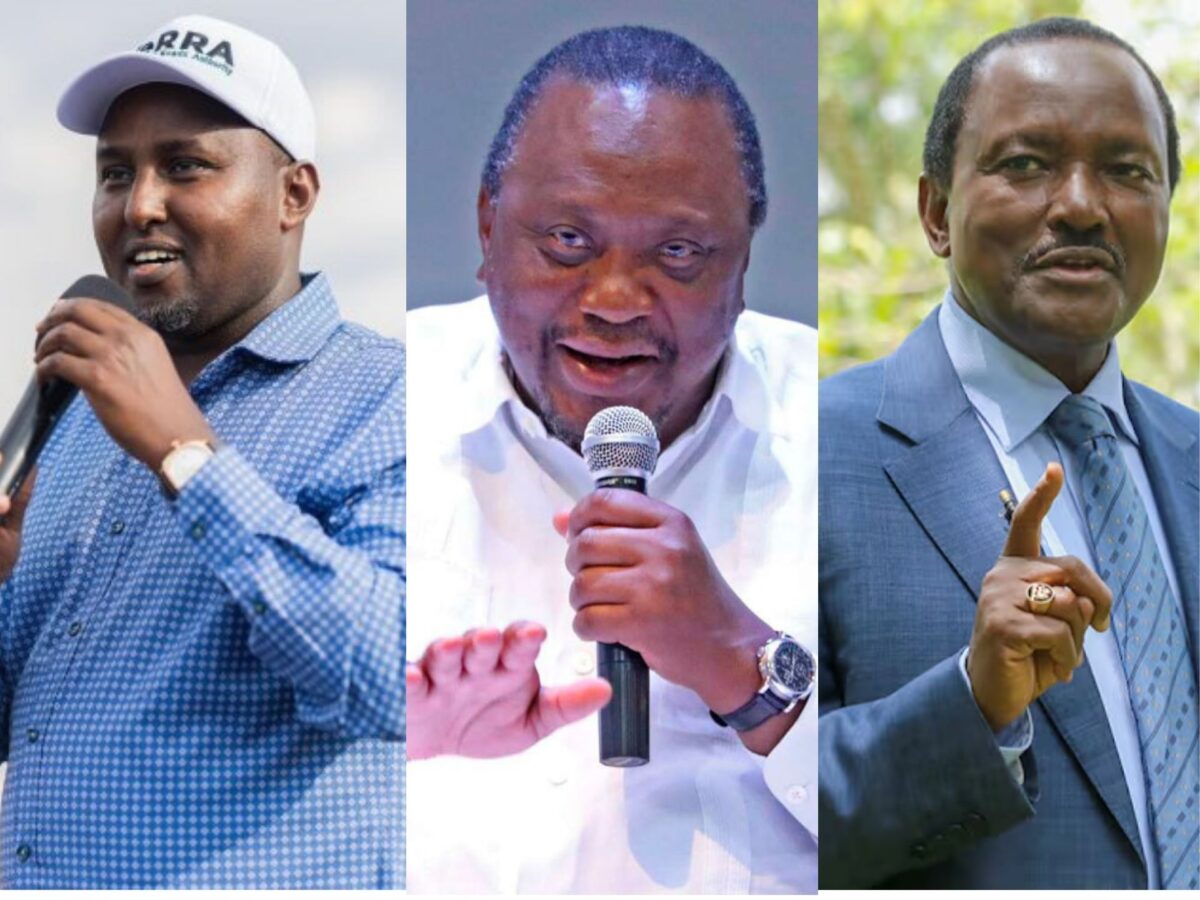
On the surface, the dispute appeared technical: a delayed notice in the Kenya Gazette, an administrative publication that rarely draws public attention. But by the weekend, the controversy surrounding the Azimio La Umoja One Kenya Coalition’s leadership had grown into a defining test of Kenya’s opposition politics, raising questions about internal democracy, executive power and the capacity of rival parties to cohere ahead of the next electoral cycle.
Stephen Kalonzo Musyoka, the veteran opposition figure and leader of the Wiper Democratic Movement, set off the storm with a lengthy public statement accusing State House of interfering with the gazettement of what he described as “legitimate leadership changes” within Azimio. The changes, he said, had already been accepted by the Office of the Registrar of Political Parties (ORPP) and published in local newspapers, with gazettement scheduled for Friday, February 6.
“State House has instructed the Government Printer to block publication of AZIMIO’s legitimate leadership changes in the Kenya Gazette,” Mr. Musyoka wrote. “When State House can arbitrarily stop the publication of legally constituted political party leadership, it’s not just AZIMIO under attack, it’s Kenya’s multiparty democracy itself.”
The statement was both accusatory and expansive, situating a coalition dispute within a broader narrative of democratic erosion. Mr. Musyoka linked the alleged interference to commitments made during the National Dialogue Committee (NADCO) talks, which he co-chaired, particularly an agenda item he described as “fidelity to the law on multiparty democracy.”
“I participated in those talks in good faith,” he wrote. “Yet here we are, watching the same administration undermine the very principles we agreed upon.”
The response was immediate, fierce and deeply revealing of the fractures inside Azimio, the coalition that lost the 2022 election to President William Ruto and has since struggled to define its identity and leadership after Raila Odinga’s exit from active opposition politics.
Junet Mohamed, a senior Orange Democratic Movement (ODM) leader and Azimio’s secretary general, rejected Mr. Musyoka’s claims and framed the dispute not as state interference but as internal non-compliance. “Hon Kalonzo, as senior counsel I am sure you know that Azimio has a legal document deposited with ORPP,” Mr. Mohamed wrote. “You decided not to follow the provisions of the document to do the changes you purported to have done. Stop blaming other people and follow the right procedure as enshrined in our Azimio deed of agreement.”
Mr. Mohamed’s message was pointed, personal and political. He reminded Mr. Musyoka that the coalition agreement — “the document that took you nine hours of persuasion to sign the day the coalition was formed” — governed leadership changes. He went further, questioning Mr. Musyoka’s consistency. “You told us six months ago that Azimio is dead,” he wrote. “But now you think you can resurrect it for your own selfish and parochial use.”
At the heart of the standoff lies a familiar problem in Kenyan coalition politics: the tension between legal form and political practice. Coalitions are governed by formal agreements deposited with the Registrar, but they are sustained by informal bargains, personal relationships and shifting calculations of advantage. When those bargains break down, procedure becomes both shield and weapon.
Mr. Musyoka insists that the facts are straightforward. He says he was legally appointed party leader, alongside Philip Kisia as executive director and Caroli Omondi as secretary general. He argues that ORPP accepted the changes, newspapers published them, and only the final step — gazettement — was obstructed. “We will pursue all legal avenues to ensure our rightful leadership is gazetted,” he wrote. “Democracy cannot function when those in power manipulate the rules to silence dissent.”
ODM figures counter that acceptance by the Registrar does not settle the matter if internal procedures were breached. In their telling, the Registrar merely receives and records submissions and may pause or decline gazettement when objections are raised by coalition partners. The dispute, they argue, is intra-Azimio, not a confrontation between the opposition and State House.
That distinction has done little to calm public debate. On social media, the episode has become a proxy for broader frustrations with political elites, institutional trust and economic hardship.
Some voices echoed Mr. Musyoka’s alarm. “Multiparty democracy is not a favor from those in power — it’s a constitutional right,” wrote one user. “If leadership changes are accepted by the Registrar and published by media, then blocking the Gazette is pure political sabotage.”
Others were sceptical, even mocking. “This isn’t sabotage; it’s self-sabotage with extra steps,” another commentator wrote. “Kalonzo is trying to rally the troops by pointing at an external villain, but the real enemy is staring at him in the mirror.”
Still others questioned the relevance of the fight altogether. “We care more about the high taxes, fixing the health care system, fixing the education mess,” one user wrote. “Azimio leadership issues to be honest” ranked far lower.
The sharpest exchanges centred on procedure. Several commentators pointed to provisions in political party law barring parties from belonging to more than one coalition, suggesting that ODM’s own political positioning undermined its authority to object. Others insisted that any leadership change within Azimio required broader consultation or even a delegates’ conference. “Azimio la Umoja has delegates,” one post read. “If it’s not fit for Kalonzo to have it, come back to the table and have delegates choose their leaders.”
Underlying these arguments is a deeper anxiety about opposition coherence. Since the 2022 election, Azimio has struggled to articulate a clear alternative to the Kenya Kwanza government. Cabinet appointments drawn from former opposition ranks blurred lines between government and opposition, while internal disagreements over strategy, protests and engagement with the administration have weakened the coalition’s public standing.
Mr. Musyoka’s critics have seized on that history. “Why are you fighting for something you termed dead, sir?” one user asked. Another was blunter: “Hii mchezo ya town tumezoea” — this is a game we have seen before.
Yet the stakes are not trivial. If gazettement can be delayed or halted on contested grounds, the episode raises questions about the neutrality of administrative processes. Conversely, if coalition leaders can unilaterally reconstitute leadership without adhering to their own agreements, it undermines claims to internal democracy.
Legal experts note that the decisive evidence will not be found in speeches or posts, but in documents: the Azimio deed of agreement, minutes of meetings, correspondence with ORPP and any formal objections lodged. Until those are tested, either in court or through the Registrar’s processes, claims of state capture and counter-claims of procedural violation remain allegations.
For Mr. Musyoka, the dispute is also about political relevance. As one of the few senior opposition figures outside the government, his attempt to assert leadership within Azimio can be read as a bid to re-anchor the coalition around a more confrontational posture. For ODM, resisting that move is about preserving influence and enforcing rules in a coalition it helped build.
What is clear is that the controversy has laid bare the fragility of Kenya’s opposition architecture. Coalitions assembled for electoral convenience often struggle to transition into durable political institutions. When leadership becomes contested, the language of law and democracy is quickly deployed, even as personal rivalries and strategic calculations drive events.
In the coming weeks, the Registrar’s decisions and any court filings will determine whether the leadership changes stand. But whatever the outcome, the episode has already inflicted political damage. It has reinforced public perceptions of an opposition consumed by internal battles, even as economic pressures mount for ordinary Kenyans.
As one commentator observed, shifting the focus from personalities to proof may be the only way forward. “Receipts turn ‘state capture’ from rhetoric into a litigable fact,” he wrote.
Until those receipts are produced, Azimio’s leadership question will remain unresolved — a symbol of both the promise and the persistent dysfunction of Kenya’s multiparty democracy.
About the Author