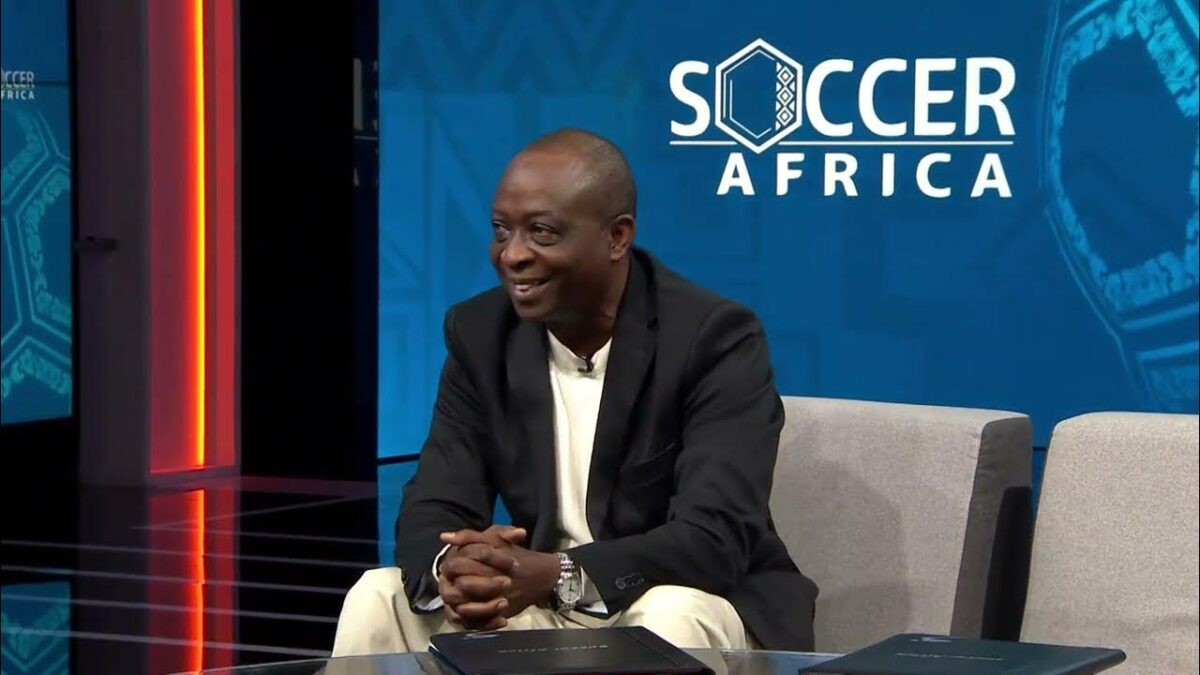
At a routine press conference ahead of the Africa Cup of Nations final in Morocco, an Ivorian journalist stood up and asked whether East Africa was truly ready to host AFCON 2027. Within hours, his name was everywhere.
Mamadou Gaye had touched a nerve.
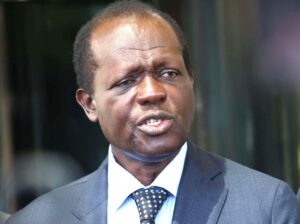
His remarks, blunt, unsparing, and delivered in front of Africa’s football leadership, triggered a fierce online debate that quickly spread beyond sport. At its heart lay a bigger issue: who gets to question Africa’s readiness, and how those questions should be asked.
A familiar voice in African football
Gaye is no stranger to controversy. Known across Francophone and pan-African football circles, he has built a reputation as a commentator unafraid of uncomfortable conversations.
Over the years, he has spoken openly about governance failures, uneven development, and what he sees as double standards within African football. Supporters describe him as honest. Critics call him abrasive.

Little is publicly known about his early career. What defines him instead is his presence, sharp questions, strong opinions, and a belief that African football must hold itself to higher standards if it wants global respect.
His work appears regularly on football-focused media platforms, where his commentary often sparks as much disagreement as applause.
The moment that ignited the debate
The latest storm began in January 2026, during a press briefing before the AFCON 2025 final in Morocco.
Gaye compared Morocco’s infrastructure, highways, rail systems, stadium access, with that of the three confirmed hosts of AFCON 2027: Kenya, Uganda and Tanzania. It will be the first time the tournament is jointly hosted in East Africa.
“At the moment, as we are speaking, the three countries are not properly ready,” he said, stressing that his concern was about logistics, not identity.
He pointed to Morocco’s transport network as a benchmark, arguing that modern tournaments demand fast movement between cities, reliable roads, and stadiums that meet international expectations.
“The roads may be good,” he added, “but they are not highways. You take a lot of time travelling.”
He also drew on history to make his case, noting that Côte d’Ivoire once appeared more developed than Morocco, only for Morocco to surge ahead through long-term investment.
His message was clear: standards have risen, and hosting AFCON now requires more than passion.
Backlash and pushback
Reaction was swift.
Many fans and commentators in East Africa rejected his claims outright, arguing they ignored recent progress. Others accused him of leaning on outdated stereotypes about infrastructure south of the Sahara.
Transport experts and regional analysts pointed out that major highway corridors already link Nairobi, Kampala and Dar es Salaam, supporting heavy commercial traffic daily.
Some critics questioned the accuracy of Gaye’s suggestion that cross-border travel could take days, saying such claims needed clearer evidence.
Yet others defended his right to ask hard questions.
“He’s saying what many think but won’t say publicly,” one football analyst wrote online. “The issue is how it’s said.”
CAF responds
The controversy eventually drew a response from the top.
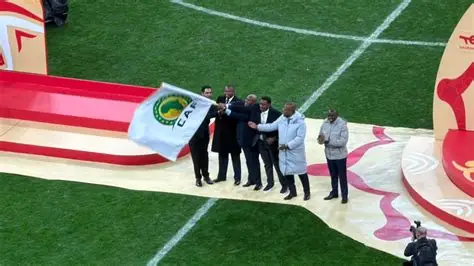
CAF President Patrice Motsepe addressed the issue directly at the same press conference. He made it clear the hosting rights would not be withdrawn.
“We must create opportunities for all African countries to develop,” Motsepe said. “I am confident the AFCON will be successful. I know there will be challenges.”
He added that the decision to stage earlier tournaments in the region was deliberate, aimed at accelerating infrastructure growth rather than excluding countries still developing.
“We are not going to take the competition away,” he said. “I am convinced it will succeed.”
What the hosts say
Governments in the three host nations insist preparations are well under way.
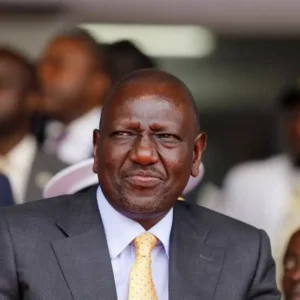
Kenya’s President William Ruto has said stadium upgrades at Kasarani and Nyayo are progressing, while the Talanta Sports City project is expected to be completed ahead of the tournament. Similar commitments have been made in Uganda and Tanzania.
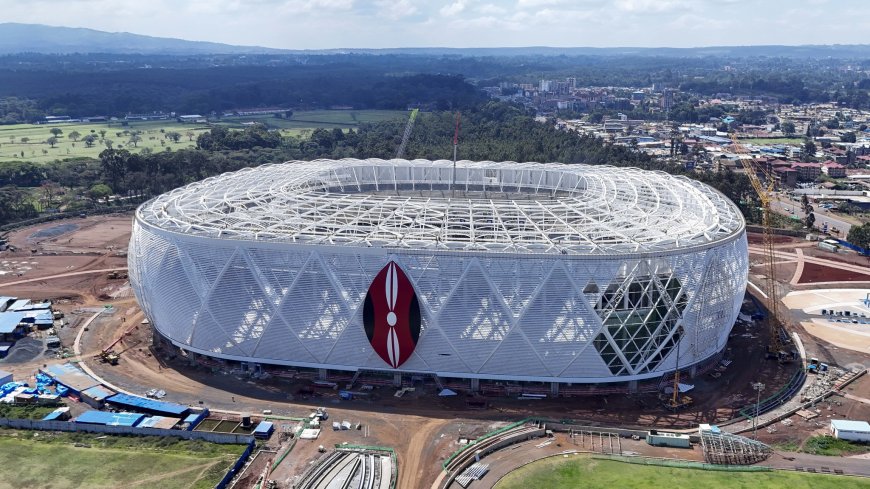
CAF continues to work with local organising committees, monitoring timelines and technical requirements.
Officials argue that AFCON itself is part of the development process, not a reward at the end of it.
The larger question
Beyond one journalist or one press conference, the debate has revealed deeper tensions within African football.
Gaye maintains his intentions were misunderstood. He has said his comments were meant to push improvement, not diminish the region.
Still, the reaction shows how sensitive football remains, not just as a sport, but as a symbol of progress, dignity and continental identity.
As AFCON 2027 approaches, the noise will likely fade. Construction will continue. Deadlines will loom.
About the Author