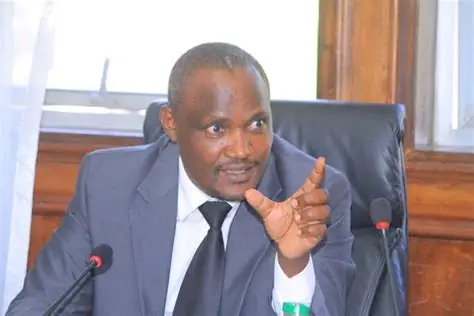
Treasury Cabinet Secretary John Mbadi has acknowledged that Kenya is currently burdened by debt, but insisted the country remains capable of meeting its financial obligations as it charts a new path toward economic independence.
Speaking on the state of the economy, Mbadi said Kenya is gradually moving away from over-reliance on institutions such as the International Monetary Fund (IMF) and the World Bank, and positioning itself to operate like other mature economies that access global markets on their own terms.
“To some extent, we are burdened by debt, but we can pay,” Mbadi said.
“We are moving towards not depending on the World Bank and IMF. Kenya is reaching a point where, as an economy, we can go to the market like any other economy.”
Mbadi explained that the government’s long-term vision is to reduce dependency on bilateral lenders and multilateral institutions, while strengthening Kenya’s ability to attract investment directly.
He noted that engaging institutions like the World Bank should no longer be out of necessity, but rather as partnerships where Kenya presents viable investment opportunities.
“If we have to go to the World Bank, it should be as equal partners, where they see where to invest their money, and we also have resources to invest,” he said.
According to the CS, only a few structural and policy adjustments are needed for Kenya to fully regain a trajectory that minimizes external dependency.
Lessons From Past Administrations
Mbadi reflected on Kenya’s economic history, contrasting different administrations and their handling of debt and development. He recalled that during the Moi era, Kenya was not heavily funded by the IMF or World Bank, yet the economy remained weak.
“Our economy was in tatters. Infrastructure was dilapidated, public servants’ salaries were low, and there was nothing to be proud of economically,” he said.
He credited the Kibaki administration with stabilizing the economy and successfully exiting IMF programs, noting that even when Kenya borrowed from China and other bilateral partners, the country retained negotiating power through arm’s-length transactions.
However, Mbadi admitted that significant setbacks occurred during the Uhuru Kenyatta administration, when borrowing escalated and eventually forced Kenya back to the IMF.
“We slipped quite a lot and overburdened ourselves to the extent that we had to run back to the IMF,” he stated.
Mbadi said the current administration is now steering the country out of that difficult phase.
“We are getting out of that point where we were depending on others,” Mbadi said, adding that the reforms underway are key to securing sustainable growth and long-term stability.
About the Author