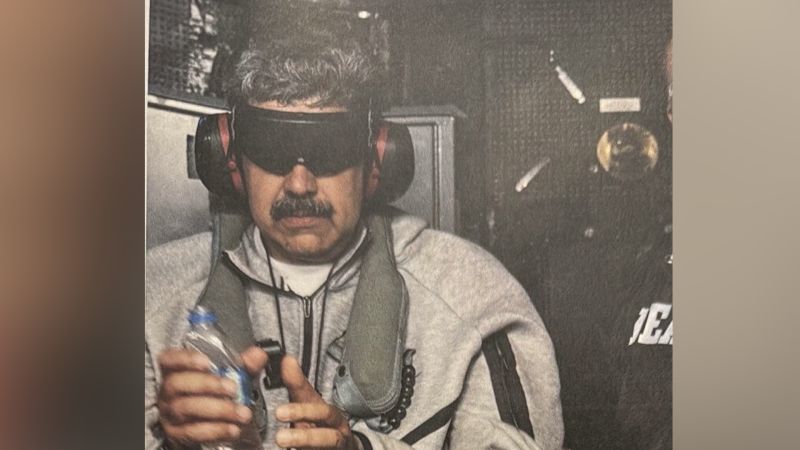
WASHINGTON / CARACAS — The United States has captured Venezuelan President Nicolás Maduro in a clandestine overnight operation in Caracas, culminating months of surveillance and a sudden, overwhelming military strike that has drawn sharp condemnation across Latin America and renewed questions about the limits of executive power in Washington.
US officials said the operation — code-named Operation Absolute Resolve — was authorised late on Friday by President Donald Trump and executed within hours by elite American forces. Maduro, 63, and his wife, Cilia Flores, were taken into custody and flown out of Venezuela before dawn, US authorities said. They are expected to face criminal charges in New York.
U.S. forces launch strikes in Venezuela as President Trump announces the capture of Nicolás Maduro, sending shockwaves across Latin America and beyond. pic.twitter.com/QotOkFDRHQ
— Switch Media Kenya (@switchtvkenya) January 4, 2026
A mission built on months of intelligence
According to US military officials, a small intelligence team had monitored Maduro’s movements for months, including his daily routines and security arrangements. One source, described as being inside the Venezuelan government, helped track the president’s whereabouts.
In early December, officials finalised plans for the raid, rehearsing entry routes using a full-scale replica of Maduro’s Caracas compound. Senior commanders said timing was critical: the mission was delayed several times to wait for favourable weather and reduced cloud cover to preserve aerial visibility.
General Dan Caine, the chairman of the US Joint Chiefs of Staff, said the order to proceed came at 22:46 EST on Friday, shortly before midnight in Caracas. “The force moved with speed, precision and discipline,” he told reporters on Saturday.
Explosions over Caracas
The first signs of the operation appeared in the skies above the Venezuelan capital. More than 150 US aircraft — including bombers, fighter jets and reconnaissance planes — were deployed, according to American officials.
Residents reported loud explosions around 02:00 local time, followed by power outages across parts of the city. Videos circulating on social media showed helicopters flying low over Caracas as smoke rose from several locations. BBC Verify later confirmed strikes at five sites, including La Carlota airfield and the Generalissimo Francisco de Miranda Air Base.
US officials said the strikes targeted air defence systems and other military installations. President Trump suggested American forces disrupted the city’s power supply before ground troops moved in, though he declined to provide details.
Inside the compound
As explosions echoed across the capital, US special forces — including members of Delta Force, according to US media reports — advanced on Maduro’s residence. They were equipped to breach reinforced doors, carrying blowtorches as a contingency.
General Caine said US troops encountered resistance on arrival, and one helicopter was hit by gunfire but remained airborne. “The apprehension force descended into the compound and completed the mission,” he said.
President Trump later described watching the operation via live feed from his Mar-a-Lago residence in Florida. “They knew we were coming,” he said, characterising the compound as a fortified military site.
Congressional unease and regional backlash
Senior US lawmakers were notified only after the operation was under way, a decision that has angered some in Congress. Senate Democratic leader Chuck Schumer criticised the administration for acting without prior authorisation. “Nicolás Maduro is an illegitimate dictator,” he said, “but launching military action without congressional approval and without a clear plan for what follows is reckless.”
Secretary of State Marco Rubio defended the secrecy, arguing that advance notification risked leaks that could have jeopardised the mission.
International reaction was swift. Brazil’s President Luiz Inácio Lula da Silva condemned the raid, warning that the violent seizure of a sitting head of state set “an extremely dangerous precedent” for international relations.
A long confrontation
The operation marks the most dramatic escalation yet in Washington’s long-running confrontation with Maduro, whom the US has accused of narco-trafficking and human rights abuses. The US Justice Department has previously offered a $50m reward for information leading to his arrest, while sanctions and diplomatic pressure have sought to isolate his government since his disputed re-election.
In recent months, the US had increased its military presence in the region, deploying thousands of troops and naval assets as part of counter-narcotics operations — a build-up noted by analysts as the largest in decades, according to reporting by Reuters and the BBC.
What comes next
By early Saturday morning, helicopters carrying Maduro and Flores had left Venezuelan airspace, US officials said. Within an hour, President Trump announced their capture, declaring that the Venezuelan leader would “face the full might of American justice”.
The arrest leaves Venezuela facing profound uncertainty. With no immediate clarity on succession or international recognition, regional governments and global markets are bracing for instability. For Washington, the operation may achieve a long-sought objective — but it also opens a new chapter of diplomatic fallout and legal scrutiny that is only beginning.
About the Author