

South Africa has taken a rare and serious step. It has officially classified violence against women as a national disaster.
The decision follows days of intense public pressure and nationwide protests. Women across the country were asked to step away from work and daily life for one day. At noon on Friday, they lay down in silence for 15 minutes. It was in honour of the 15 women killed every day in South Africa.
The protest was simple. But its message was not.
Demonstrators dressed in black. They stood, sat and lay down in cities such as Johannesburg, Cape Town and Durban. Similar acts of solidarity were seen in Kenya, Eswatini and Namibia.
At first, the state resisted calls to classify gender-based violence as a disaster. But the government later reversed its position.
The National Disaster Management Centre said it had reviewed updated reports and submissions from state bodies and civil groups. After this, it found that the level of violence posed an “immediate threat to life and safety”.
Cooperative Governance Minister Velenkosini Hlabisa confirmed the new classification. He said the move followed a detailed reassessment of the crisis.
South Africa has some of the highest rates of gender-based violence in the world. According to UN Women, women in the country are five times more likely to be killed than the global average.
The protests were organised by Women for Change, which has led an online campaign for months. More than a million people signed a petition calling for action. Thousands changed their profile pictures to purple, a colour linked to awareness of gender violence.
In a statement, the group said: “We have written history together. We have finally forced the country to confront the truth.”
President Cyril Ramaphosa reminded delegates at the G20 Social Summit that the country had declared gender violence a national crisis in 2019. The latest move, however, marks a stronger legal response.
The new status allows government departments to use their budgets more freely to tackle the problem. If these measures fail, a full state of disaster may follow, unlocking even wider emergency powers.
Still, many remain cautious.
Women for Change spokesperson Cameron Kasambala said progress has often been slow.
“So many beautiful laws have been followed by a lack of implementation and transparency,” she said. “We’ve integrated violence into our culture and our social norms.”
Some women have faced resistance from employers for taking part in the protest. Others say the fear is constant.
A university lecturer who travelled to Johannesburg for the demonstration said she now thinks twice about simple things like jogging. “I just hope this slows the violence,” she said.
For some, fear has turned into action.
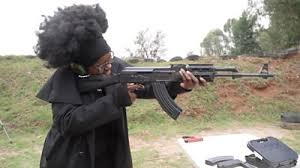
Lynette Oxeley, who runs Girls on Fire, trains women to defend themselves using firearms. Many in her group are survivors of rape or assault. She is clear that guns are a last option.
“This is not about violence,” she said. “It is about women changing how they see themselves. Stop being silent.”
One survivor, Prudence, described her assault in painful detail.
“I said no. I screamed. I cried. But he didn’t stop,” she said. Her case was later withdrawn after her rape kit was lost.
“It’s not just a police problem. It’s a nation problem.”
As South Africa faces this reality, the message from the streets is clear. Women want more than words. They want safety. And they want action now.
The government has heard them. The real test lies in what comes next.
About the Author