History does not forget those who sacrifice to make life better for the many, even at great personal cost and pain. One such person, whose sacrifices, fortitude, resilience, and magnanimity will forever be etched in the history of post-colonial Kenya, is Raila Amolo Odinga.
Cynics and critics alike know that Raila Odinga was never fighting for himself. His struggle was not always about the quest for the crown. The crown would have been the ultimate reward for his sacrifices — but it was never a do-or-die pursuit. He never sought shortcuts or played foul to claim the prize. Yet, ironically, due process often disappointed one of its greatest defenders.
Motivational writer John Maxwell reminds us that “successful people realize that the door to the room of success swings on the hinges of setbacks and opposition.” The late Raila Odinga endured many such setbacks, but each time, he emerged stronger — recharged to fight another day.
Raila Odinga was a student of a just contest — one that produced logical, credible outcomes. The football-loving politician always desired a level playing field, where competitors could congratulate one another for a fair game, untainted by foul play.

Those who wonder why Raila never played rough or crude misunderstand the man. He detested offensive fouls that could harm honest competitors. Instead, he sought to elevate the standards of the game — its processes, integrity, and results.
From his first presidential bid in 1997, Raila Odinga made countless sacrifices between political contests. His compromises for the common good revealed a leader more misunderstood than understood.
Raila’s enigmatic influence came freely — not through coercion, money, or manipulation, but through the magnetic power of his personality. His ultimate quest was never merely the presidency. For him, the seat was only a vantage point — a means to advance the cause of justice and dignity for the vulnerable masses.
Raila Odinga was, and will always be, a force of purpose for the victims of politically motivated injustices. He had every reason to live comfortably and privately, enjoying personal wealth and privilege. Yet, the former Prime Minister, son of Kenya’s first Vice President, the late Jaramogi Oginga Odinga, chose a public life of sacrifice, jail, detention, and harassment, all to champion causes that secured and protected human rights.
History can be distorted or misunderstood, but its core truths remain indelible. To appreciate Raila Odinga’s legacy, one must understand what drove him — a deep, pan-African purpose far broader than many have acknowledged. He was both prophet and cornerstone — the building stone that cynics dismissed.
When the Kibaki administration, through a compromised Electoral Commission of Kenya, snatched victory from him in 2007, Raila did not cry over spilt milk. He resisted the advice of radical allies who wanted to push Kenya to the brink. Instead, he relented — because his purpose was greater than personal ambition. He gave Kenya a second chance to reform its electoral process.
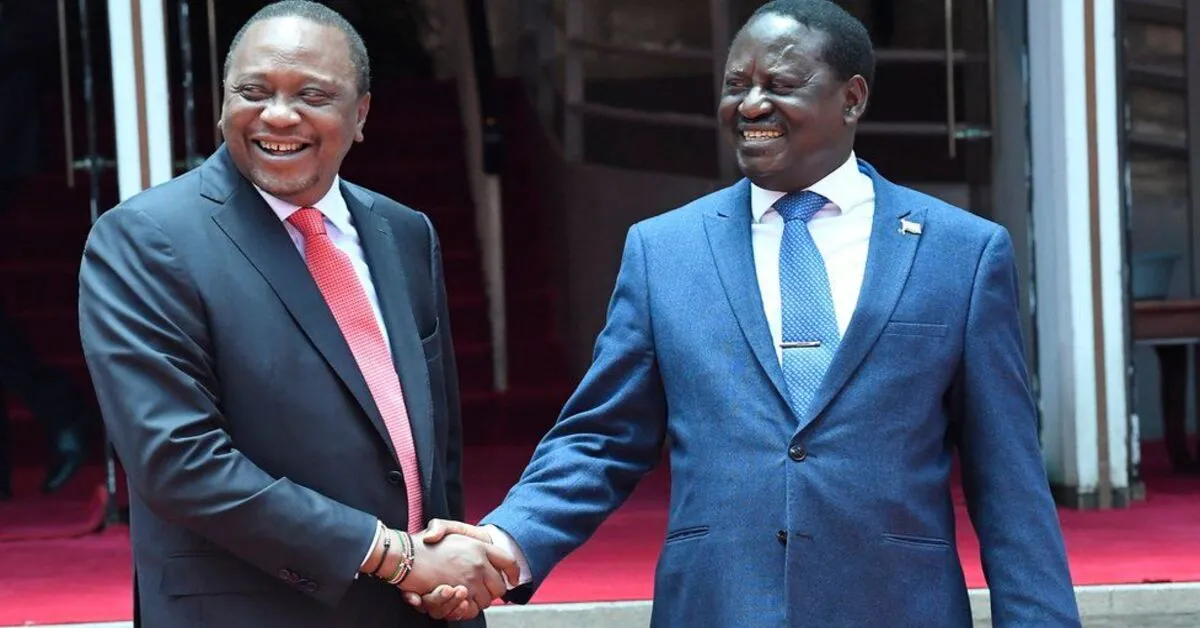
The seeds of the 2010 Constitution germinated from the ashes of the 2007 post-election violence through the will and reformist zeal of Raila Odinga and other luminaries.
When the electoral body bungled the 2013 presidential election, denying him victory, Raila’s words were: “Don’t cry for me; cry for Kenya.”
Then came the 2017 presidential election, a sham process that rolled back democracy and left Kenya mourning missed opportunities. Even in 2022, his petition at the Supreme Court was not about “hot air” or a “wild goose chase.” It was not a vain attempt for power but a fight to improve the quality of Kenya’s electoral system.
History is not meant to be forgotten; it should illuminate the future. When treated casually, it leaves a people fumbling, mumbling, and bumbling in confusion.
Heroic
When the impartial story of Raila Odinga and Kenya is written, it will echo the valor of Mohamed Karim, the Egyptian hero who resisted Napoleon Bonaparte’s invasion of Alexandria.
When Karim was captured and sentenced to death, Napoleon appealed to him:
“I have trouble executing a man who valiantly defended his country. I do not wish history to remember me as one who stifled the spirit of patriots. I will spare your life if you pay 10,000 gold coins as compensation to my soldiers.”
Smiling, Karim replied:
“I do not have the full amount, but I am owed more than 100,000 gold coins by the merchants of Alexandria. They will surely pay to save my life.”
Chained and paraded across Alexandria, Karim sought help in vain. No merchant came to his aid; instead, they accused him of being a troublemaker who ruined their businesses.
Seeing their cowardice, Napoleon declared:
“I will execute you — not for killing my soldiers, but for having fought for a cowardly people who care more for business than for their country’s integrity.”
The Syrian-Arab reformist Mohamed Rachid Rida later observed:
“To revolt on behalf of an ignorant people is like setting yourself on fire to light the way for a blind man.”
Raila Odinga, it can be said, fought for a people who did not always understand his dream for a truly democratic republic.
In death, as in life, Raila Amolo Odinga remains a colossus — a man who traversed our land and left an indelible mark on history.
Rest in peace, Baba.
Okech Kendo is a seasoned Kenyan journalist, editor, and faculty member at the Technical University of Kenya, where he lectures in the Department of Creative Arts and Media. He holds degrees in Mass Communication and Journalism and has previously served in senior editorial roles, including Deputy Features Editor and Editor at The East African Standard. With decades of experience in the newsroom and media training, Kendo continues to contribute insightful commentary as a columnist while mentoring the next generation of journalists. His work bridges practical journalism and academic excellence, reflecting his lifelong commitment to media integrity and public discourse.
About the Author