Life. Seasoned with perspective.
“Sometimes, life reminds us that our truest support doesn’t come from where we expect it. In moments of loss, struggle, or uncertainty, it’s the people who quietly show up that become our real anchors.”
Family is everything.
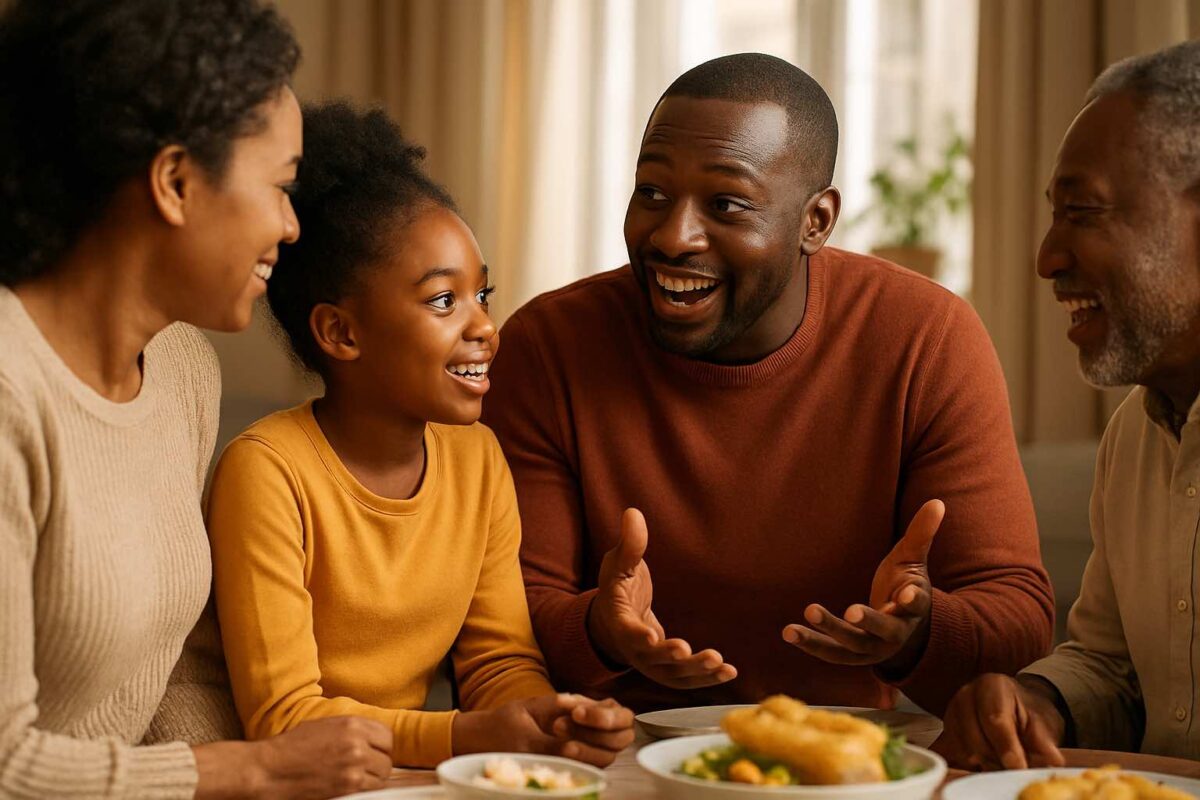
That statement may sound obvious, but it hits home most when everything falls apart and you have nowhere else to turn. For clarity, there is family I don’t consider as family—and there are friends I consider family.
I’ve had moments when I kept things from my family, believing that the friends I trusted would step in. I was wrong. In the end, it was family—though upset that I hadn’t asked sooner—who came through and pulled me out of the dungeons.
Let’s rewind to my childhood. Back then, the community around us was family. This was the proper era of “spare the rod and spoil the child.” One day, a neighbour caught my friends and me in mischief and gave us a proper beating. She didn’t stop there.
By the ears, she dragged me home, where my mum thanked her and continued the punishment herself. More beating. I would have loved to hate that neighbour and the community-style parenting, but truth be told, we are who we are because of that upbringing—traditional, strict, but deeply meaningful.
During those times, the word “orphan” was just that—a word. Orphans were cared for by extended family and community. They never lacked love. Today, that communal living has largely faded. People are more individualistic, more guarded. With that comes a quiet loneliness. Many don’t know where to turn when life gets tough.
I’m grateful for family. In 2001, one of the greatest tragedies in my life struck: I lost my loving mum. With her passing, I lost more than a parent. I lost a home, a sense of direction, and a future that suddenly looked uncertain. My big sister Pamela stepped in and became my mother for a couple of years, despite having her own family. With her, shelter was sorted.
I owe her my foundation. Later, I stayed with other relatives, including my sister Christine. And then there was my big brother Tim, who finally restored the place we now call home—a roof to return to, a space that feels like ours.
That same year, while I was still uncertain about my education, my uncle Wambete—whom I regard more as a friend—picked me up and drove me to a media school in Nairobi.
He didn’t just drop me off; he made sure I was admitted. And as they say, the rest is history. He set the foundation for my career in media, and I built upon it with further studies. Now, twenty years later, I’m still in the craft, and I owe him for that.
I also have a friend who’s as good as family. Dan and I go way back. We met in media school in 2001, and, as odd as it sounds, it was the way he introduced himself that caught my attention. I didn’t quite catch his name, and that moment sparked a friendship that has endured. We can go months without talking, but when I need him, he’s there—no explanations required.

The older I get, the more I understand that family isn’t perfect. We argue, we disappoint, we frustrate one another. But somehow, we remain tethered—by memory, by obligation, by love. Family doesn’t always mean blood.
Over time, I’ve gathered people I look up to and lean on—mentors, colleagues, friends who give counsel when the road gets unclear. In today’s world, you need such people. Those who hold you up when life tries to knock you down.
Family, in all its forms, is the net that catches us when the world lets us fall. You might not always see it, but it’s there—stretched beneath every risk, every failure, every stumble. Maybe it’s time we stopped testing its strength and simply said, thank you.
Because at the end of the day, family—whether by blood, choice, or circumstance—is what keeps us grounded when everything else comes undone.
About the author
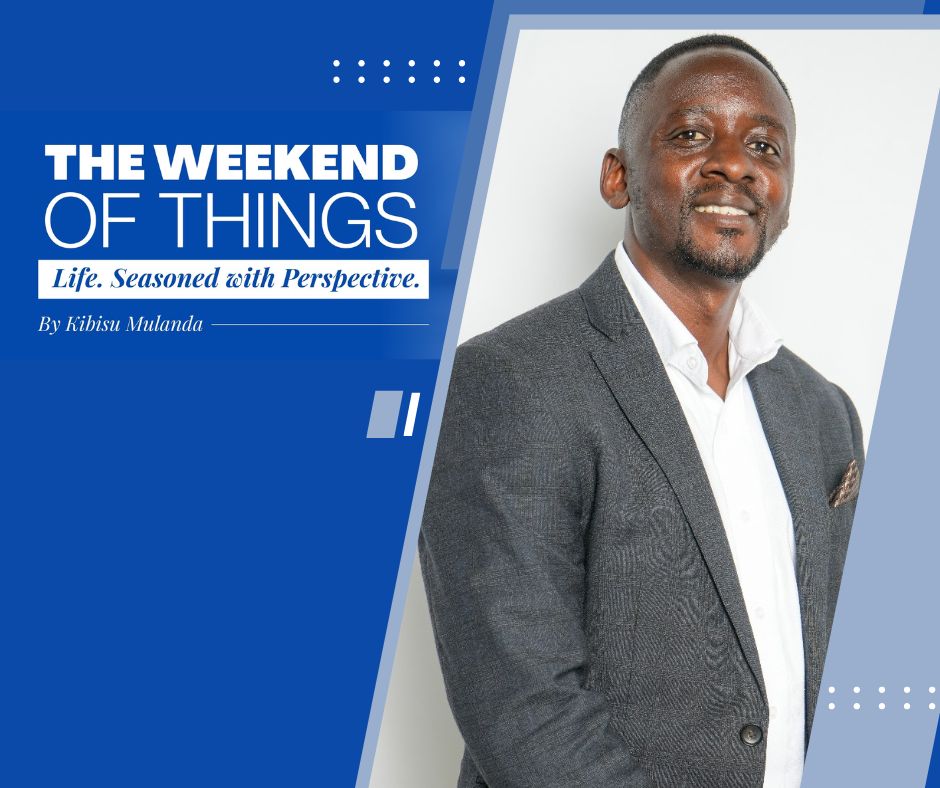
Kibisu Mulanda is a media executive and strategic communicator with over 20 years of experience in television, NGO storytelling, and youth-focused content. He is the Acting Head of Switch Media Ltd and teaches media at the Kenya Institute of Mass Communication (KIMC). A Certified SIYB Trainer, he blends storytelling with strategy to drive social impact.on (KIMC). A Certified SIYB Trainer, he blends storytelling with strategy to drive social impact.
About the Author