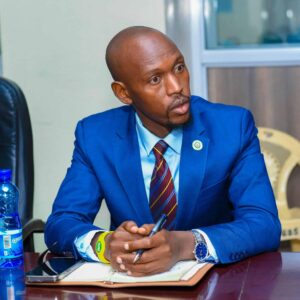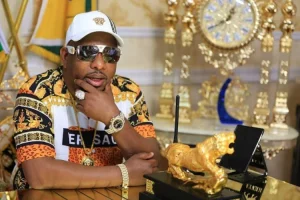
A magistrate’s court in Nairobi has referred a hate speech case against Mumias East Member of Parliament Peter Salasya to the National Cohesion and Integration Commission (NCIC) for review before the case proceeds.
The decision came after State Prosecutor Virginia Kariuki, from the Office of the Director of Public Prosecutions (ODPP), requested that the Commission be allowed to examine the matter and make recommendations.
“We are seeking a further mention in two months to confirm whether the Commission has finalised this matter,” Ms Kariuki told the court.
Senior Resident Magistrate Paul Mutai, who presided over the case, raised concerns about whether the referral could result in a parallel process.
In response, Ms Kariuki clarified that the NCIC’s role was purely advisory.
“The offence in question involves alleged incitement of the public. The Commission’s role is advisory and not judicial,” she said.
The prosecutor explained that while the DPP and the NCIC operate independently, they often collaborate in cases relating to hate speech, public incitement, and national cohesion.
Magistrate Mutai questioned why the NCIC had not been consulted before the MP was charged. He urged the prosecution to ensure that all investigative and advisory steps are exhausted before arraigning individuals in similar cases.
“The DPP should ensure all avenues are explored before arraigning an accused person,” he said.
The court granted the prosecution’s application and scheduled the matter for mention on 11 November 2025, to allow time for the NCIC to present its findings. Should there be no progress by then, the case will move to hearing.
Background
Mr Salasya was charged on 19 May 2025 with hate speech, accused of making inflammatory remarks on social media that allegedly targeted members of a specific community.
The MP, known for his outspoken and sometimes controversial public statements, has denied the charges. His defence team has argued that his comments were taken out of context and that the case amounts to political persecution.
The NCIC, a statutory body established in 2008, is tasked with promoting national unity and investigating hate speech and ethnic discrimination. Its advisory input is often sought in politically sensitive cases to determine whether public utterances meet the legal threshold for incitement.
The case against Mr Salasya has once again drawn attention to Kenya’s ongoing struggle with hate speech in the digital age, where political rhetoric frequently spills onto social media platforms — often with divisive consequences.
As the NCIC begins its review, the outcome will be closely watched, not only for what it means for the MP’s fate but also for how Kenya enforces laws designed to safeguard national cohesion while protecting freedom of expression.
About the Author