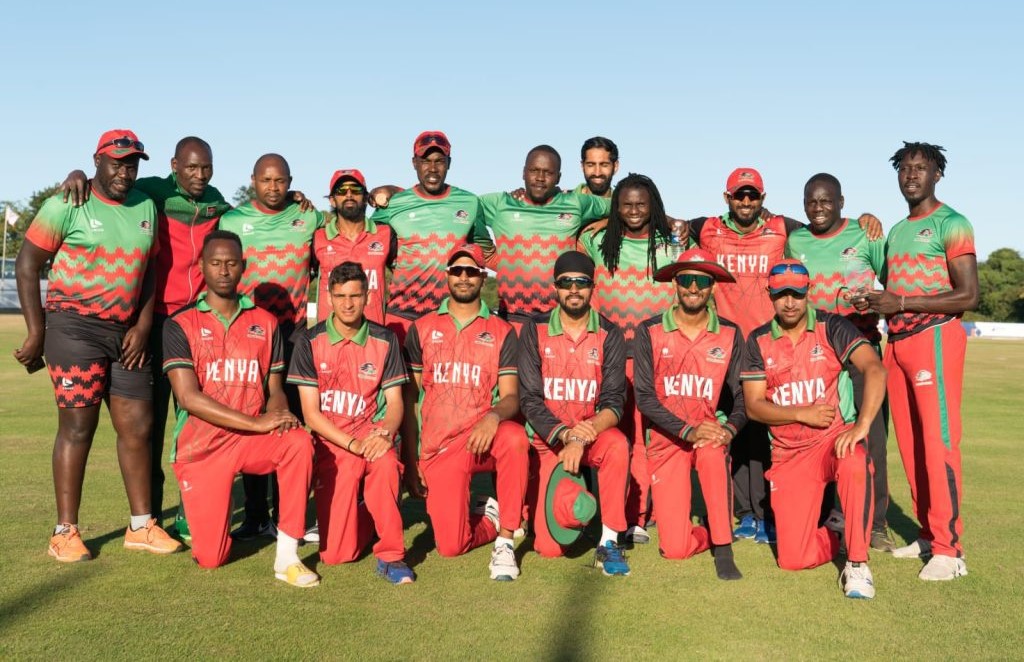
The Kenyan national cricket team landed back in Nairobi on Sunday evening to a warm reception after a spirited run in the ICC Africa World Cup Qualifiers in Zimbabwe. They finished third — a respectable result that nonetheless fell short of securing a World Cup spot.
At Jomo Kenyatta International Airport, Cricket Kenya’s chief executive, Ronald Bukusi, was on hand to greet the players. But even amid smiles and handshakes, the tensions shadowing the sport’s leadership were hard to miss.
In recent weeks, a rival faction within the federation has claimed Bukusi was ousted — allegations he firmly denies.
“We’re not quite where we should be, but we are definitely on the way back,” Bukusi told reporters. “Two of our directors attended the ICC-accredited tournament in Harare and met ICC officials. We are in constant communication with them. We are not imposters, nor do we masquerade to be what we are not.”
Bukusi urged those in the sport to put players’ interests first and end the internal wrangles that have drawn scrutiny from the International Cricket Council (ICC).
“This is the time to focus on rebuilding and supporting the team,” he said. “We must put cricket before individual ambitions.”
A Promising But Painful Finish
Kenya’s campaign in Harare ended just shy of qualification, behind Zimbabwe and Namibia, who took the top two spots. But their performance was seen as a signal that Kenyan cricket — once a continental powerhouse — could yet rise again.
Players, though proud of their showing, were candid about the need for more support.
“We weren’t sure what to expect, but we knew we had to be in the top four,” said Lucas Ndandason, the vice-captain. “We’re thankful for the support so far, but more has to be done — more tournaments, more grassroots development. That’s how we get better.”
Cricket’s Crossroads
The return comes at a fragile moment for the sport in Kenya. Internal disputes, funding shortfalls, and administrative uncertainty have slowed progress for years, leaving players often underprepared for elite competition.
Sports analysts say the team’s solid showing in Harare could serve as a rallying point — but only if the federation finds stability.
For now, Bukusi insists that order will prevail, and dialogue with international partners will continue. “We’re back in good standing,” he said, “and we’re determined to keep it that way.”
As the players dispersed from the arrivals hall, there was quiet pride but also a sober understanding: for Kenyan cricket to reclaim its past glory, unity will matter as much as talent.
About the Author