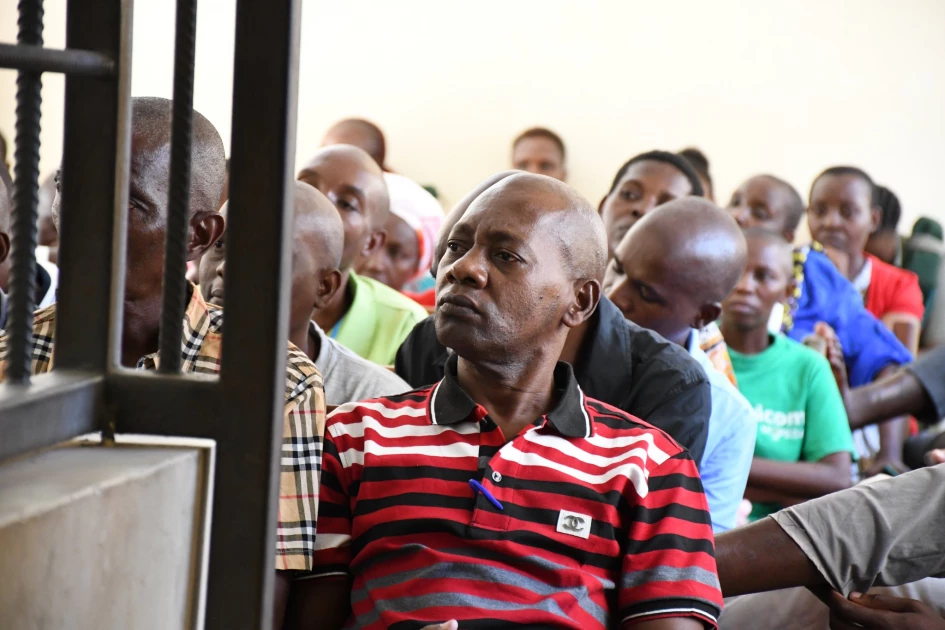
MOMBASA, Kenya — When Titus Ngonjo took the stand in a Mombasa courtroom this week, his voice was heavy with grief. The 60-year-old told judges how he lost almost his entire family — his wife, two sons, and eight grandchildren — to the Shakahola cult led by Pastor Paul Nthenge Mackenzie.
“My family was wiped out by deception,” he said, describing how his loved ones abandoned their jobs, homes, and schools to follow Mackenzie into a forest where hundreds died.
Ngonjo testified at Tononoka Children’s Court in proceedings linked to what has become known as the Shakahola massacre, one of the deadliest cult tragedies in Kenya’s history. Prosecutors say Mackenzie, head of the Good News International Church, persuaded followers to starve themselves in pursuit of salvation.
According to the Office of the Director of Public Prosecutions (ODPP), Ngonjo’s wife, Esther Birya Masha, was the first to be drawn in. She then convinced their sons, Harry and Isaack, to join. Both men brought along their wives and children.
Harry, his wife, and their five children died in the forest. Isaack, once a General Service Unit officer, resigned after Mackenzie told him salaried work was evil. His wife, a government teacher, also gave up her job. Together, they moved with their three children to Shakahola.
“Tragically, Isaack, his wife, and two of their children also died in the forest. Only one child survived, whom Mr. Ngonjo now raises,” the ODPP told the court.
Ngonjo recalled pleading with his wife not to join the sect, warning her of its rejection of education and work. His warnings strained their marriage. “He recounted his last meal with her before she disappeared into Shakahola forest, never to return,” prosecutors said.
DNA tests later confirmed the identities of some of the bodies. Ngonjo has managed to bury two of the 12 relatives he lost. The remains of one grandson are still missing.
As he addressed the court, he urged for a swift conclusion to the case. “My family was destroyed by radical indoctrination. I ask this court for justice,” he said.
Mackenzie, who denies the charges, is on trial for a catalogue of offences including murder, manslaughter, and radicalisation. The Shakahola case has sparked fierce debate in Kenya over how fringe religious movements are regulated, and whether authorities failed to act on early warnings.
About the Author