As the world commemorates International Deaf Awareness Week 2025 under the theme “No Human Rights Without Sign Language Rights,” one truth stands out clearly: technology is no longer optional it is a lifeline. For the Deaf community, Artificial Intelligence (AI) is not just innovation; it is inclusion.
For decades, Deaf and Hard of Hearing persons have faced communication barriers in schools, hospitals, workplaces, and even in accessing government services. While sign language is recognized as a natural language of the Deaf, many societies have been slow to integrate it fully into public life. This gap leaves millions excluded from meaningful participation.
AI is now emerging as a bridge. From real time captioning tools that allow Hard of Hearing persons to follow conversations, to AI driven sign language avatars that can interpret content on digital platforms, the possibilities are expanding. In Kenya, innovative projects are already underway: researchers are piloting software that translates spoken English into Kenyan Sign Language (KSL), a move that could revolutionize classrooms and public communication.
Yet, technology alone is not enough. Policy, investment, and Deaf inclusion in design are critical. AI systems must be trained with authentic sign language data, guided by Deaf experts, and tested in real life contexts. Without this, the technology risks excluding the very people it aims to serve.
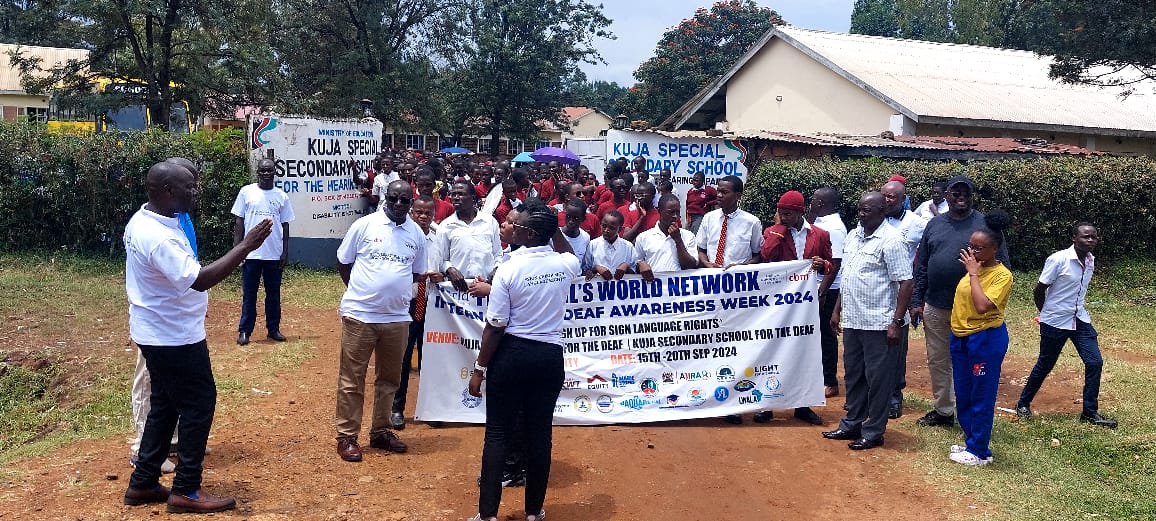
Equally important is awareness. Many still view sign language as secondary to spoken language, failing to recognize it as a fully fledged language with its own grammar and culture. AI provides an opportunity not only to improve accessibility but also to normalize and mainstream sign language as a right, not a privilege.
This International Deaf Awareness Week, we are reminded that inclusion is not charity it is justice. AI can help deliver that justice if governments, innovators, and communities work together to ensure no one is left behind.
The conversation about human rights must include digital rights, and that begins with ensuring that AI driven accessibility solutions are inclusive, ethical, and scalable. In celebrating sign language, we are also celebrating a future where technology amplifies not silences the voices of the Deaf.
AUTHOR: George Ochola.
George Ochola is a Journalist, Disability Inclusion Advocate, and Project Coordinator at Free a Girl’s World Network.
About the Author