
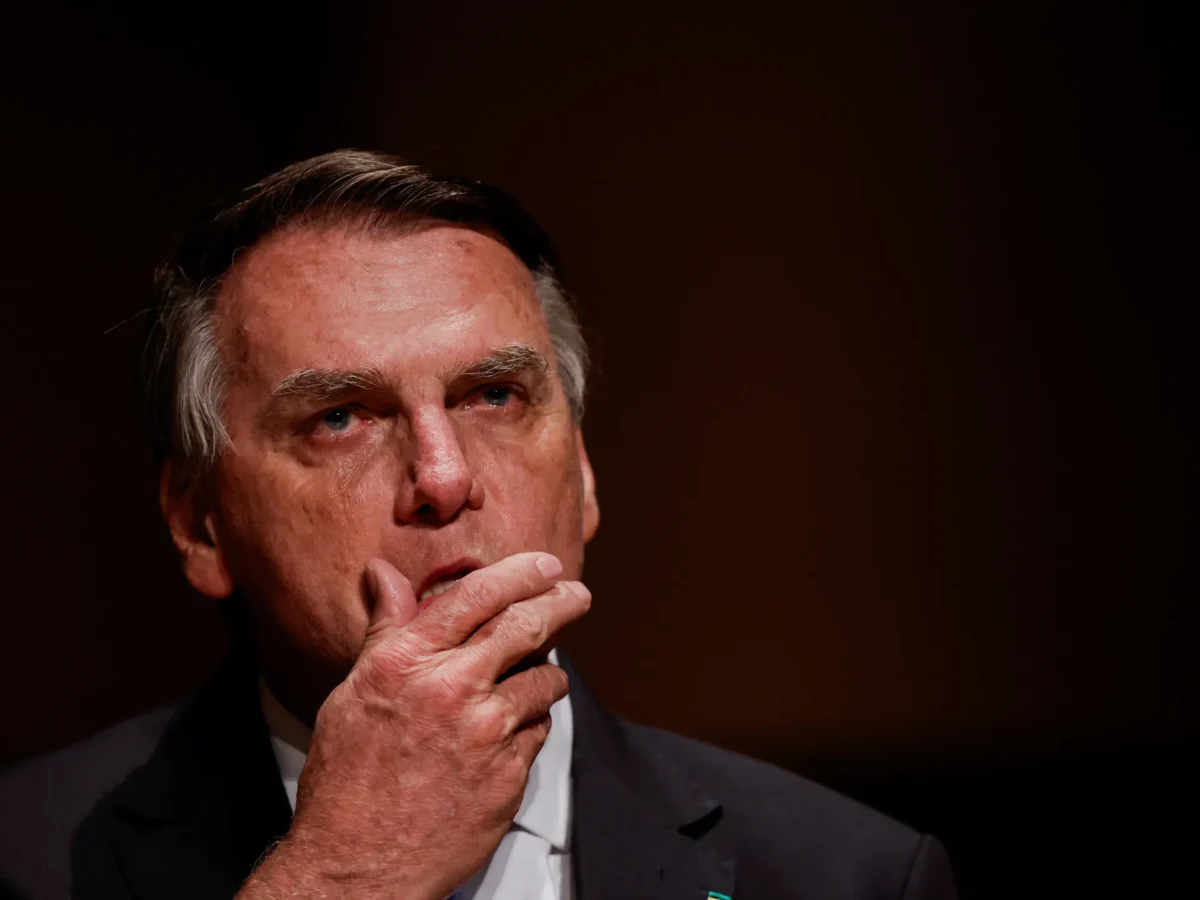
Former Brazilian president Jair Bolsonaro has been sentenced to 27 years and three months in prison after the Supreme Court found him guilty of leading a conspiracy to overturn the country’s 2022 election.
The ruling, delivered late Thursday by a panel of five justices, marks the most dramatic chapter yet in Brazil’s long-running political turmoil. Four of the justices voted to convict; one dissented.
Bolsonaro, 70, was convicted on five charges tied to his efforts to cling to power after losing to Luiz Inácio Lula da Silva. He has also been barred from holding public office until 2033.
“Brazil almost returned to its 20-year dictatorship because a political group did not know how to lose,” Justice Alexandre de Moraes said in his vote. He warned that the plot had pushed the country dangerously close to authoritarian rule.
Justice Cármen Lúcia, whose vote secured the majority, likened the attempted coup to a “virus” threatening the very fabric of society. “There is no immunity to authoritarianism,” she said.
The court found that Bolsonaro courted military leaders, spread baseless claims about Brazil’s electronic voting system and tolerated discussions of violence against his opponents. Prosecutors alleged he was aware of a plan to assassinate Lula, his running mate and a Supreme Court justice.
Seven of his allies, including two former defence ministers, a former spy chief and a former security minister, were also convicted. The justices linked the failed plot to the storming of government buildings by Bolsonaro supporters on 8 January 2023, an event that drew comparisons to the attack on the US Capitol two years earlier. More than 1,500 people were arrested in its aftermath.
Bolsonaro did not attend the sentencing, having been placed under house arrest earlier this year after judges ruled he was a flight risk. His legal team called the punishment “absurdly excessive” and vowed to appeal. “We will file the appropriate motions,” his lawyers said in a statement, arguing that he should remain under house arrest instead of going to prison.
The sole dissenting justice, Luiz Fux, spoke for 11 hours in Bolsonaro’s defence. He argued the case lacked sufficient evidence and that the former president should be acquitted.
Outside Brazil, the verdict drew strong reactions. Former US president Donald Trump, a Bolsonaro ally, described the outcome as “very surprising,” likening it to his own legal battles. “That’s very much like they tried to do with me,” he said.
US Secretary of State Marco Rubio called the ruling unjust and threatened consequences. Brazil’s foreign ministry swiftly rejected his comments, saying: “Threats like the one made today will not intimidate our democracy.”
Bolsonaro’s conviction leaves Brazil deeply divided. To his opponents, it is proof that democratic institutions held firm. To his supporters, it fuels a narrative of persecution that may echo long after he leaves the political stage.
About the Author