

South Sudan has formally withdrawn from the Tumaini Peace Initiative led by Kenya, declaring the process “dead” and accusing it of violating the framework of the 2018 Revitalised Agreement on the Resolution of the Conflict in South Sudan (R-ARCSS).
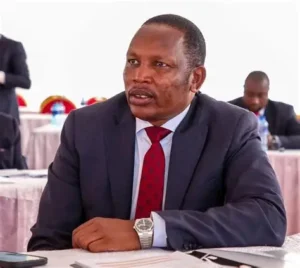
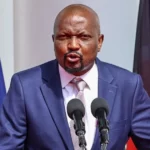
Speaking in Nairobi on Friday, Presidential Advisor Kuol Manyang Juuk said the Tumaini Initiative had strayed from its original intent and was no longer tenable. “The R-ARCSS has not been dissolved, so it cannot be replaced by Tumaini,” Juuk said. “You don’t add the majority to the minority. Tumaini was just 10 percent of what’s already covered.”
The Tumaini Initiative began in December 2023 at the invitation of President Salva Kiir, with Kenya taking the lead to bring in new opposition actors most notably the United People’s Alliance. The goal was to revitalize dialogue after delays in implementing the 2018 peace agreement. But South Sudan now says the process instead emboldened rebels and threatened the legitimacy of existing structures.
Presidential Advisor Juuk accused the new opposition groups of manipulating the talks to gain political legitimacy. “They wanted to remove the R-ARCSS and make Tumaini the authority. These were people in government before they cannot now disown the same government they helped run,” he said. He also questioned the wealth and intentions of exiled leaders involved in the Tumaini process. “They’re living in villas abroad. Where did they get that money, if not from when they were in office in South Sudan?” Juuk asked.
A central point of contention was the Tumaini proposal to create a Leadership Council as a transitional governing body. Juba flatly rejected the idea, calling it an attempt to rewrite the constitution.
“That’s a coup disguised as dialogue,”Presidential Advisor Juuk warned. “If you let them rise to the top this way, then anyone else can rebel and demand a seat at the table.”
According to Juuk, the government had already raised concerns with Nairobi over reports that the United People’s Alliance was allowed to form a military wing while operating from Kenya. “This undermines the East African Community’s principles. You can’t set up armed movements from a member country and call it peace,” Presidential Advisor Juuk said.
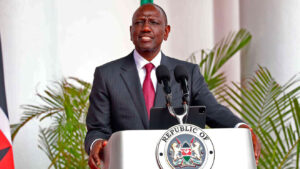
The Tumaini talks were suspended for the third time on February 7, 2025, after repeated disagreements between the government and opposition. While initially hailed as a fresh path forward by President William Ruto, the process ultimately collapsed under political pressure and mutual distrust.
South Sudan withdrawal marks a significant setback to regional peace efforts, especially after similar difficulties stalled the Sant’Egidio-led talks in Italy. Despite the Tumaini initiative’s initial momentum, the push to integrate new actors without full consensus has now led to its official collapse.
“It’s over. Tumaini is dead,” Presidential Advisor Juuk concluded.
The future of South Sudan’s peace roadmap now rests solely on the implementation of the R-ARCSS, signed in 2018 by President Kiir and First Vice President Riek Machar.
About the Author