KAMCHATKA — A volcano dormant for six centuries erupted overnight in eastern Russia, throwing a massive ash column nearly four miles into the sky. The Krasheninnikov Volcano, located in the Kamchatka Peninsula, began spewing ash on Saturday night its first confirmed eruption since the 15th century. The eruption followed days after one of the strongest earthquakes ever recorded in Russia’s Far East, raising concerns of a seismic link between the two events. The 8.8 magnitude quake last week triggered tsunami warnings across the Pacific and was followed by significant aftershocks, including a 7.0 tremor on Sunday in the Kuril Islands.
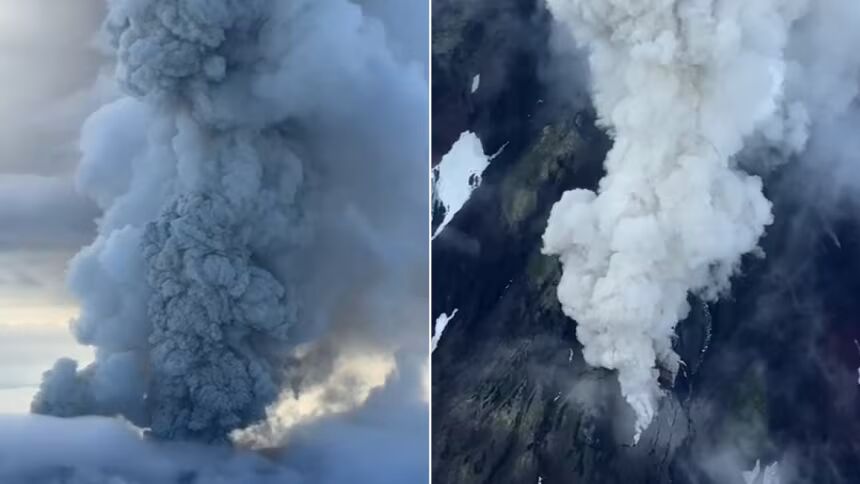
“This is the first historically confirmed eruption of Krasheninnikov Volcano in 600 years,” said Olga Girina, head of the Kamchatka Volcanic Eruption Response Team. “The eruption may be connected to the recent earthquake activity.”
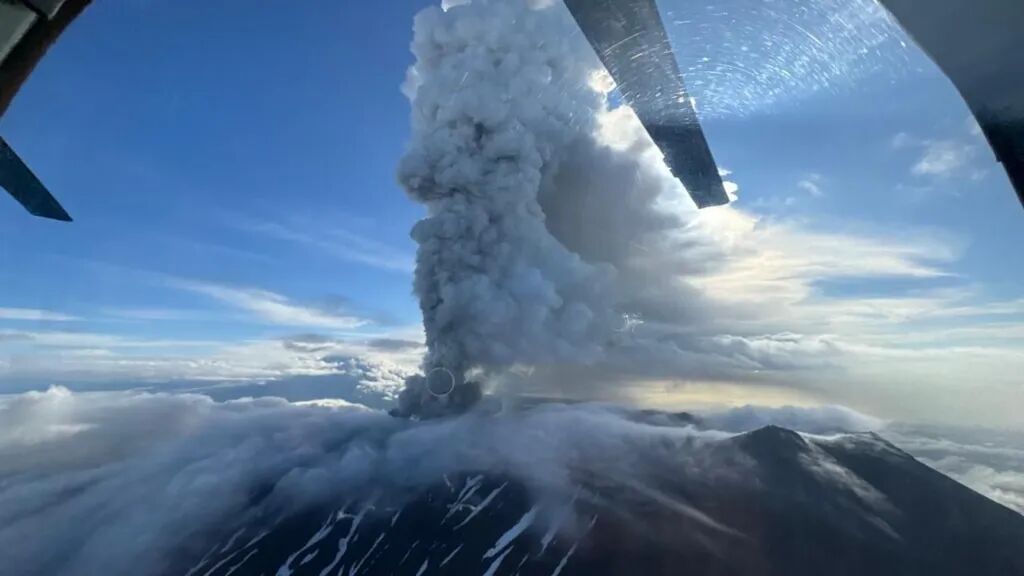
The Kamchatka emergency ministry confirmed the ash plume reached 6,000 meters (19,685 feet) and drifted east toward the Pacific Ocean. Officials stated there are no populated areas in the plume’s path. The volcano itself stands at 1,856 meters (6,089 feet).
An orange aviation code was issued for the volcano, signaling a significant threat to aircraft due to ash in the atmosphere. Russia’s meteorological services continue to monitor air quality and flight safety along regional air corridors.
Photos shared by the Russian Institute of Volcanology and Seismology showed the ash cloud towering above the crater, taken from a helicopter during a survey of the site. Scientists say the last lava flow from Krasheninnikov likely occurred in 1463, give or take 40 years.
The Kamchatka Peninsula lies within the Pacific “Ring of Fire,” an area known for frequent earthquakes and active volcanoes. Following last week’s 8.8 magnitude quake, tsunami warnings reached as far as French Polynesia and Chile. While the massive quake did not cause widespread tsunami damage, geologists warned that strong aftershocks and volcanic responses could continue for weeks.
The 7.0 aftershock that struck Sunday forced authorities to issue new local tsunami alerts in three parts of Kamchatka. Waves of up to 18 centimeters (7 inches) were projected, and coastal residents were instructed to move away from the shore.
Girina reiterated that the eruption of Krasheninnikov follows activity from Klyuchevskoy Volcano, Kamchatka’s most active volcano, which erupted shortly after the initial quake. “The tectonic shifts may have triggered pressure changes beneath long-dormant volcanic systems,” she said.
The region, though sparsely populated is home to critical research stations and protected natural reserves. Authorities have not reported any casualties or damage from the eruption or the quake aftershocks.
Russia’s emergency services continue to assess the situation. Monitoring teams remain on high alert as seismic activity persists along the peninsula.
As of Sunday evening, flights in eastern Russia were being rerouted away from the ash zone, and scientists were preparing for possible further eruptions. The sudden reawakening of Krasheninnikov underscores the unpredictable nature of the Pacific Rim and has prompted renewed scientific attention to other dormant volcanoes across the region.
About the Author