SWITCH MEDIA -KENYA
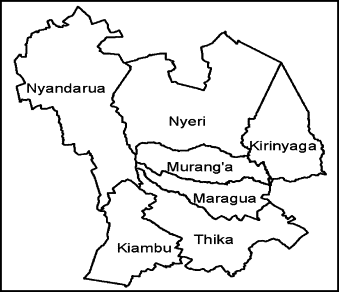
When people think of Central Kenya, they often picture rolling green hills, vibrant farms, and thriving markets. The region-comprising counties like Murang’a, Nyeri, Kirinyaga, Kiambu, Embu, and Nyandarua-is widely regarded as the heart of Kenya’s agricultural wealth. It’s a place where tea and coffee plantations stretch for miles, and food is expected to be both plentiful and nutritious. But behind this picture of abundance lies a troubling and lesser-known reality: Central Kenya has some of the highest rates of child malnutrition in the country.
This might sound counterintuitive. How can malnutrition exist, let alone thrive, in an area known for its food production? Yet recent reports and national surveys tell a different story-one that challenges assumptions and calls for urgent attention.
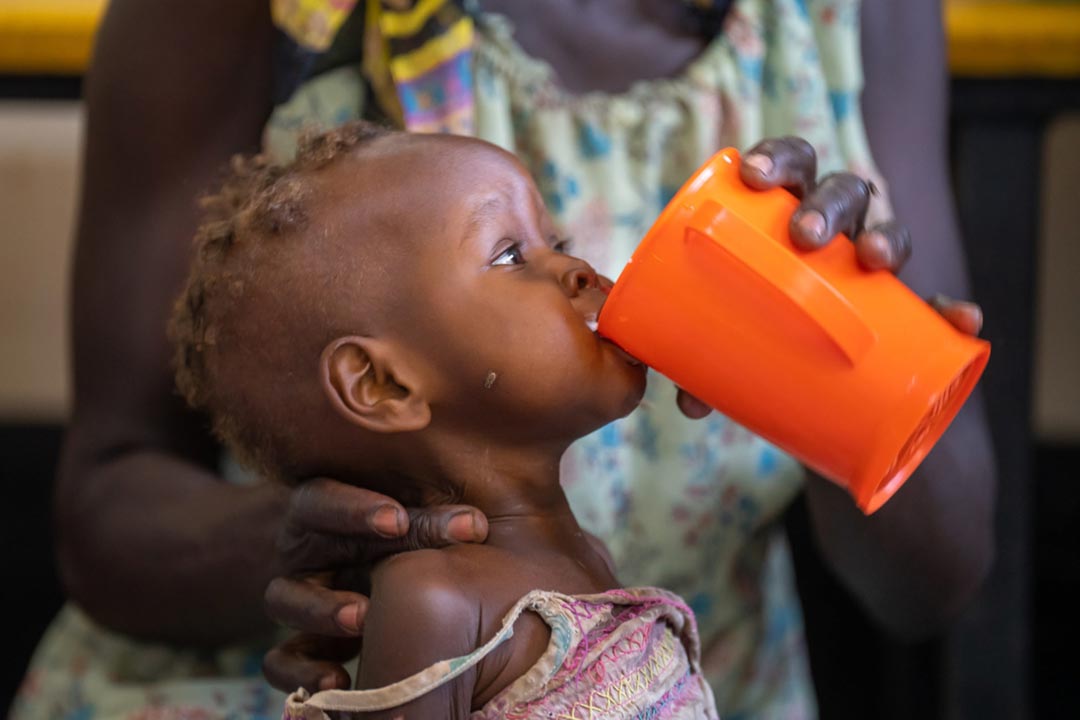
Child malnutrition is not always about the absence of food; it’s about the absence of the right kind of food, given in the right way, at the right time. According to the Kenya Demographic and Health Survey (KDHS) 2022, nearly 27% of children in Central Kenya are stunted, meaning they are too short for their age. This is higher than the national average, which hovers around 21%. Stunting is a long-term form of malnutrition that results from chronic undernutrition during the most critical periods of growth and development-especially the first 1,000 days of life. It often leads to poor cognitive development, weakened immunity, and diminished future productivity.
In addition to stunting, wasting-when a child is too thin for their height due to rapid weight loss or failure to gain weight-is also present, though less visible. Data from UNICEF Kenya (2023) shows that wasting rates in parts of Kiambu and Nyandarua approach 7%, a figure classified by WHO as “serious.” Meanwhile, underweight children-those who weigh less than what’s expected for their age-make up over 18% in some informal settlements around Embu and Murang’a, according to Nutrition International (2024). These statistics represent more than just numbers; they are warning signs of a deep-seated crisis.
So what’s causing this nutritional emergency in a region that should, by all logic, be immune?
One major factor is the soaring cost of living, which has gripped the country over the last three years. Between 2022 and 2024, the price of key food staples such as maize flour, cooking oil, and milk rose by nearly 40%, as reported by Citizen TV Kenya in a 2024 feature. While wealthy households have absorbed the shocks, many families-especially those in low-income urban areas like Limuru, Karatina, or Githurai-have been forced to make tough choices. For some, this has meant feeding children diluted porridge or skipping meals entirely.
The irony of rural poverty is also at play. Many smallholder farmers in Nyeri and Murang’a grow cash crops like tea or coffee, which are sold to cooperatives or export markets, but not necessarily consumed at home. As a result, children may live in homes surrounded by crops, but still face an empty plate at mealtime.
Poor breastfeeding practices also contribute significantly to early childhood malnutrition. While exclusive breastfeeding is recommended for the first six months of life, cultural myths and workplace challenges often interfere. In many communities, there’s still a belief that water or porridge must be introduced early to “quench the baby,” a practice that compromises infant nutrition and exposes babies to infections.
At the same time, many working mothers face systemic obstacles. Few public institutions and private businesses in Central Kenya offer lactation rooms-safe, clean spaces where mothers can breastfeed or express milk. As one community health nurse in Kirinyaga explained, “We have mothers coming to the clinic worried they can’t breastfeed at work, so they start weaning too early. Most don’t have support.” Her voice reflects the experience of many others-mothers torn between earning a living and feeding their child right.
Climate variability has added another layer of complexity. While Central Kenya has historically enjoyed favorable weather patterns, recent years have seen unpredictable rainfall, longer dry spells, and even flash floods. According to WFP Kenya’s 2025 update, this climate instability has disrupted planting seasons, reduced harvests, and left many families food insecure-especially those relying on subsistence farming in Nyandarua and Embu.
Then there are the urban slums, often hidden behind the region’s more polished facade. In towns like Thika and Murang’a, informal settlements have grown rapidly, housing families who struggle with overcrowding, poor sanitation, and low-income jobs. In such settings, food quality and hygiene are often compromised. A 29-year-old mother from one of Thika’s informal settlements shared, “We try to give our children a good meal, but sometimes it’s just tea and bread. Fruits or vegetables? Those are a luxury.”
Cultural feeding myths also linger. Some parents avoid feeding eggs or meat to young children, fearing they might develop a “bad appetite” or become too expensive to maintain. Others withhold certain vegetables or legumes due to outdated beliefs, further narrowing the child’s nutritional intake. These practices, though often rooted in tradition, have harmful consequences when left unchallenged by public education or health outreach.
Yet, amidst the crisis, there is hope. NGOs, county governments, and health workers are making efforts-though limited by resources-to address the issue. Community outreach programs in Murang’a and Nyeri have started promoting nutrition education in local dialects, tackling misconceptions head-on. There are small-scale initiatives providing fortified porridge flour to vulnerable households and training mothers on proper weaning techniques. But the scale of the problem requires much more.
This is not just a call to provide food-it’s a call to transform systems. Malnutrition in Central Kenya is a symptom of deeper inequalities: unequal access to information, unequal maternal support in workplaces, and unequal economic opportunity, even in agriculturally rich areas.
Addressing this hidden crisis means prioritizing infant and maternal nutrition in county budgets. It means building lactating mothers’ rooms in government offices, health facilities, and markets. It means empowering women through education and microfinance, ensuring they can afford diverse and nutritious meals for their children. And it means rethinking agricultural policies, so that food grown in Central Kenya doesn’t just feed markets, but also the mouths of the children who live there.
To every stakeholder reading this-whether you are part of a local NGO, a county official, a healthcare worker, or a donor-this is your moment to act. Hunger may not always look like a starving child; sometimes, it hides behind a uniform, a school desk, or a rural homestead. But its impact is just as devastating.
In the fields of Central Kenya, food may grow in abundance. Now, we must ensure that nutrition does too.
About the Author