The White House confirmed on Thursday that President Donald Trump has been diagnosed with a vein condition known as chronic venous insufficiency, days after photos of bruising on his hand and swelling in his legs raised questions about his health.
Speaking to reporters, Press Secretary Karoline Leavitt said the 79-year-old president had recently undergone a “comprehensive exam” after experiencing noticeable swelling in his legs. Vascular tests revealed the condition, which affects how blood flows from the legs back to the heart.
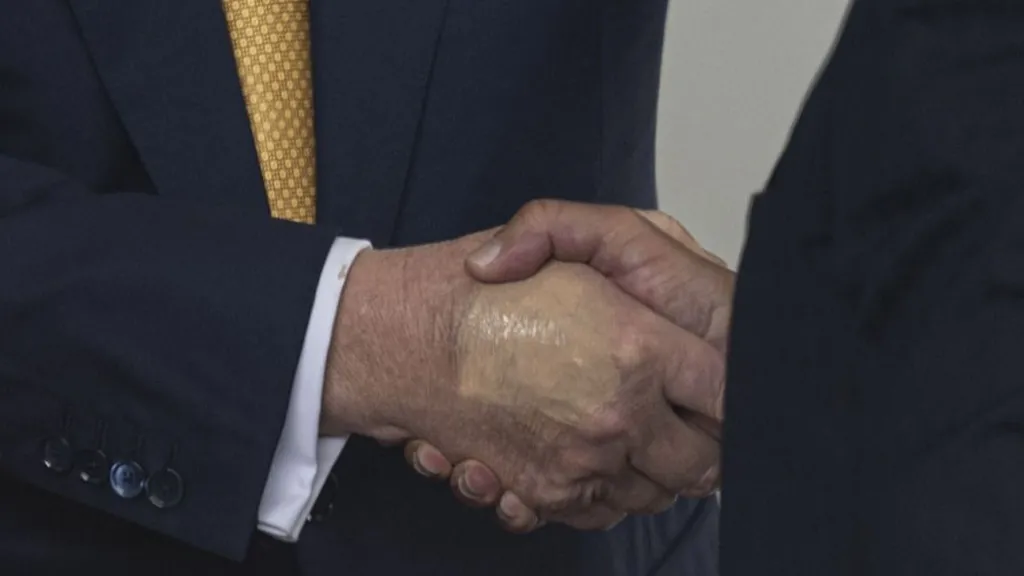
She said the bruising on his hand first seen during a meeting with the Bahraini Prime Minister on Tuesday was likely due to frequent handshaking combined with his daily use of aspirin, which can thin the blood.
“This is consistent with minor tissue damage,” Leavitt told journalists. “The president is taking aspirin as part of a standard cardiovascular prevention plan.”
The condition, doctors say, is common in older adults and often harmless.
What the Tests Showed
A detailed note released by White House physician Dr Sean Barbabella echoed Leavitt’s remarks. He described the diagnosis as “benign and common,” especially in people over the age of 70.
“There is no evidence of deep vein thrombosis or arterial disease,” Dr Barbabella wrote. “Additional tests showed no signs of heart failure, kidney problems, or any underlying illness.”
He concluded that President Trump remains in “excellent health.”
What Is Chronic Venous Insufficiency?
According to vascular specialists, the condition occurs when the veins in the legs don’t work as they should. Instead of pushing blood upward toward the heart, weakened valves allow blood to pool in the legs, leading to swelling, heaviness, and discomfort.
“It’s very common and not dangerous on its own,” said Dr Meryl Logan, a vascular surgeon at the University of Texas at Austin. “It becomes an issue only if it’s ignored for a long time.”
Dr Matthew Edwards, chair of vascular surgery at Wake Forest University, said that between 10 and 35% of people in Trump’s age group are likely to have it.
Risk factors include ageing, obesity, past blood clots, and jobs that require long periods of standing. Treatment often includes wearing compression stockings and elevating the legs at night.
And the Bruised Hand?
The president’s bruised hand, which first appeared in February during a meeting with French President Emmanuel Macron, was not linked to the vein condition.
“It’s more likely the bruising was caused by repeated handshakes and aspirin use,” said Dr Edwards. “People on blood thinners, especially older adults, tend to bruise more easily.”
He added, “If someone gives you a firm handshake and you’re on aspirin, a bruise is definitely possible.”
Health and Politics
Trump, who is seeking a return to office in 2028, has long portrayed himself as a picture of strength and vitality. At 78 years and 7 months, he became the oldest president ever sworn in when he began his second term in January.
His age and health have often come under scrutiny, particularly as concerns grow around the physical demands of the presidency. Following his annual physical in April, Dr Barbabella reported that Trump “exhibits cognitive and physical health.”
About the Author