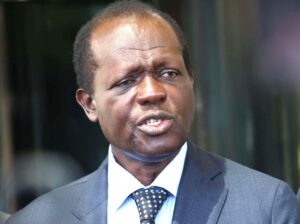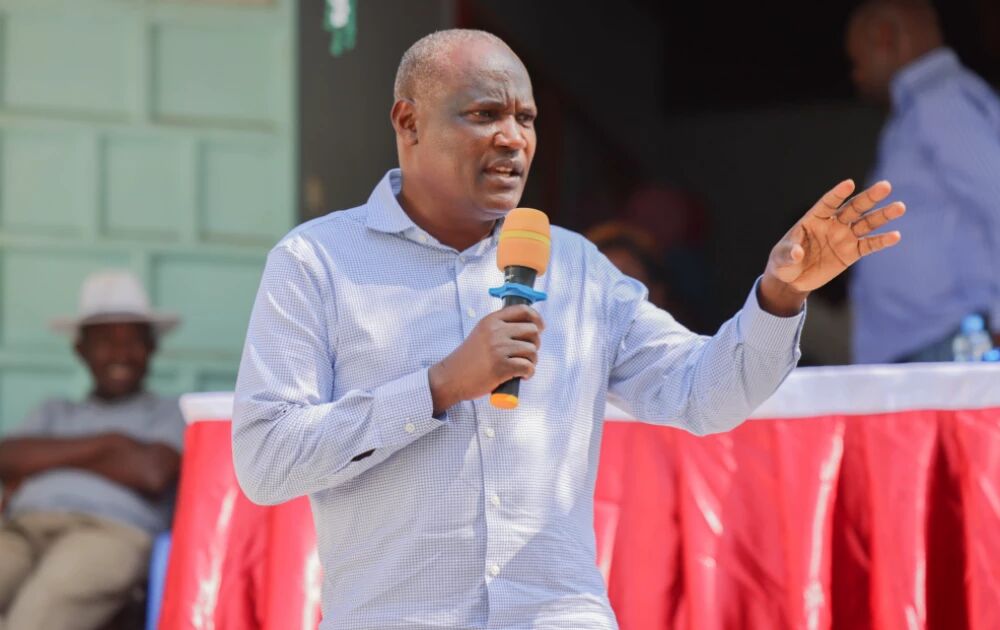
NAIROBI – Treasury Cabinet Secretary John Mbadi has faulted Parliament for the growing shortfall in school capitation funding, arguing that lawmakers approved a budget that falls far below the policy target. Speaking at a thanksgiving event in Suba South on Friday, Mbadi said the National Treasury had released the full amount set aside in the current education budget, but the figures remain insufficient. According to government policy, each student in public day secondary school is entitled to KSh22,244 annually, but the actual allocation this year amounts to about KSh17,000.
“We disbursed every shilling allocated in the budget,” CS Mbadi stated. “But that does not mean it’s enough. The truth is we’ve never been able to meet the KSh22,000 per student.”. CS Mbadi reiterated that the government allocates KSh15,000 for junior secondary learners and KSh1,400 for each primary school pupil. He emphasized that the funding gap is nothing foreign, and even past administrations failed to fully meet the per-student target.
CS Mbadi said criticism of the Treasury over delayed or incomplete disbursements was misplaced. Mbadi accused Parliament of cutting the ministry’s capitation proposals during the latest budget process. “In the current budget, Parliament reduced the amount we had requested for capitation,” he said. “Then MPs turn around and ask why we can’t pay KSh22,000 per learner. They passed the budget where do they expect me to get the extra money?”
CS Mbadi proposed using part of the KSh58 billion National Government Constituency Development Fund (NG-CDF), which sets aside KSh21 billion for bursaries. Mbadi suggested redirecting 40% of that figure to support capitation directly. “If we pooled these bursary funds, no child would need to approach their MP for school fees. The government would already have paid,” he said.
CS Mbadi proposed merging bursary allocations from NG-CDF, the Government Affirmative Action Fund (GAAF), and county programs into a single national fund to ensure uniform support for learners.
CS Mbadi challenged a common claim that former President Mwai Kibaki introduced free secondary education. Mbadi clarified that Kibaki only implemented free primary education, while President Uhuru Kenyatta rolled out the Free Day Secondary Education program. “For ten years, Kibaki never introduced free secondary education,” CS Mbadi said. “It was Uhuru who first subsidized it, then made it free for day schools.”
CS Mbadi’s remarks followed criticism over comments he made earlier in the week before a parliamentary committee, where he said the government could not sustain full funding of free education. The statements drew concern from parents, education groups, and lawmakers.
He defended his position, stating, “We like fiction in Kenya. People prefer to hear what makes them feel good. But the truth is there’s a gap, and we must deal with it.”
In Kilifi, Basic Education Principal Secretary Julius Bitok responded to the backlash, affirming that the policy on free education remains unchanged. “The government will not abolish free primary and secondary education,” PS Bitok said. “We are working to close the capitation gap through parliamentary support.”
PS Bitok confirmed that while the Ministry of Education received a record KSh702 billion for the current financial year, the amount still falls short of sector demands. He said the government will continue pressing Parliament to boost capitation funding and support national exams. “Growing enrollment means our needs are rising,” PS Bitok said. “We’re focused on ensuring that no learner is left behind due to lack of funding.”
As the education debate intensifies, the Treasury’s proposal to realign bursary funds may face political resistance, but it marks a shift in how the government aims to fund one of its most critical public services.
About the Author