
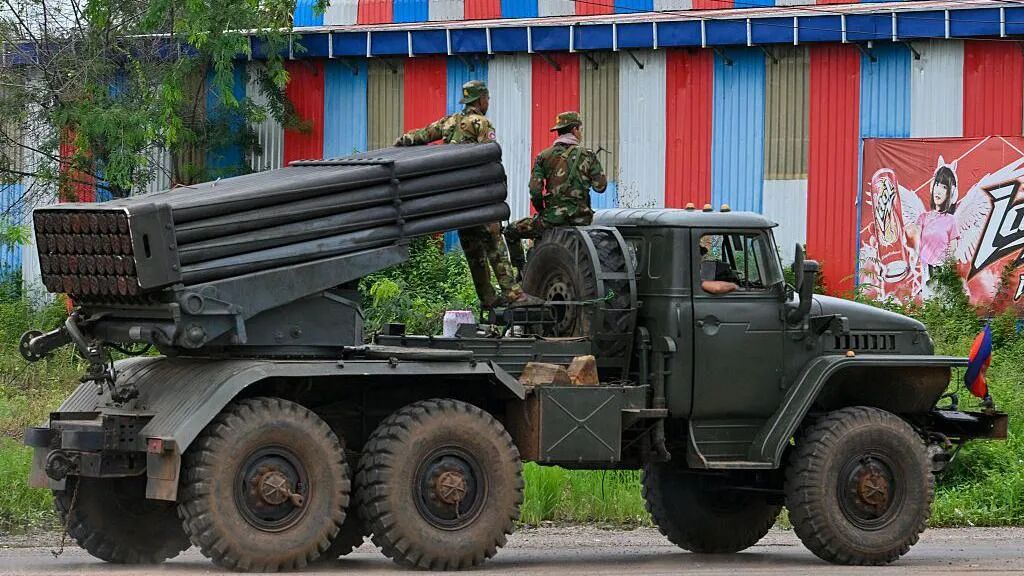
Tensions flared again Tuesday after Thailand accused Cambodia of violating a ceasefire just hours after both countries agreed to halt five days of deadly cross-border fighting. According to the Thailand millitary, its forces ceased firing after midnight Monday. But by dawn Tuesday, Thailand security forces reported sustained gunfire from Cambodian positions “at multiple locations” along the disputed border. Thailand officials has not disclosed further casualties but said its troops remained in defensive positions.
Cambodia’s defense ministry denied the accusation, saying “no armed clashes” had occurred since the ceasefire took effect. It maintained that its troops had honored the agreement. The accusations surfaced only hours after ceasefire agreement from Prime Minister of Cambodia and Prime Minister of Thailand met Tuesday morning and affirmed peaceful commitments to a ceasefire, freeze troop movements, and recover the bodies of fallen soldiers.
The fragile truce follows days of heavy bombardment, rocket fire, and airstrikes that left at least 33 people dead and forced more than 20,000 residents to flee to shelters. Most of the displaced are civilians living in rural villages along the Thai-Cambodian border, an area long fraught with unresolved territorial disputes.
Violence escalated last week after a Thailand military vehicle struck a landmine near the frontier, injuring five soldiers. That triggered a series of retaliatory strikes. On Thursday, Cambodia launched multiple rockets into Thai territory, killing civilians and damaging property. Thai airstrikes followed over the weekend.
On Monday, the two sides reached a ceasefire during emergency talks in Malaysia. Cambodian Prime Minister Hun Manet called it a “very good meeting,” and said the agreement gave both sides space to de-escalate. Thai Deputy Prime Minister Phumtham Wechayachai joined the talks, which were hosted by Malaysian Prime Minister Anwar Ibrahim.
PM Hun Manet said Tuesday that “the frontlines have eased since midnight,” but his remarks came before Thailand’s military publicly accused Cambodia of firing again.
Under the ceasefire terms, both sides agreed to pull back troops, allow international monitoring, and restore communication between local military officials. Independent monitors have not yet been deployed.
The border fighting marks the worst violence between the neighbors since 2011. The current flare-up has roots in a long-running dispute over a strip of land surrounding the 11th-century Preah Vihear temple. In 2008, Cambodia’s move to list the temple as a UNESCO World Heritage Site drew sharp protest from Thailand, reigniting nationalist tensions.
Border clashes since then have been sporadic but deadly. In May, a Cambodian soldier was killed in a skirmish, further straining ties. This month, both countries imposed mutual restrictions. Cambodia banned Thailand imports, including fruit and electricity. Thailand expelled Cambodia’s ambassador and recalled its envoy from Phnom Penh.
Thailand initially resisted negotiations, but agreed to the ceasefire talks after U.S. President Donald Trump threatened to freeze trade talks with both countries unless they stopped fighting.
Despite the ceasefire breakdown, both governments say they remain committed to dialogue. Prime Minister of Cambodia and Prime Minister of Thailand plan to hold another round of field-level discussions later this week.
Diplomatic sources say Malaysia may offer to mediate further if tensions persist.
The border remains sealed in key regions, and both militaries continue to reinforce positions near the conflict zone. No new fighting was reported Tuesday afternoon.
This latest breakdown risks dragging Southeast Asia into deeper instability and could draw in regional powers if fighting continues. The decades-long dispute over the Preah Vihear area remains unresolved, and this ceasefire failure signals how volatile the border remains
About the Author