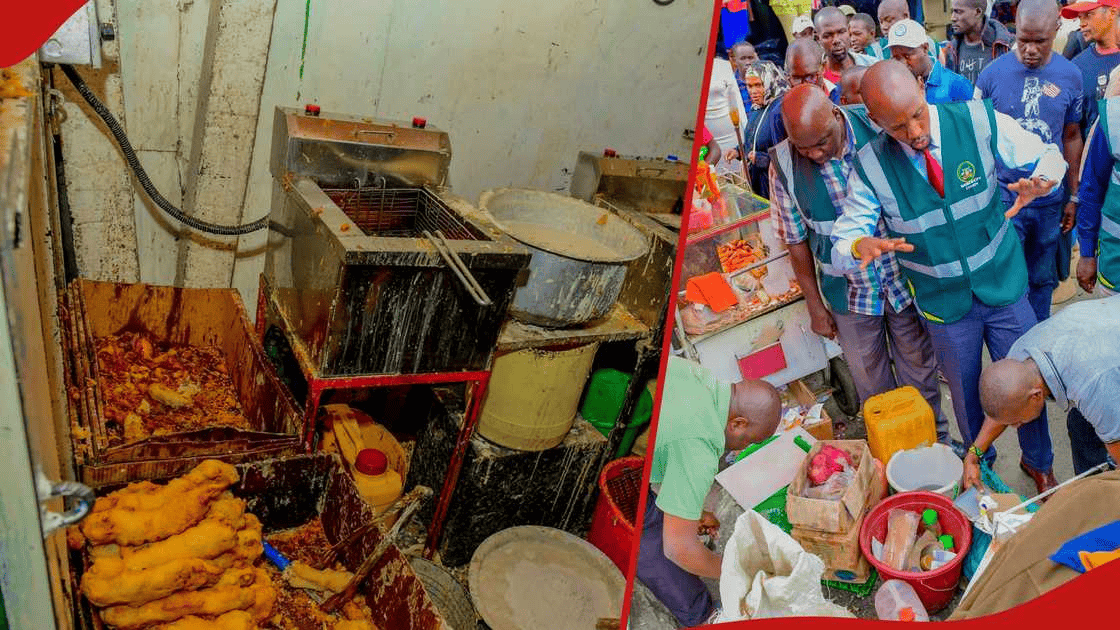
Nairobi residents are voicing growing fears over the safety of street food and drinks, following claims that rotten fruits are being used to make juice and unsanitary foods are being sold in the city’s bustling streets. Many exposes done by Geoffrey Mosiria the Chief Officer Environment on his Social Media handles bursts street vendors who sell unsanitary food, beverages and drinks. The exposes include street foods made using rancid or expired cooking oil, rotten food, juices made with rotten fruits, rodents infested restaurants, selling carts stored inside toilets, poor handling of food where vendors don’t use gloves and masks, washing of containers and dishes with sewage water, lack of licenses and proper skills to sell and handle food.
Geoffrey Mosiria the Chief Officer Environment since moving to the environment docket, has led high-impact campaigns against unsanitary street food and illegal dumping and waste mismanagement.
As Chief Officer for Environment, Geoffrey Mosiria has built a reputation as a hands‑on enforcer. In recent months, his efforts include shutting down filthy street food kiosks found to be using filthy utensils or recycled oil, illegal dumpsites and enforcing noise and litter controls across the city. He recently shut down an illegal dumping site in Mukuru, seizing lorries and launching legal action. He also enforced clean‑up orders at matatu stages and night markets, banning hooting, clubs causing unnecessary noise, neighbors who are noisy, churches that disrupt local residents and setting fines for litter and abandoned vehicles.
Geoffrey Mosiria has also made great effort in Pipeline Nairobi where he cleaned the streets and called out residents who dump garbage from their houses. He urged landlords, apartment caretakers and residents that he will start an operation of arresting them for dumping garbage on the roadsides and streets. He advised them to have garbage bags for proper disposal instead. He commented that Kenyans cannot be disposing garbage poorly and calling out the government for not doing their job. He called it, an act of impunity happening in Pipeline that must be stopped at all costs.
He has won national awards and recognition for improving public health through better hygiene and sanitation.
Nairobian’s have recently been praising him for improving public well-being through sanitation interventions calling him “a voice for cleaner, healthier Nairobi”.
Food street vendors are among the many small business owners in Nairobi. The business has become a livelihood for many and that has been a great improvement in terms of economy and providing opportunities for many Kenyans.
A wave of concern is rippling through Nairobi as residents report cases of stomach pain and infection. They blame street‑sold food and drinks allegedly made from rotten ingredients and made in unsanitary places. Some fear the bacterial culprit may be Helicobacter pylori, a bacteria known to cause ulcers.
“This is exactly why we keep complaining about H. pylori and constant stomach pains,” read one viral post made by TheNairobiTea page on TikTok, accusing some street vendors of compromising public health.
Residents say the food is cheap, popular and widely available that’s why they opt for it but yet recognizing that it is possibly unregulated and unhygienic.
Experts have warned that repeated stomach infections could point to poor food hygiene or bacterial contamination. While H. pylori is common and treatable, its source is often linked to unsanitary handling of food or water.
The public is now urging Nairobi County health officials, led by Geoffrey Mosiria, to take stricter action against unsafe food handling practices. “This is also part of environmental health,” the post continued, highlighting the connection between poor sanitation and rising illness.
Street vendors plead their case. Many operate on tight margins and argue that enforcement without support would threaten their incomes. They argue that training or guidance would help, but sudden fines would hurt them.
Public health advocates, on the other hand, stress that wellness cannot be sacrificed. They say spoiled food is a known risk and weak oversight has long allowed unsafe practices.
While street food is a staple for many city dwellers, some doctors online warn that poor hygiene and the use of spoiled ingredients could be fueling the spread of gastrointestinal infections. Vendors, however, argue that not all are compromising the public health and closure of all street vendors would affect their livelihoods instead the government should provide better support and training on safe food practices.
Health officials have asked the public to be vigilant and be careful
Local residents are calling for routine inspections and enforcement of food safety standards to prevent future outbreaks.
Next steps:
Kenyans have provided street food vendors some options which include; to provide garbage cans for proper disposal, cook and make food made in sanitary conditions with fresh and proper ingredients, to wash containers and dishes thoroughly with clean and safe water, provide dispensed drinking water, stop selling expired food or that is cooked with rancid cooking oil, to fumigate and clean kitchens, restaurants and eating joints, to handle food with care using gloves and masks, to acquire proper skills and training on how to handle food and to acquire licenses.
Public pressure is mounting. Residents want prompt inspections of street vendors and clear standards enforced. Health experts suggest microbiological tests of popular food and beverages sold in public.
Street vendors continue to ask for training on safe food handling. Advocates call for a shared approach cleaner streets, safer food, fair livelihoods.
About the Author