A lawyer has filed a lawsuit challenging President William Ruto’s construction of a Sh1.2 billion mega‑church within the State House complex, raising fresh debate over government neutrality in religious matters.
Attorney Ndegwa Njiru, in a petition lodged on Saturday, argues that the church claimed to seat 8,000 worshipers violates Article 8 of Kenya’s constitution, which enshrines the principle of no state religion. He demands the courts halt the project and require Ruto to either build alternative places of worship for other faiths or remove the structure entirely.
“If you build a church, you must equally build a mosque, a Hindu temple and a traditional shrine,” Njiru said on X, warning that failing to do so would prompt legal action.
Public Outrage Over Priorities
The announcement of the church’s construction sparked widespread criticism. Online commentators juxtaposed it with underfunded schools and hospitals, questioning the morality of prioritizing lavish religious buildings over public services. One user commented,
“While children sit on stones in mud-walled classrooms. Ruto is spending KSh 1.2 bn on a church.”
Critics also pointed to the use of public land for a religious purpose. Constitutional lawyer Kibe Mungai described the move as a direct breach of Article 8 and a threat to national unity.
Ruto Says It’s Private and Personal
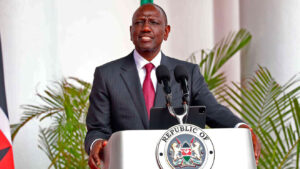
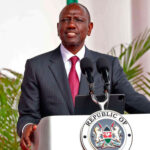
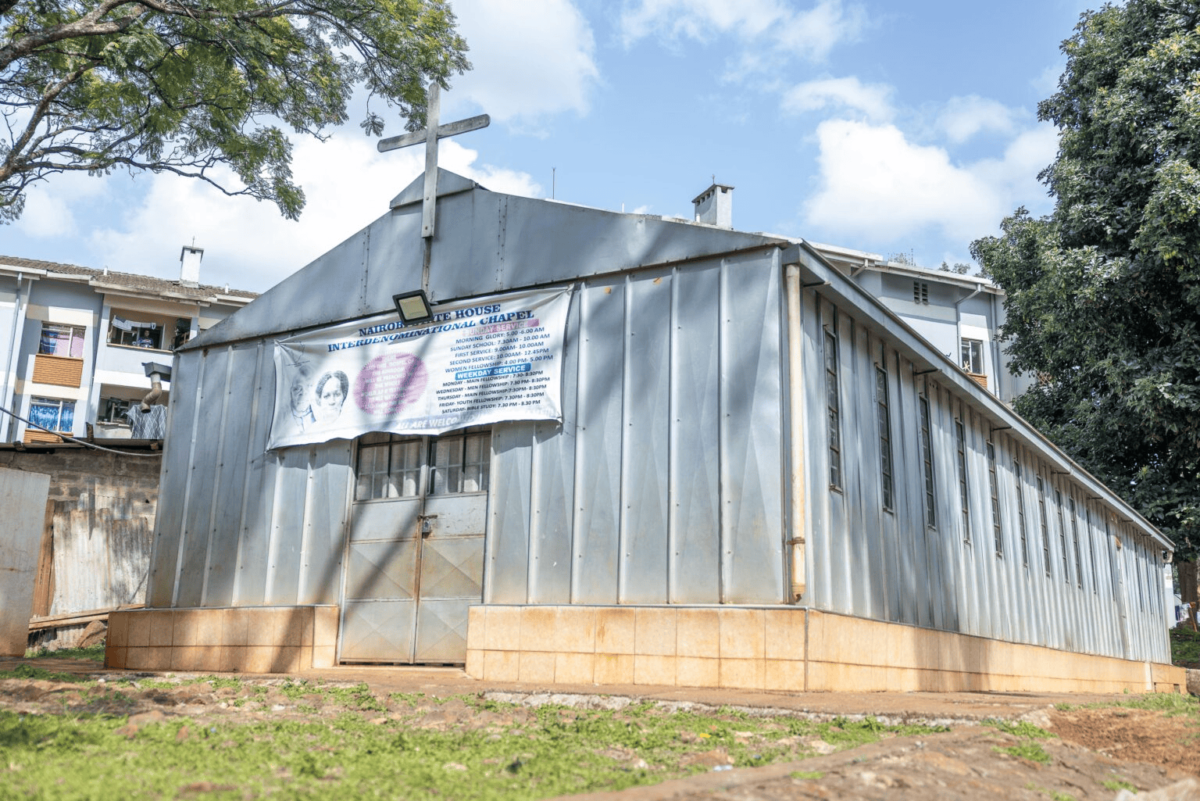
President Ruto, speaking at State House, defended the project, insisting it was privately funded. “I am not using government money… it will not cost the country a single shilling,” he said, describing the former iron-sheet chapel as unbefitting of the presidential residence.
He added: “I am a believer in God and I have no apologies to make… let Satan be angry if he must.”
Legal Experts Call It Precipitous
Lawyers and activists have urged caution. Paul Muite questioned the decision to locate a religious building at the heart of executive power, pointing out that no equivalent facilities exist on‑site for Muslims, Hindus, or followers of African traditional faiths.
Wiper leader Kalonzo Musyoka added that such construction on government land is “impeachable”.
The Atheists Society of Kenya has also vowed to initiate court action, labeling the project “anti‑democratic”.
A Test for Secular Governance
The petition now moves to court. At stake is the interpretation of constitutional limits: whether a privately funded church on public land undermines the secular values set out in the 2010 Constitution.
About the Author