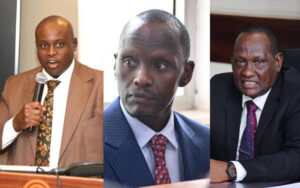
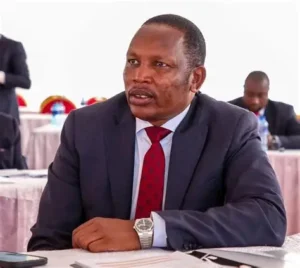
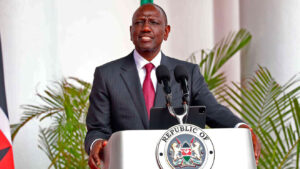
Nairobi —President William Ruto has re-gazetted the appointment of a new Independent Electoral and Boundaries Commission (IEBC) team, reaffirming Erastus Edung Ethekon as Chairperson and naming six commissioners. This follows a High Court ruling that invalidated a previous gazette notice issued on June 10.
The court upheld the legality of the selection process but found that the earlier publication violated an active court order. Judges instructed the President to issue a fresh notice to formalize the appointments.
In a gazette notice dated July 10, Ruto stated:
“In exercise of the powers conferred by Article 250 (2) as read with section 5(2) of the IEBC Act and Paragraph 4 of the First Schedule to the Act, I, William Samoei Ruto, President of the Republic of Kenya, appoint Erastus Edung Ethekon to be Chairperson of the IEBC for a period of six years.”
Alongside Ethekon, the President appointed Ann Njeri Nderitu, Moses Alutalala Mukhwana, Mary Karen Sorobit, Hassan Noor Hassan, Francis Odhiambo Aduol, and Fahima Araphat Abdallah as commissioners. All appointees are set to serve a single six-year term.
The move unlocks the next phase in the electoral process. The commissioners are now expected to take the oath of office and begin preparations to manage the 2027 General Election.
The reappointment signals a critical step in filling the electoral commission’s top positions, which have remained vacant since the resignation and dismissal of previous officials in the aftermath of the 2022 elections.
The court’s intervention followed a legal petition challenging the manner in which the initial notice was issued. While it did not fault the Public Service Commission’s recruitment process or Parliament’s vetting, the court emphasized the importance of procedural compliance under Kenyan law.
This new IEBC leadership is now tasked with restoring public confidence and laying the groundwork for a credible electoral process.
The Office of the President confirmed that preparations for swearing-in are underway, pending administrative arrangements by the Judiciary.
About the Author