NAIROBI, Kenya —Nairobi’s Chief Officer for Environment, Geoffrey Mosiria, has issued a strong warning to landlords in Pipeline Estate over widespread illegal garbage dumping.
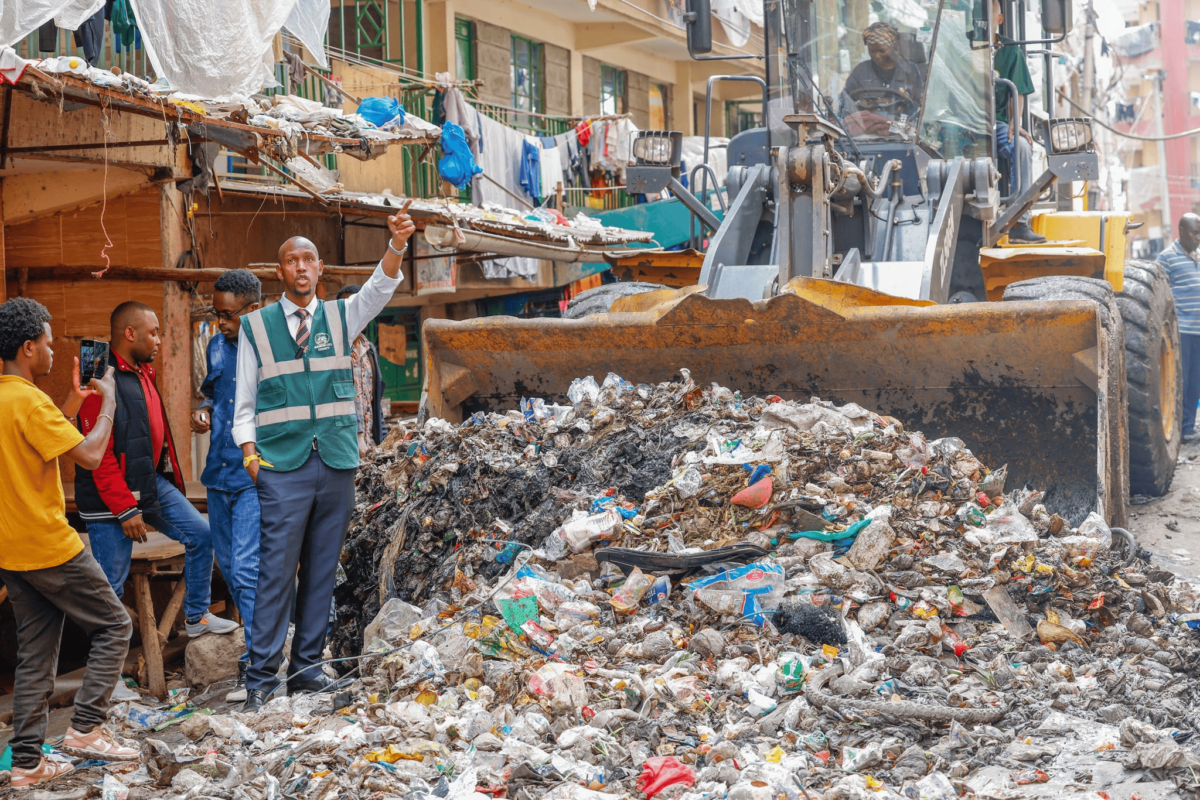
Leading a cleanup operation in the estate on Wednesday, July 16, Mosiria condemned what he described as a “high level of impunity” among property owners who have failed to provide tenants with proper waste collection services.
“It’s unfortunate that many landlords in Pipeline do not pay for garbage collection services,” he said during the exercise. “As a result, their tenants, lacking proper waste disposal options, are forced to dispose of their household waste directly onto the roads posing serious health and environmental risks.”
The cleanup revealed heaps of uncollected garbage dumped along roads and open spaces, mostly by residents with no access to licensed waste services.
Citing the Nairobi City County Solid Waste Management Act of 2015, Mosiria reminded property owners that they are legally required to maintain cleanliness within a 10-metre radius of their buildings.
“This law will be enforced fully and without exception,” he declared. “I will lead a strict enforcement exercise to ensure that all landlords, caretakers, agents, and tenants involved in illegal dumping are held accountable.”
He urged landlords to immediately contract licensed waste collectors to avoid legal action.

“All landlords, caretakers, or agents in Pipeline must move with speed and engage licensed private service providers for waste collection and transportation,” Mosiria said. “These providers will ensure garbage is properly handled and transported to designated disposal sites.”
Failure to comply will attract tough penalties. Mosiria announced upcoming inspections to verify which premises have valid waste collection contracts.
“Any property owner or manager found operating without proper waste tracking documentation will be arrested and prosecuted. No one will be allowed to continue operating while garbage piles up outside their buildings,” he warned.
The planned operation, supported by Governor Johnson Sakaja’s administration, comes as part of Nairobi’s broader efforts to clean up the city and tackle growing concerns over public hygiene and urban pollution.
About the Author