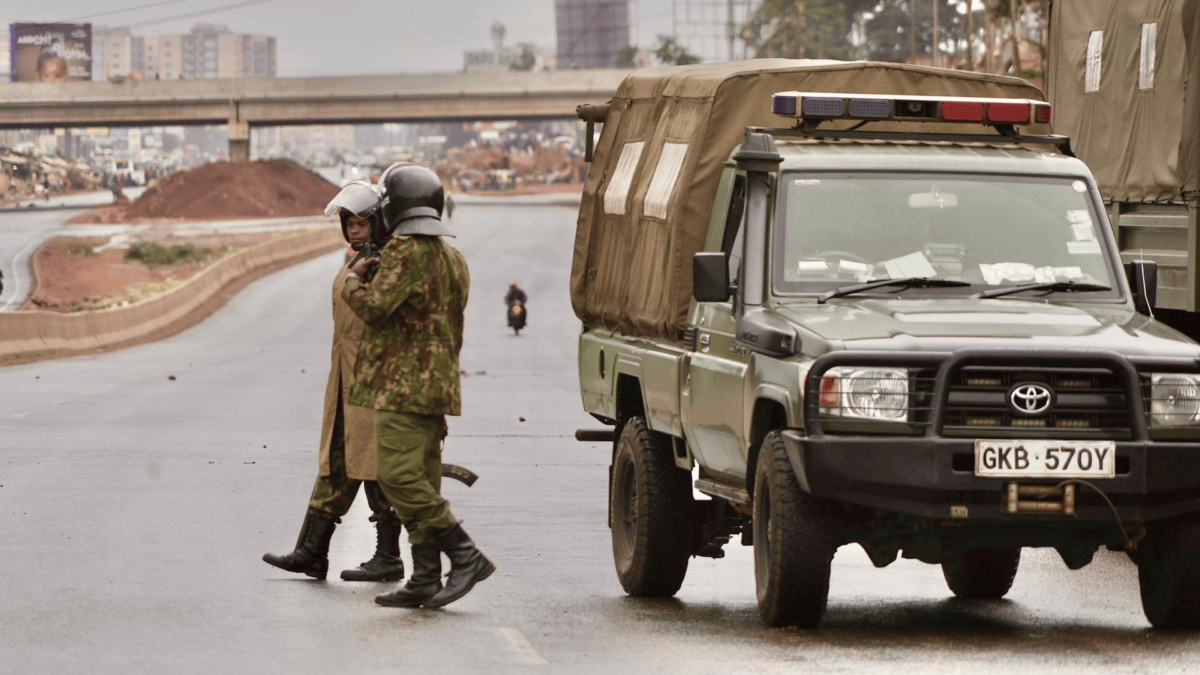
NAIROBI -On a cold Monday morning, police in riot gear blocked nearly every major road leading into the heart of Nairobi. Only government and emergency vehicles were allowed through, as officers tightened security ahead of the Saba Saba demonstrations.
From Waiyaki Way to Mombasa Road, Thika to Jogoo Road, Nairobi woke up to a city nearly sealed off. The roadblocks were a clear sign of the government’s unease over calls for mass protests. Many Kenyans trying to reach work or school were forced to walk long distances or turn back.
“I had to walk from Westlands to the CBD,” said Joseph Mwangi, a hotel worker. “There were no matatus allowed past Kangemi. I didn’t even see one private car get through.”
Similar scenes played out across the country. In Mombasa, police set up checkpoints in Likoni, Nyali, and Changamwe. In Nairobi’s Eastlands area, vehicles on Jogoo Road were rerouted through Donholm.
According to police, the roadblocks were meant to pre-empt what they feared could become violent or unlawful gatherings.
“There’s no clear leadership behind these planned protests,” one officer told The Star on condition of anonymity. “We’ve been told to stop all vehicles. Only pedestrians are allowed.”

Though the government had earlier maintained that July 7 would be a normal working day, the heavy police presence told a different story. Several city businesses remained shuttered, with some boarding up their entrances in anticipation of unrest.
Schools across Nairobi and other towns had already issued notices over the weekend, urging parents to keep children at home. Many cited safety concerns stemming from past protests, which were marked by violent clashes and accusations of police brutality.
The National Police Service (NPS) released a statement on Sunday, warning that while peaceful protest is allowed under Article 37 of the Constitution, any unlawful assembly or disruption would not be tolerated.
“All gatherings must remain peaceful and unarmed,” said police spokesperson Michael Muchiri. “Any person found with weapons will be prosecuted.”
The statement also reminded the public that damaging property, looting, or blocking roads are criminal acts. Anyone caught trying to access government installations unlawfully would face arrest under the Protected Areas Act.
Rights groups and civil society bodies say they are undeterred. For them, Saba Saba is not just a date. It is a reminder of Kenya’s long and painful journey toward multiparty democracy. On this day in 1990, brave citizens took to the streets to demand political reforms -a movement that helped dismantle one-party rule.
“This isn’t just about today,” said a representative from one civil rights group who spoke under anonymity for safety reasons. “It’s about reminding the state that the people still have a voice – and that voice must be heard.”
As morning gave way to mid-day, the streets remained tense but largely calm. But with no sign of the roadblocks being lifted, many commuters were left stranded or uncertain about how the day would unfold.
Despite the official warnings, the message on the streets is clear -Saba Saba still means something. And the push for justice, transparency, and accountability in Kenya is far from over.
About the Author