Muhammadu Buhari, the man who once ruled Nigeria as a military general and later returned as a civilian president, has died in London at the age of 82.
His death was confirmed by Garba Shehu, his former presidential spokesperson, who said Buhari passed away at a private hospital in the British capital. The cause of death has not been made public.
Buhari led Nigeria through two sharply different chapters. First, as a no-nonsense military ruler from 1983 to 1985, after seizing power in a coup. Then, after years in the political wilderness and three failed election bids, he won the presidency in 2015 as a civilian, serving two terms until 2023.
“It’s a huge loss,” said former Senate President Bukola Saraki in a statement. “Whatever one’s opinion of his leadership, he left a mark on Nigeria’s political history.”
President Bola Tinubu has ordered Vice President Kashim Shettima to fly to the UK and oversee arrangements for Buhari’s body to be returned to Nigeria. The late president is expected to be buried under Islamic rites in his hometown, Daura, Katsina State.
From Military Strongman to Elected President
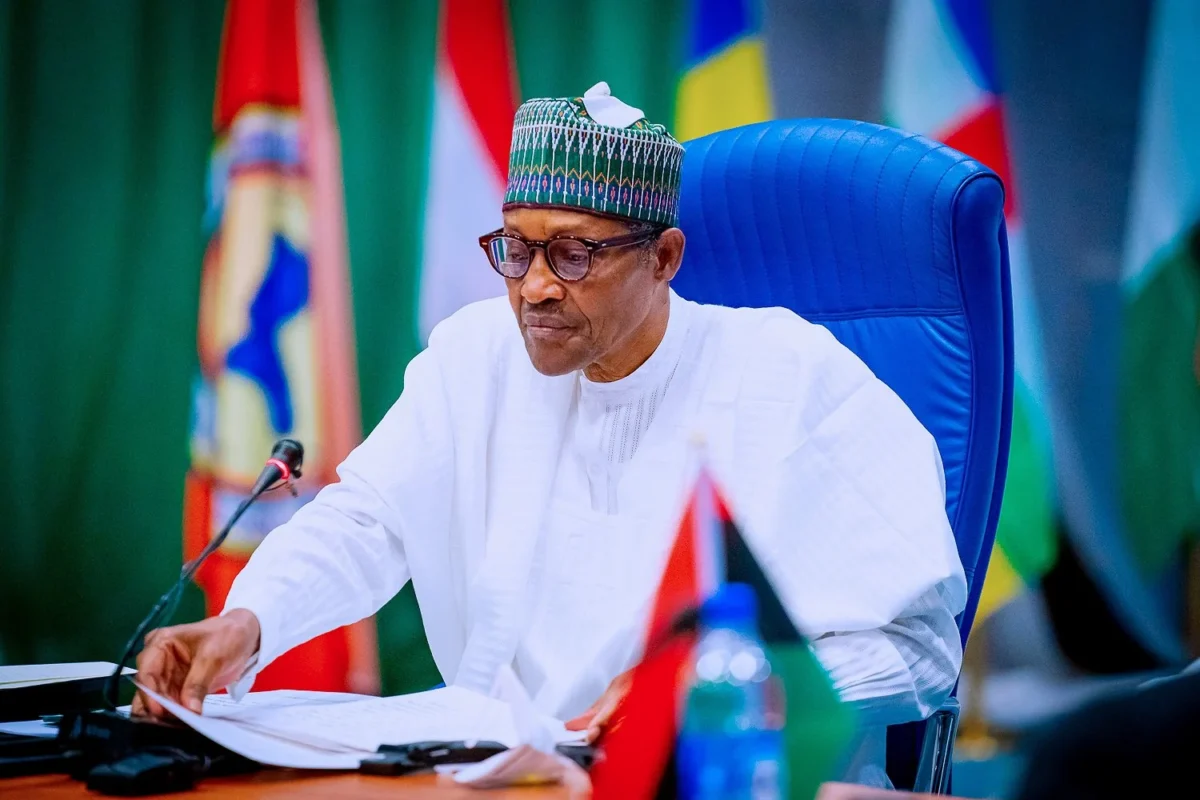
Born in December 1942 in Daura, in Nigeria’s far north, Buhari came of age in a country still finding its feet after independence. He joined the military young and rose through the ranks, gaining a reputation for discipline and austerity.
His first stint as Nigeria’s leader came after a coup in December 1983 that ousted the democratically elected government of President Shehu Shagari. Buhari promised to clean up what he called “indiscipline and corruption” in public life. But his 20-month rule was marked by crackdowns on press freedom, mass arrests, and harsh economic controls. He was removed in another coup in 1985, led by then-General Ibrahim Babangida.
Held in detention for over three years, Buhari largely stayed out of politics until Nigeria returned to democracy in 1999. Then began a slow political comeback.
He ran for president in 2003, 2007, and 2011—losing each time—before finally clinching victory in 2015 as the candidate of the newly formed All Progressives Congress (APC), unseating incumbent Goodluck Jonathan.
A Divided Legacy

Buhari’s presidency, from 2015 to 2023, was marked by both praise and criticism. Supporters saw him as a steady hand in turbulent times, committed to fighting corruption and restoring discipline. Critics accused him of authoritarian tendencies, mismanaging the economy, and failing to tackle rising insecurity, especially in Nigeria’s north.
In a farewell speech in May 2023, Buhari defended his record. “I am leaving Nigeria better than I met it,” he said, acknowledging the challenges but insisting he had done his best.
“Nigeria is not an easy country to govern,” he said in an earlier interview. “But I gave it everything I had.”
Final Journey

Buhari’s passing has drawn condolences from across Africa and beyond. Ghana’s President Nana Akufo-Addo called him “a statesman whose influence reached far beyond Nigeria’s borders.”
A state funeral is being planned, although full details are yet to be announced. For now, Nigerians are reflecting on the life of a man who shaped their country through both the barrel of a gun and the ballot box.
About the Author