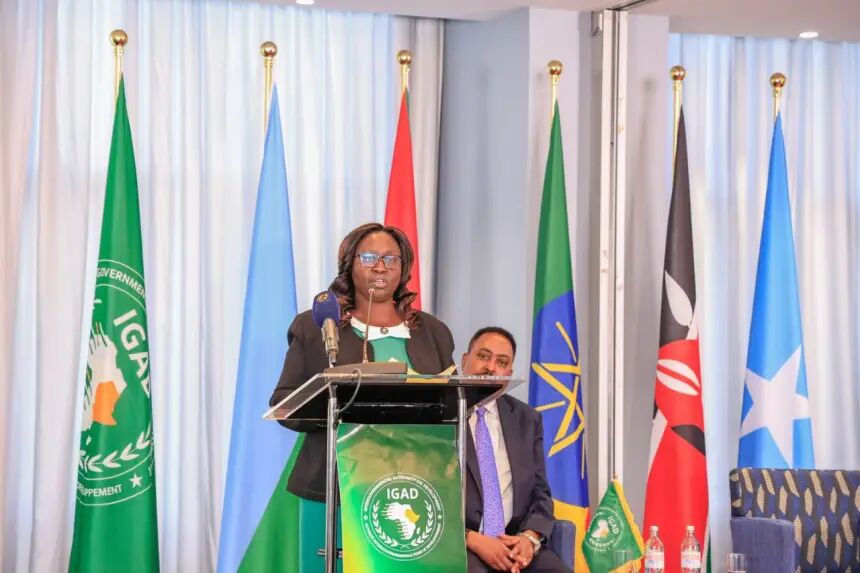
Kenya’s Gender, Culture, and Children Services Cabinet Secretary Hanna Wendot Cheptumo has called on the Intergovernmental Authority on Development (IGAD) to formally recognize and institutionalize the participation of women and youth in regional peace efforts. Speaking at the IGAD Regional Forum for Eminent Personalities and Leaders for Peace, CS Cheptumo said that peacebuilding frameworks in the Horn of Africa remain incomplete without the voices of women and younger generations.
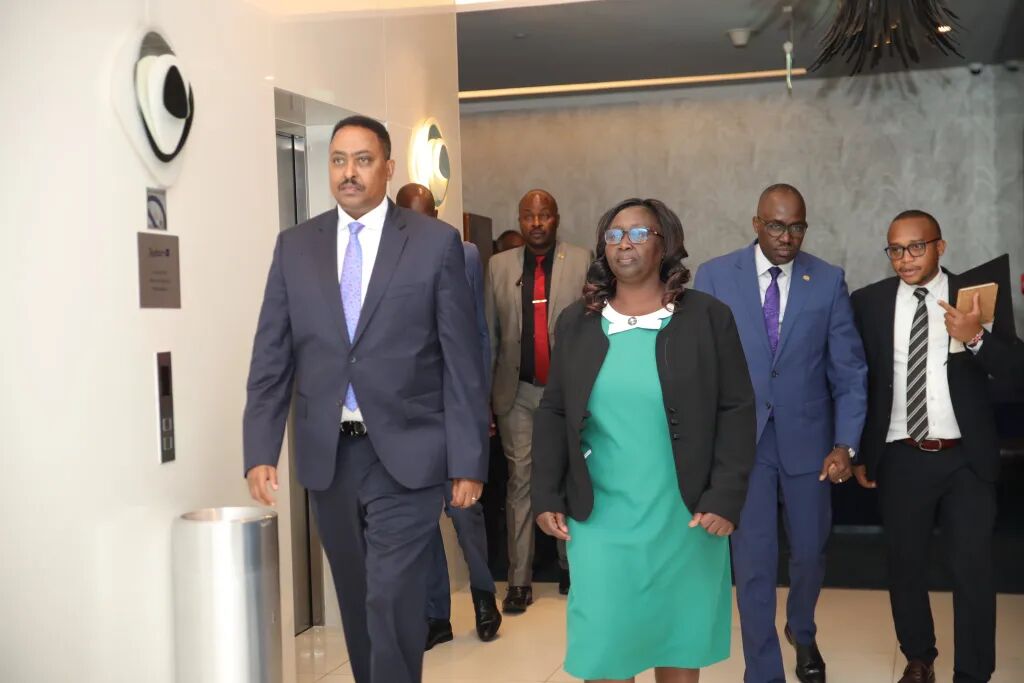
“Conflict has torn families apart, displaced communities, and shattered hope across our region,” CS Cheptumo said. “But it is women and youth who often become the informal diplomats, quietly stitching together peace where institutions have failed.”
CS Cheptumo said that despite bearing the brunt of instability, women and youth consistently take on the role of mediators at the grassroots level. She urged IGAD to embed their participation in all mediation tracks especially Track II diplomacy, which focuses on community-based conflict resolution.
“Peace processes that ignore women and youth are building on weak foundations,” CS Cheptumo cautioned. “A lasting peace must be rooted in lived experiences and local knowledge.”
Citing Kenya’s post-election recovery efforts, she highlighted the critical role of women-led mediation teams. These groups, often organized at the local level, helped mend fractured relationships after political violence. “They rebuilt trust where it was broken,” she said.
CS Cheptumo also pointed to youth-focused civil society initiatives in Kenya that have trained dozens of young peacebuilders especially women in conflict-prone counties. She emphasized that such efforts prove the capacity and commitment already exist on the ground.
She proposed that IGAD create a regional roster of trained mediators drawn from different age groups and backgrounds, including elders, women, and youth. This group would be skilled in gender-aware negotiation, trauma care, and cultural dialogue.
“Let’s build a team that reflects our diversity and draws from the full pool of wisdom within our societies,” CS Cheptumo said.
CS Cheptumo also called attention to the role of traditional arts, shared customs, and cultural heritage in bridging divides. “These practices have long helped communities reconcile. Let’s not ignore what has worked for generations.”
In her closing remarks, CS Cheptumo appealed to regional leaders to shift away from symbolic gestures toward practical inclusion in peace processes. “This is not about seats at a table it’s about shaping the table together,” CS Cheptumo said. “When our sons and daughters stand alongside our elders, peace becomes something real, something built to last.”
CS Cheptumo message comes as IGAD faces rising tensions across the Horn of Africa, where conflicts continue to destabilize communities in Sudan, Somalia, Ethiopia, and South Sudan.
About the Author