The humanitarian crisis in Gaza has escalated into a deadly famine. Over 100 people have died from malnutrition, according to the Palestinian Ministry of Health. Eighty percent of those deaths are children. UNICEF under United Nations officials say the deaths were preventable and are demanding immediate and unrestricted access for aid. Children like Mariam, a two-year-old now weighing just 5 kilograms less than half the expected weight for her age are slipping away in front of exhausted parents and overwhelmed doctors. Her mother said Mariam was healthy at birth but became frail and stopped eating as access to food disappeared. She is one of thousands now in urgent need of nutritional support.
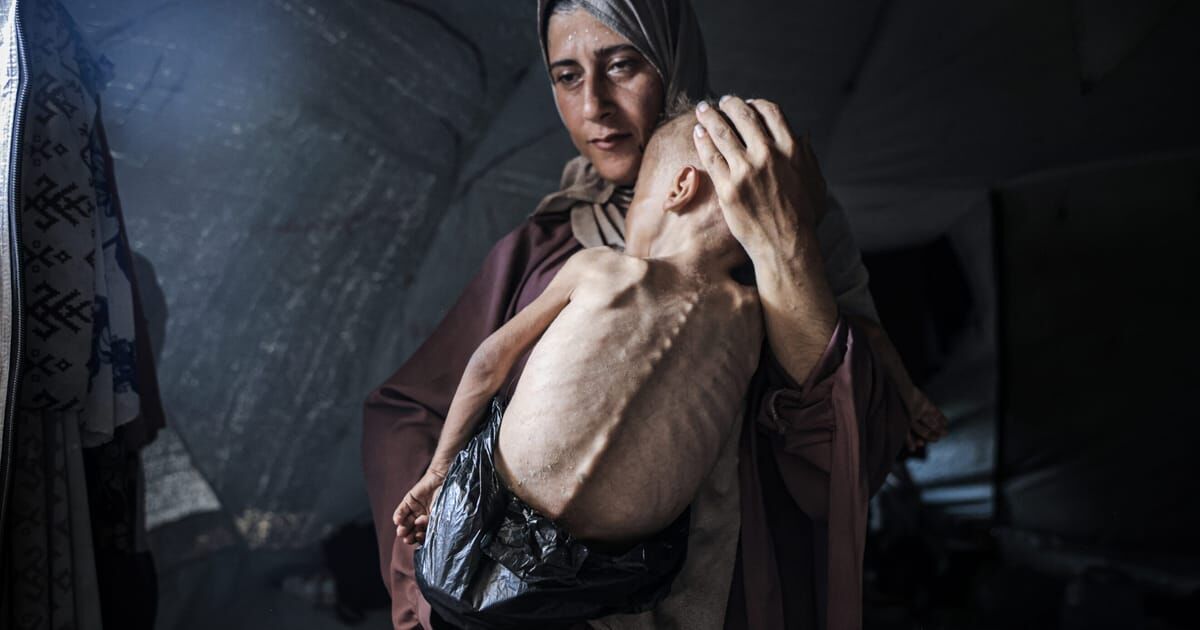
“Children in Gaza are starving to death,” said Edouard Beigbeder, UNICEF’s Regional Director for the Middle East and North Africa, in a statement issued on July 24. “Severe malnutrition is spreading faster than aid can reach them, and the world is watching it happen.”
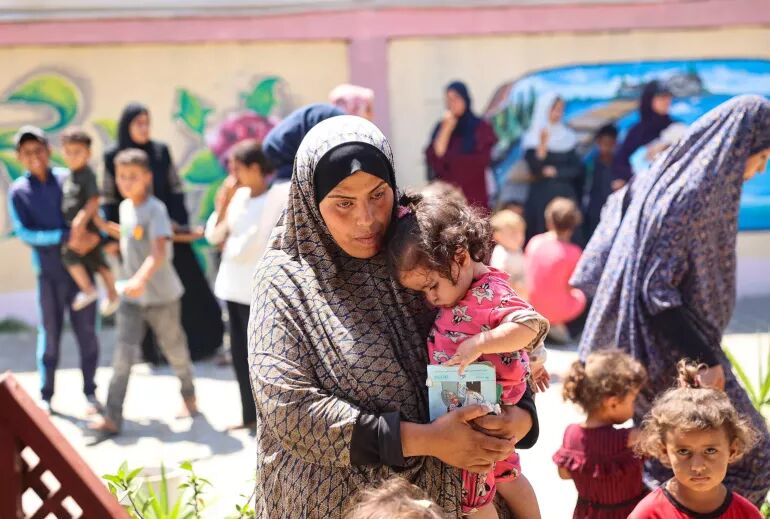
In June alone, over 6,500 children were treated for acute malnutrition, the highest number recorded since the conflict began. That number is rising fast. By mid-July, 5,000 children had already been admitted. In Gaza City, screenings revealed that acute malnutrition rates among children have quadrupled since February.
Beigbeder called the deaths “unconscionable” and said they “could have been prevented.” He urged the international community to “let the UN deliver aid at scale to families wherever they are.”
The United Nations has blamed restricted aid access and widespread destruction of Gaza’s infrastructure for the catastrophe. Tom Fletcher, UN Emergency Relief Coordinator, told the Security Council last week that aid trucks face roadblocks, re-inspections, and frequent attacks. Only a small fraction of aid requests are approved, and fuel to power hospitals, water pumps, and bakeries remains tightly limited.
“Food is running out. Those seeking it risk being shot,” Fletcher said. “People are dying trying to feed their families.”
UNICEF reported that 798 Palestinians were killed between May 27 and July 7 while trying to reach food aid. Many died near UN and Gaza Humanitarian Foundation (GHF) distribution points. Catherine Russell, UNICEF Executive Director, said, “Children are being killed and maimed as they line up for lifesaving food and medicine.”
On average, 28 children have been killed daily since the start of the war. Over the past 21 months, more than 17,000 children have been killed, and another 33,000 injured. Many of those, according to Russell, were hit while waiting in food lines or near shelters.
Infrastructure across Gaza has collapsed. Only 17 out of 36 hospitals remain partially functional. Seventy percent of essential medicines are out of stock. More than half of medical equipment is damaged. Clean water access is down by 95 percent. In some cases, five newborns share one incubator.
In northern Gaza, Masoud, a father of four, lost his newborn twins to starvation. Desperate to save his remaining children, he walked from central Gaza to Rafah. While waiting in a food line, he was injured by shelling. “I tied my leg with a cloth and crawled away. I thought if I stayed, I might get something the next day,” he said. His leg became infected, and he was later diagnosed with early-stage gangrene. “All this suffering, and I still returned with nothing.”
UNICEF has warned that without a sustained and predictable flow of food, medicine, water treatment supplies, and fuel, the number of deaths will rise sharply. The agency says it has stockpiled thousands of truckloads of emergency supplies but cannot distribute them safely without guaranteed access through multiple routes.
Aid convoys have trickled in since mid-May. Between May 19 and July 2, only 30 trucks per day on average were allowed into Gaza. Before the war, over 500 trucks crossed daily.
Fletcher urged the Security Council to evaluate whether Israel, as the occupying power, is meeting its legal obligation to ensure that civilians under its control receive food and medicine. He said, “We must hold all parties to the standards of international law. We do not have to choose between demanding the end to starvation and calling for the release of hostages. Both must happen.”
UNICEF is appealing for $463.8 million to meet immediate needs in Gaza and the West Bank but has only received 35 percent of the required funding. “The world knows what works,” said UNICEF Spokesperson James Elder. “We’ve done it before. We just need to be allowed to save lives.”
In Gaza, 13-year-old Fadi is now the family’s only provider. His father was killed, and he risks his life to reach food for his mother and siblings. “Even though it’s very dangerous, I have to go,” he said. “I rushed there to get a food basket. We can’t survive without it.”
The UN and aid groups continue to demand an immediate ceasefire, the release of all hostages, and full humanitarian access. As Beigbeder warned, “Without these, more children will die. We need action. Now.”
About the Author