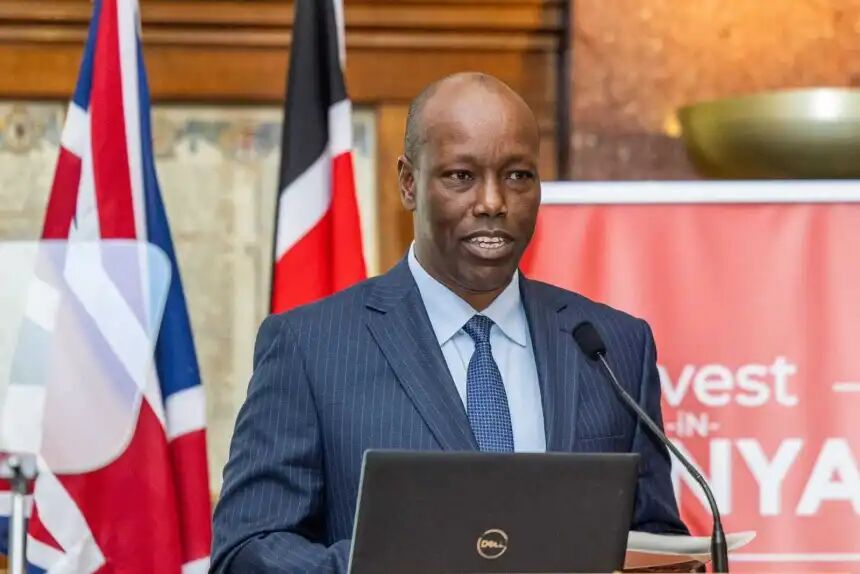
CS Kinyanjui Saba Saba Chaos Triggers Billions in Losses, Job Cuts
Nairobi – Trade and Industry Cabinet Secretary Lee Kinyanjui has blamed violent Saba Saba protests for widespread destruction that paralyzed businesses and cost the country billions of shillings. The Monday demonstrations turned chaotic across major towns, leaving behind looted wholesale and retail shops including Naivas and Magunas, torched stalls, and families mourning their loved ones.
“We cannot afford to destroy jobs and livelihoods in the name of protest,” Kinyanjui said in a public statement issued Tuesday morning. “As the smoke settles, the extent of the damage and loss of life is becoming clear. Billions have been lost, and many lives disrupted, some forever. An abomination has visited the land.”
The unrest, which started as a call to address the high cost of living, quickly spiraled into violence. Footage shared on social media showed crowds looting small businesses, setting structures ablaze, and clashing with police in Nairobi, Kisumu, Nakuru, and Mombasa.
Kinyanjui said the damage dealt a heavy blow to small traders already struggling in a tough economic environment. “My heart bleeds for the many businesses that were vandalized, looted, and burned down. Thousands now have no place to report to work or sell their wares,” he stated. “This is both defeatist and retrogressive.”
Official estimates from county authorities and trade associations place business losses in the billions. Local traders confirmed loss of merchandise, property damage, and job layoffs.
The protests coincided with the anniversary of the historical Saba Saba movement but deviated sharply from its original spirit of civil resistance. The violence drew strong condemnation from both government leaders and civil rights groups who called for dialogue instead of destruction.
Kinyanjui urged protest organizers and the public to consider the long-term impact of violent actions. “We cannot sacrifice our businesses and terminate jobs to protest the cost of living doing so only worsens the problem,” he warned. “We have added more people to the jobless bench. Anarchy is not the panacea to the challenges our society faces. We can and must do better than this.”
By Tuesday morning, cleanup efforts had begun in several affected towns, but shop owners expressed uncertainty about reopening. Local chambers of commerce are compiling loss reports to present to the national government for compensation talks, although officials say restoring confidence will take time.
Police have confirmed multiple arrests linked to looting and property damage. Human rights watchdogs are calling for transparent investigations into both the violence and police response, which they claim resulted in casualties.
As the country reflects on the aftermath, government agencies are urging calm and dialogue, while affected communities begin the slow path to recovery.
About the Author