Southern Syria is reeling from a deadly wave of sectarian violence that has left 594 people dead in Suweida province, according to figures released by the Syrian Observatory for Human Rights (SOHR). The monitoring group reported mass executions, fierce street battles, and targeted strikes, including Israeli air raids, in one of the bloodiest episodes since Syria’s civil war began over a decade ago.
The clashes erupted Sunday following a violent dispute between the Druze religious minority and Bedouin tribes. The conflict quickly escalated as government forces intervened, leading to a sharp increase in casualties and destruction.
SOHR reported that 300 Druze were killed in the fighting, including 146 fighters and 154 civilians. Among the civilians, 83 were allegedly executed by Syrian government forces. At least 257 pro-government troops died during the clashes. On the Bedouin side, 18 fighters and 3 civilians were confirmed dead, with reports indicating the civilians were executed by Druze fighters.
Another 15 Syrian government soldiers were reportedly killed in Israeli airstrikes. The Israeli military confirmed the strikes, stating the action aimed to protect the Druze community and block government troop movements into Suweida.
On Thursday, Suweida residents described scenes of widespread destruction, abandoned military vehicles, and bodies left in the streets. Most government forces had withdrawn from the area following a ceasefire declared late Wednesday. Despite the official truce, prominent Druze leader Sheikh Hikmat al-Hajri rejected the ceasefire, urging continued resistance until what he called the “complete liberation” of Suweida from government forces.
“We will not stop until our province is free from these gangs,” Sheikh Hajri said in a public statement, referring to the Syrian military.
Tensions within the Druze community have also deepened. Hajri, who holds significant influence in the province, has cultivated ties with Israel. Meanwhile, other Druze factions in Suweida have aligned with Syria’s new Islamist-led government, adding internal complexity to an already volatile conflict.
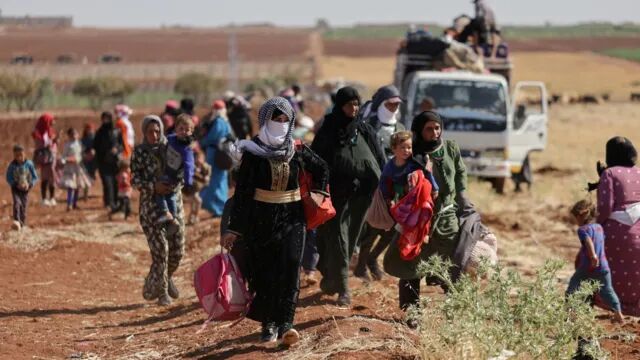
Hundreds of Bedouin civilians have reportedly fled the fighting, with many seeking safety in neighboring Deraa province. The Syrian Network for Human Rights, a separate watchdog, documented at least 169 civilian deaths, though it did not provide a breakdown.
Israel has taken a direct and public stance in the crisis. Prime Minister Benjamin Netanyahu, addressing the situation on Thursday, said Israel would continue to act militarily to keep Syrian forces from the southern border.
“We will not allow Syrian army units to enter south of Damascus,” PM Netanyahu said. “We will not permit any harm to the Druze community.”
Israeli airstrikes on Wednesday marked a dramatic shift in engagement. Missiles hit the Syrian Ministry of Defense in Damascus and struck near the presidential palace. The Syrian government called the strikes a violation of its sovereignty and an attempt to fuel more unrest.
Syria’s interim president, Ahmed al-Sharaa, condemned Israel’s actions during a televised address, describing them as part of a broader campaign to destabilize the country following the collapse of Bashar al-Assad’s regime last December.
“We are facing a battle to defend our unity and dignity,” Syria Sharaa said. “We will not allow foreign or internal forces to divide our people.”
With the ceasefire fragile and hostilities unresolved, Suweida remains tense. Aid groups and local leaders continue to call for international mediation as fears of renewed violence linger.
About the Author