

The United Nations is sounding alarm over deepening hunger in Gaza, warning that air drops of aid will not stop the worsening starvation. As the humanitarian situation spirals, UN officials say what Gaza needs is not symbolic gestures, but unrestricted access to aid.
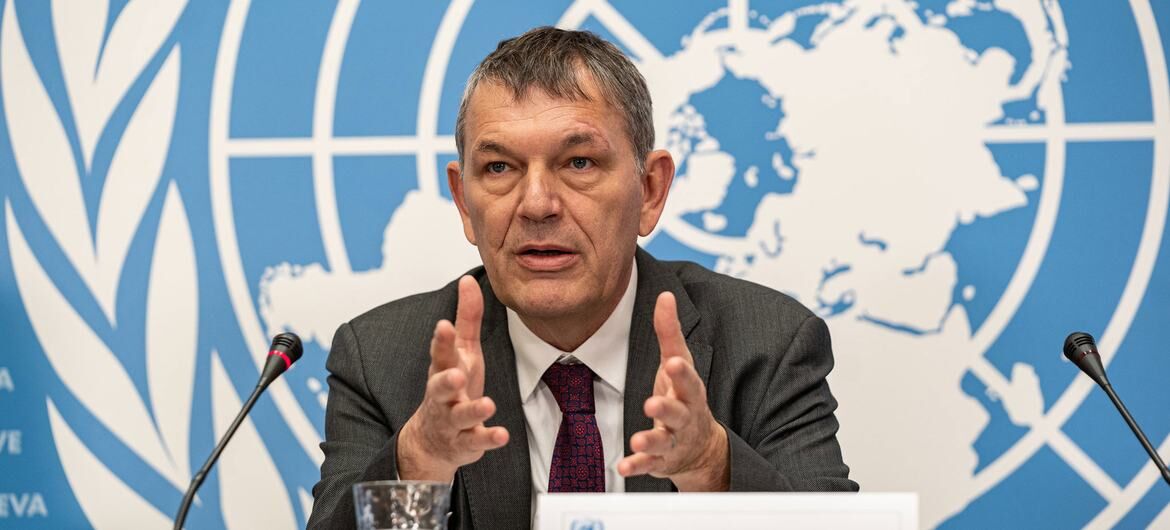
Philippe Lazzarini, head of the UN’s agency for Palestinian refugees (UNRWA), criticized Israel’s recent announcement allowing foreign governments to airdrop supplies. He called the tactic “expensive, inefficient, and dangerous,” warning that dropping aid into a densely packed war zone can injure or kill desperate civilians scrambling for food. “Aid must move safely and freely across Gaza. The only meaningful solution is to open the gates and let convoys through,” Lazzarini posted online adding that “6,000 trucks of food and medical aid” are stalled at entry points in Jordan and Egypt awaiting Israeli clearance.
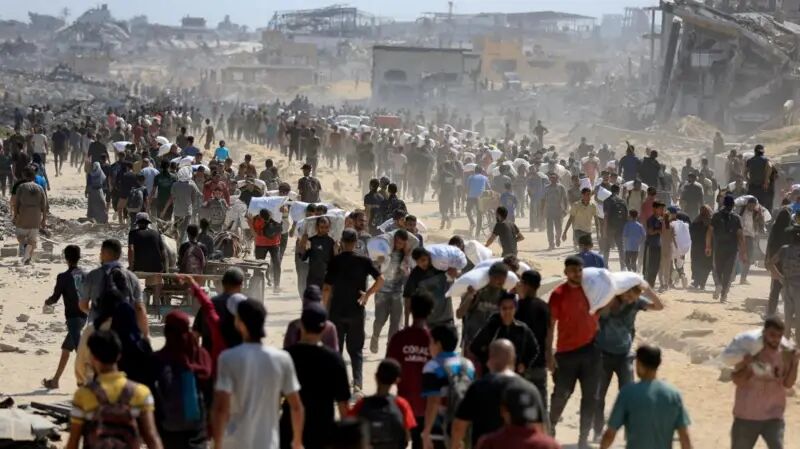
The World Food Programme reports nearly one in three people in Gaza are going days without eating. Around 90,000 women and children urgently require treatment for malnutrition. Since May 27, more than 1,000 Palestinians have died while trying to access food, the UN said.
Images released by Gaza’s health authorities show emaciated children. One photo circulated Friday showed six-month-old Zeinab Abu Halib, who reportedly died from severe malnutrition and lack of baby formula. Souad Nasser, a mother displaced from Beit Hanoun, described her children crying for food. “We give them one piece of bread to last the whole day,” she said.
On Thursday, Israeli officials said foreign governments would be allowed to deliver aid via air. Jordan and the United Arab Emirates are reportedly preparing for drops, and UK Prime Minister Keir Starmer pledged full support.
“News that Israel will allow countries to air drop aid into Gaza has come far too late,” UK Prime Minister Keir Starmer wrote in The Mirror. He added that the UK is “already working with Jordan to get British aid onto planes.”
But aid agencies rejected the move as a distraction. Caroline Willemen, an aid worker in Gaza with Médecins Sans Frontières, warned that “air drops won’t reach the most vulnerable” and would “create chaos.” She said her medical team has seen cases of malnutrition quadruple since May. “Even healthcare workers treating patients haven’t eaten in over a day,” she said.
Veteran observers also raised concern. “I’ve seen families killed by falling pallets,” one analyst recalled, citing experiences in Iraq and Bosnia. “With Gaza’s dense population, air drops are not just ineffective they’re dangerous.”
The Israeli military’s coordination unit, COGAT, said on Friday that it had allowed 90 trucks of food into Gaza and that 100 more were collected by international agencies. It published photos of what it claimed were hundreds of pallets still awaiting pickup. Israeli officials maintain there are no restrictions on aid entry, blaming the UN for slow distribution and accusing Hamas of interfering with deliveries. The UN rejected those claims citing “bureaucratic obstacles” imposed by Israel, which delay or prevent safe aid movement inside the Strip.
Hamas denies allegations of aid theft, and no verified reports have supported those claims. The UN estimates that 600 trucks per day are required to address the humanitarian needs of Gaza’s population. Current deliveries fall far short. Meanwhile, talks for a ceasefire and hostage release deal remain stalled. The US and Israel withdrew negotiators from Doha, claiming Hamas is unwilling to make a deal. Hamas officials disputed that, saying mediation is still active and that an Israeli delegation may return to Qatar next week.
The war began on October 7, 2023, after Hamas fighters attacked southern Israel, killing 1,200 people and capturing 251 hostages. Israel responded with a full-scale military campaign and total blockade of Gaza. Since then, over 59,000 people have died in Gaza, according to figures from local health authorities. The blockade intensified in March, then partially eased in May after warnings of famine. However, shortages of food, water, medicine, and fuel have worsened.
More than 90% of homes are damaged or destroyed, and Gaza’s population over two million is displaced, many living in tents and makeshift shelters.
France announced it will recognize a Palestinian state in September a bold move initiated by President Macron. Over 220 UK lawmakers have signed a letter urging Prime Minister Starmer to follow suit.

UK Prime Minister Keir Starmer has declined to act immediately, stating that recognition should come “as part of a wider plan” to achieve a two-state solution. Labour MP Sarah Champion, who coordinated the letter, said recognition must happen now. “This is about acknowledging the Palestinian right to self-determination,” she said. “What is the alternative if we don’t have a two-state solution?”
As the crisis deepens, aid workers, UN officials, and families in Gaza continue to plead for sustained, safe access to humanitarian assistance. For them, time and food is running out.
About the Author