


GAZA CITY — Fourteen people, including two children, died from malnutrition in Gaza within 24 hours, according to the local health ministry. The report comes as Israel begins a limited daily military pause intended to ease aid distribution to northern Gaza, where conditions remain dire. The health ministry said Monday the latest fatalities bring the total number of confirmed malnutrition-related deaths to 147 since the start of the war, with 88 of those being children.
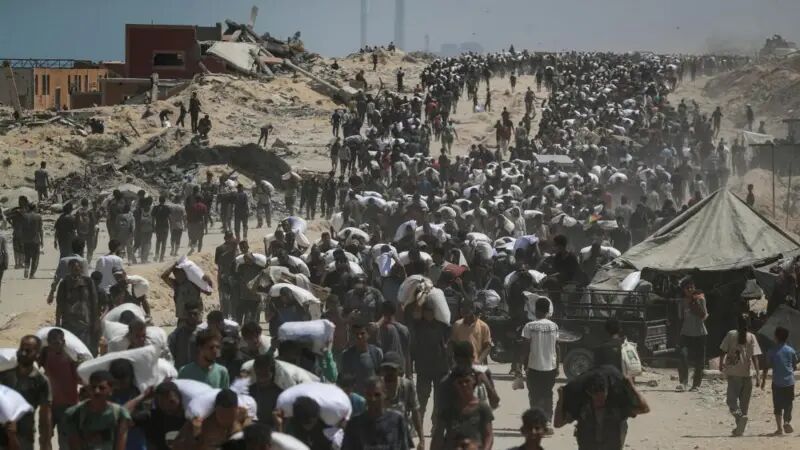
Israel’s military announced Sunday a 10-hour daily suspension of operations in specific northern zones to enable humanitarian access. The pause will reportedly run from 08:00 to 18:00 local time, though the Israel Defense Forces did not provide an end date, stating it would continue “until further notice.”
The United Nations welcomed the decision but cautioned that isolated pauses would not be enough to reverse the rapidly worsening humanitarian crisis.
“We welcome Israel’s decision to support a one-week scale-up of aid,” said UN aid chief Tom Fletcher in an interview with press. “But the scale of need demands sustained access, faster clearance for convoys, and an immediate halt to attacks on civilians gathering for food.” UN aid chief Fletcher said one in three people in Gaza has gone days without eating, including aid workers. “The next few days are make or break,” he said, describing the humanitarian situation as a “21st-century atrocity.”
Aid deliveries have become increasingly chaotic. Over the weekend, UN trucks were mobbed by desperate civilians in northern Gaza, leading to widespread looting. UN personnel described aid routes as dangerous, with drivers navigating roads where hungry crowds wait to intercept trucks.
“We have to run the gauntlet,” UN aid chief Fletcher said. “Most of the flour we brought in yesterday was taken off trucks before it could reach organized distribution points.”
The UN has coordinated limited airdrops with Jordan and the United Arab Emirates, though the food dropped just 25 tons over the weekend represents a fraction of daily need. The UN says air drops are inefficient, risky, and cannot replace truck convoys.
Humanitarian workers inside Gaza describe widespread starvation. In Deir al-Balah, Save the Children’s Rachael Cummings said every child at a local clinic appeared severely malnourished.
“Families used to feed children first. That has now completely collapsed,” she said in a video interview. “The fact that children are starving is a signal that the entire population is at risk.”
UN aid chief Fletcher echoed that assessment, warning that if aid routes are not secured and expanded, famine could soon engulf the Strip. “We can reach everyone in Gaza in the next couple of weeks,” he said, “but only if we’re granted permits, security, and open border crossings.”
Prime Minister Benjamin Netanyahu dismissed accusations that Israel is using starvation as a tactic, calling the claims “a bold-faced lie.”
“There is no policy of starvation in Gaza, and there is no starvation in Gaza,” PM Netanyahu told a Christian conference in Jerusalem. He blamed Hamas for diverting or stealing aid and said Israel was meeting its obligations under international law.
However, a recent USAID report found no evidence of systematic looting of U.S.-funded supplies by Hamas. The UN and humanitarian agencies continue to call for unfettered access and direct oversight of aid operations.
Israel has not granted international journalists access to Gaza, making independent verification of conditions on the ground difficult. UN officials have urged Israel to allow legal and media observers into the territory to improve transparency and accountability.
UN aid chief Fletcher concluded, “If the international community wants to stop starvation in Gaza, there has to be more than air drops and partial pauses. We need a ceasefire, and we need it now.”
About the Author